|
As you have likely heard, Help Me Grow Washington has long been a partner of Home Visiting programs in Washington state. But recently, that partnership took a step forward.
Help Me Grow serves as a resource for families across Washington state, providing access to essential services like basic needs, health care, developmental supports and family supports.
These supports and tools can be accessed either through their resource finder, or through the to connect with a Resource Navigator. The hotline is open Monday to Thursday from 8 a.m. to 5:30 p.m. and Friday 8 a.m. to 5 p.m. In addition, some navigators are multilingual and speak Spanish, Amharic, Tigrinya, and Teochew. All navigators also have access to professional interpreters through Language Line Solutions.
This year’s model changes the training that Help Me Grow Washington (HMG WA) Resource Navigators are trained in regarding home visiting referrals. Prior to this July, families contacting HMG WA would be screened for interest in home visiting resources and transferred to a specialized internal team for further home visiting navigation. In this year’s model, any caller contacting Help Me Grow will be offered all HMG WA essential services including linkage to a home visiting referral via the same Resource Navigator. This streamlined process will connect more families with home visiting services across the state.
Call Help Me Grow WA at 1-800-322-2588 for more information or visit their website.
The Washington Tracking Network (WTN), the Data Visualization section, and the former Community Health Strategies for Homelessness team recently published a dashboard about housing and homelessness in Washington.
Homelessness causes severe health impacts and may reduce a person’s life expectancy by up to 30 years. Across the United States, the main reason people become homeless is not being able to find affordable housing. It is a bigger contributor than mental illness, drug abuse, or even poverty. According to the Department of Commerce, high rents and not enough affordable housing are the most significant challenges for reducing homelessness in Washington.
Data on housing and homelessness help us understand these connections and challenges. The dashboard has housing data at the census tract level and data on homelessness at the county level.
We recommend viewing the dashboard on a desktop rather than a mobile device.
A newly released report from the Mother and Infant Home Visiting Program Evaluation (MIHOPE) provides strong evidence that the Maternal, Infant, and Early Childhood Home Visiting (MIECHV) program positively impacts children as they enter kindergarten. The findings highlight improvements in school readiness, child development, and family well-being—affirming the long-term value of home visiting services.
Free virtual Home Visitor Training series with presenters from a wonderful team of experienced and wise home visitors and WSCADV staff!
The two-day DV Assessment and Response training is offered three times per year, and Safety Planning is offered three times as well.
- First - please register for a DV Assessment and Response training
- Second - please register for a Safety Planning training
|
DV Assessment and Response (Zoom Webinar)
Sept. 29, 2025 (part 1) Sept. 30, 2025 (part 2) 10:00 - 11:30 a.m. both days
|
|
|
| |
|
DV Assessment and Response (Zoom Webinar)
Jan. 22, 2026 (part 1) Jan. 23, 2026 (part 2) 10:00 - 11:30 a.m. both days
|
|
|
|
|
Safety Planning with Families (Zoom Meeting)
Oct. 17, 2025 9:30 a.m. - 2:30 p.m. Break from noon - 1:00 p.m.
|
|
|
| |
|
DV Assessment and Response (Zoom Webinar)
Feb. 24, 2026 (part 1) Feb. 25, 2026 (part 2) 10:00 - 11:30 a.m. both days
|
|
|
|
|
Safety Planning with Families (Zoom Meeting)
March 20, 2026 9:30 a.m. - 2:30 p.m. Break from noon - 1:00 pm
|
|
|
|
|
Safety Planning with Families (Zoom Meeting)
May 27, 2026 9:30 a.m. - 2:30 p.m. Break from noon - 1:00 pm
|
|
|
|
The Office of Early Childhood Development has launched a new Tribal Maternal, Infant, and Early Childhood Home Visiting (MIECHV) Outcomes Dashboard.
Developed in close partnership with Tribal MIECHV grant recipients, this first-of-its-kind dashboard offers a transparent and accessible view of program outcomes while upholding the privacy, dignity, and sovereignty of each participating Tribal community.
What’s Inside the Dashboard:
- Demographic insights into program participants
- Geographic reach and service coverage
- Performance on legislatively mandated benchmark measures
- Individual profiles of each Tribal MIECHV grant recipient
Resources for Families Impacted by Immigration-Related Concerns
We are excited to announce that the Family Separation Rapid Response Team Resource Flyer is now available in multiple languages on our website. This is a comprehensive list of trusted resources for families at risk of separation due to immigration-related detention or deportation.
View and download the flyer here: Resources for Families Impacted by Immigration-Related Concerns.
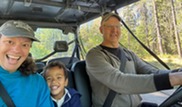
Grandparents Publish Book Inspired By Kinship Care Experience
September is Kinship Care Month, a time to celebrate and appreciate caregivers who are providing stability and love to relatives and close family friends who are unable to live with their parents.
Read about grandparents Shaun and Brenda in Snohomish County who care for their grandson, Jaxon. The grandparents wrote a book called “Jaxon and the Magic of the Forest,” which was inspired by the beauty of nature and the strength of kinship and foster families.
Read their story on the DCYF What’s New blog and learn more about kinship care.
|
 |
|
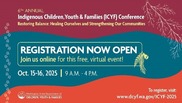
Register now for the 6th annual Indigenous Children, Youth and Families conference! Free, online, virtual event. Oct. 15-16, 9 a.m. – 4 p.m. Register at The Alliance Training Portal. |
Start Early Washington Training Webpage
Start Early Washington Training Schedule
Foundational Perinatal Mental Health for Home Visitors
When: Sept. 23, 30 and Oct. 7 (9 a.m. - noon)
Register Here
Strengthening the Foundation: Elevating Mental Health Support in Home Visiting
When: Oct. 14, 21 and 28 (9 a.m. - noon)
Register Here * Note: This is for home visitors and supervisors who have at least 6 months of experience working with families.
The PICCOLO in Practice
When: Oct. 22, 29, and Nov. 5 (1-3 p.m.)
Register Here
PICCOLO Refresher
When: Nov. 12 (1-3 p.m.)
Register Here * Note: This training is only for those who have gone through The PICCOLO in Practice 3-day training.
Home Visitor Peer Connection
Home Visitor Peer Connections provide an open space for home visitors across the state to connect with each other about their work. During this time there will be a focus on the Washington state Home Visiting Core Competencies.
Competencies are observable actions that require a combination of knowledge, skills, and attributes necessary to perform a major task or function in the work setting. Each session will focus on one competency area to support the enhancement of skills, knowledge, and attributes of home visiting work. Participation is flexible—you’re welcome to join sessions as your schedule allows. Each session stands on its own.
Our next session will be held on Thursday, Sept. 25 (10:30-11:30 a.m.)
Register Here *Note: Peer connections are offered every other month. Upcoming dates will be posted on an ongoing basis.
Contact Adrienne Matthias (amatthias@startearly.org) or Alex Patricelli (apatricelli@startearly.org) with any questions.
Each month, DCYF ESIT Tribal Program Consultant Brian Frisina will provide a key topic to help support us all in getting to know our Tribal Nations partners better.
This month’s topic is:
What is the Tribal Supreme Court Project (TSCP)?
[...] in September 2001, Tribe Leaders met in Washington, D.C. and established the TSCP as part of a larger Tribal Sovereignty Protection Initiative. The Project’s purposes are to improve strategy and promote greater coordination in SCOTUS cases that may affect the rights and interests of Indian tribes.
Read more about the Tribal Supreme Court, why it was formed and what the TSCP does:
What is the Tribal Supreme Court Project?
The Center on the Developing Child hosted a live discussion on how wildfire smoke affects young children. Wildfire smoke is becoming increasingly common, with implications for the health and development of young children in both the moment and throughout their lifespan. During the webinar, Lindsey Burghardt, MD, MPH, FAAP, Chief Science Officer at the Center, and panelist Joseph Allen, DSc, MPH, CIH, shared emerging findings from the LA Fire HEALTH Study, which aims to better understand the short- and long-term health impacts of wildfires after the January 2025 fires in the Los Angeles area. The study has broader implications for many communities across the US that are increasingly dealing with wildfire smoke. Panelist Sujeet Rao also discussed his work leading CLEAN, a program evaluating soil samples for lead contamination in the wake of the Los Angeles fires. The panelists shared how insights from these projects can guide efforts to reduce exposure, support children and caregivers, and protect healthy development.
What happens when we FOCUS on Tiered Care Coordination for Families? Join a unique three-part webinar series designed to introduce and deepen your understanding and application of FOCUS, an intermediate-intensity care coordination model developed by the Innovations Institute at UConn School of Social Work. Oct. 9 and 23, Nov. 6, 10 a.m. -1 p.m.
Join the Apple Health Advisory Council: Your chance to shape the future of Apple Health (Medicaid) services has arrived! The newly formed Apple Health Advisory Council is seeking members with lived experience in intellectual and developmental disability or long-term care services.
Rapid Response: Reinvesting in Racial and Indigenous Health Equity Research from Robert Woods Johnson Foundation. The purpose of this call for proposals is to meet the current moment by supporting timely, actionable health equity research that has been interrupted by shifts in federal funding.
New! Prenatal and Infant Screening for Chagas Disease: The Washington State Department of Health (WA DOH) recently conducted an analysis that identified low screening rates for Chagas disease. We want to ensure that providers are aware of the screening recommendations and treatment procedures for Chagas disease to increase screening uptake and improve patient outcomes. To do so, we developed an educational flyer for people working in reproductive or maternal health with information on screening and diagnosis for patients suspected to have Chagas disease.
Below are resources and opportunities to engage:
Native & Strong Lifeline expands access with text and chat: The Native & Strong Lifeline, Washington’s suicide-prevention, crisis, and help line for all Native and Indigenous people in the state, now offers text and chat services.
These new options expand the line's efforts to provide culturally affirming support for American Indian and Alaska Native people experiencing thoughts of suicide, substance use concerns, mental health crises, or emotional distress.
To learn more, visit the Department of Health webpage.
Sept. 15 – Oct. 15 is National Hispanic Heritage Month. The Library of Congress, National Archives and Records Administration, National Endowment for the Humanities, National Gallery of Art, National Park Service, Smithsonian Institution and United States Holocaust Memorial Museum join in paying tribute to the generations of Hispanic Americans who have positively influenced and enriched our nation and society.
Music for Kids: Hispanic Heritage: These albums feature a wide range of children's music recorded in English and Spanish, including well-known folk songs and nursery rhymes from artists such as José-Luis Orozco and 123 Andrés. For ages 3-9. List compiled by Colorín Colorado, a national multimedia project that offers a wealth of bilingual, research-based information, activities, and advice for educators and families of English language learners (ELLs).
Sept. 26 is Native American Day: Native American Day is celebrated on the fourth Friday of September every year, falling on Sept. 26 this year, as a way of honoring those who have been a part of the American tradition even before the nation of the U.S.A. came into being.
|