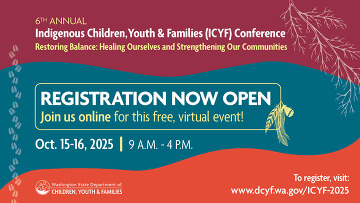
6th Annual Indigenous Children, Youth & Families (ICYF) Conference
Oct. 15-16, 2025 | Virtual
To register: www.dcyf.wa.gov/ICYF-2025
The Office of Tribal Relations (OTR) is excited to announce that registration for the 6th annual Indigenous, Children, Youth & Families (ICYF) conference is now open! Taking place this year on Oct. 15-16, the conference is a free, virtual event open to DCYF staff, tribal partners, and the community.
This year’s theme – Restoring Balance: Healing Ourselves and Strengthening Our Communities – will focus on coming together to learn, connect, and support each other as we continue to deepen and improve our practice.
Our agenda will feature advocates and educators from the fields of Indian Child Welfare, Juvenile Justice and Early Learning. We will hear about innovative programming and research from nationally recognized organizations such as the National Native Children's Trauma Center, Indigenous Justice Circle, and The Center for Native American Youth.
Washington state tribal leaders will also share how they are responding to the unique needs of their communities during these challenging, uncertain times through community-led programming and culturally responsive prevention.
Initial License Refresher & Access Pathways
Article written by Natalie Adams, Tribal Foster Care Licensing Consultant
An Initial License is a 90-day, child specific temporary license for kinship caregivers. It allows them to receive financial reimbursement while completing the home study, which may include the full licensing process.
Did You Know? There Are Two Initial Licensing Pathways!
The process depends on whether the child is in DCYF care or under Tribal jurisdiction. Below is an outline for each pathway:
1. Children in DCYF Care and Custody:
- A child is placed with a kinship caregiver.
- About 10 days after placement, the Kinship Notification Unit (KNU) is internally notified.
- KNU has 30 days to:
- Begin the licensing intake process
- Start background checks
- Issue initial license (if requirements are met)
- The initial license start date is based on when the requirements are met, not the child’s placement date.
- If a caregiver does not engage with KNU in 30 days, KNU refers to the Kinship Care Licensing team (or Child Placing Agency/Tribal Child Placing Agency) for follow-up.
2. Tribal Jurisdiction Children:
- A child is placed with a kinship caregiver.
- Tribal caseworker requests to open a Tribal Payment Only (TPO) case.
- Tribal caseworker completes an Initial/Kinship License Request for Tribes Form (DCYF 10-056).
- The completed form is emailed to:
- TPO worker;
- KNU general email; and
- Child Placing Agency (if applicable)
- DCYF issues the initial license within 3-5 business days after receiving the completed form.
Key Takeaways & Tips
- Initial Licenses = reimbursement payments. Payments may take 4-8 weeks to arrive.
- Licensing Division CPS investigates all abuse/neglect reports involving licensed caregivers (excluding Tribes with Inter-governmental Agreements)
- Kinship Care Licensor Collaboration Tips for Tribes When a Child is in DCYF care:
- Caregiver information is confidential unless they sign a release.
- Ask the DCYF caseworker for the assigned licensor’s contact information.
- The same licensor typically supports families before and after full licensing.
- Without a signed release of information, licensors cannot share caregiver information with the Tribe.
- Kinship Care licensors should notify Tribes before visiting reservation lands.
To learn more, view the DCYF Licensing Types Guide. For questions, please contact Natalie Adams, Tribal Foster Care Licensing Consultant, at Natalie.adams@dcyf.wa.gov or call 360-764-9273.
Seeking Feedback | DCYF Guardianship Assistance Program
In March, DCYF made some changes to the Guardianship Assistance Program (GAP). These updates were necessary due to budget changes and new state rules (WAC Chapter 110-85) that went into effect in May 2024. We want to share what’s changed and hear how it’s going for program participants.
What changed:
- A New GAP Team at Headquarters: A dedicated team now manages GAP subsidies from start to finish, including help with subsidy changes and Extended GAP services.
- Changes to Monthly Subsidy Calculations: DCYF updated how subsidy amounts are determined. The agency works with program participants to understand their family’s situation and child’s needs to make sure the process is fair and consistent.
What DCYF looks at:
- Child’s health, education, and other needs
- Family size, income, and living expenses
Join Us for a Feedback Session
Aug. 26, 2025 | 5:30 to 7 p.m.
Meeting Link
DCYF is hosting a virtual session to walk through the changes and to hear directly from those involved with the program about how the changes are going. This is an opportunity to share how the new GAP process is working — or not working. We want to know what’s helpful, what’s challenging, and what could be better. For questions, reach out to geene.delaplane@dcyf.wa.gov.
New State Laws Help Open Doors to More Child Care Access
Individuals wanting to become licensed child care providers, and community organizations, such as churches, seeking to use existing facilities for child care programs, can benefit from local siting and zoning changes aimed to expand places where child care can be made available.
To read more, visit our What's New blog.
OCVA Healing, Support & Transition Services Grant: Statewide Coordination
The Office of Crime Victims Advocacy (OCVA) is looking for proposals from qualified organizations that can help bring together and support service providers across the state. The goal is to organize and lead statewide meetings, quarterly, for programs that offer healing, support, and transition services, as well as related services.
OCVA intends to fund one entity for this statewide coordination role. All activities and support must be provided in Washington state.
Application deadline: Aug. 18, 2025
Visit the Washington State Department of Commerce for information and to apply.
Tribal Wellness Program Specialist/Chinook Indian Nation
Apply online: Tribal Wellness Program Specialist - Indeed.com
Opening of Fern Lodge, Inpatient Behavioral Health Facility
On June 6, Tulalip Tribes, joined by leaders from HCA and Telecare, held an open house for Fern Lodge, a 16‑bed inpatient behavioral health facility in Stanwood. This facility is especially meaningful: It’s a much-needed treatment facility on Tribal land, in partnership with HCA and Telecare. Read more.
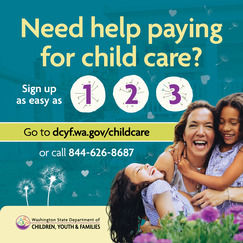
Help Spread the Word about Free & Low-Cost Child Care
Many families living in Washington state qualify for free or low-cost child care, but they may not know about it. You can help by sharing information with parents, caregivers, and your community.
DCYF has put together a toolkit with ready-to-use materials that make spreading the word easy!
Visit the digital toolkit to access printable flyers, sample social media posts, and email templates. Whether you work directly with families or want to help your community stay informed, these resources make it easy to connect families to the support they need.
Want to know more about the Working Connections Child Care Subsidy Program? Visit www.dcyf.wa.gov/childcare or call 844-626-8687. Help is available in multiple languages.
|
Upcoming Local Events
Annual Nesika Illahee Pow-Wow | Siletz, OR
Aug. 8-10, 2025
The Confederated Tribes of Siletz Indians hosts and invites all to come join and celebrate their annual Nesika Illahee Pow-Wow. The celebration takes place in the heart of the Siletz reservation in the town of Siletz, Oregon. Visit Confederated Tribes of Siletz Indians for information.
Practicing Cultural Humility in Child Welfare with Tribal Communities
Article written by Shannel Squally-Janzen, Tribal Prevention Specialist
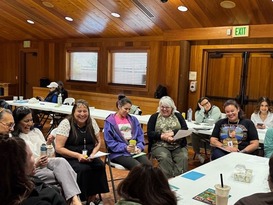
OTR recently facilitated a powerful training on Practicing Cultural Humility in Child Welfare with Tribal Communities for the Pierce County Juvenile Court. Attendees included judges, Guardian Ad Litems, attorneys, and representatives from the Puyallup Tribal Court. The training focused on building awareness of power dynamics, tribal sovereignty, and historical trauma, while emphasizing the importance of meaningful collaboration with tribal communities.
|
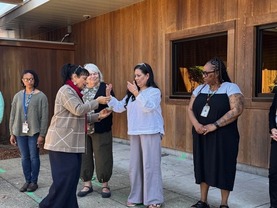
Feedback from participants was overwhelmingly positive, with many expressing that the training was “compelling and inspiring,” “insightful and valuable,” and “full of relevant information.” One attendee shared, “It is so powerful to feel the passion and pain and truly learn and grow through that strong community connection.”
OTR is honored to provide these learning spaces and looks forward to continuing this work alongside state and tribal partners to promote respectful, culturally responsive practices across Washington. Visit our Training webpage for more information and fill out the Training Request Form.
|
ʔu siʔab wiw’su. Oh Honorable Children
Join three Puyallup Tribal Youth, and Puyallup Tribal Language Director Amber Haywardd, as they dive into the importance of revitalizing the Lushootseed language. To view this video, visit the
Puyallup Tribe of Indians' YouTube channel.
|