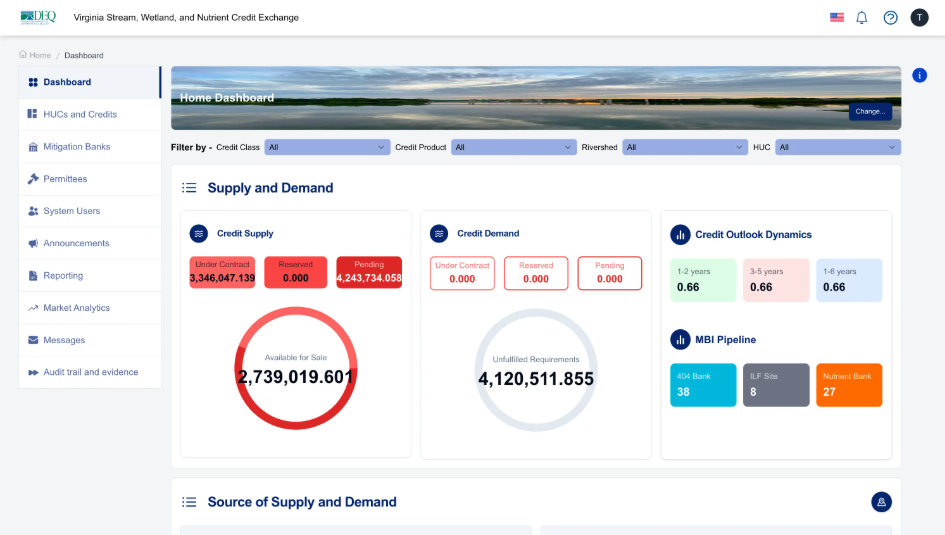
 DEQ partnered with Water Ledger to create an exciting new digital compensatory wetland mitigation and nutrient credit marketplace that launched on Dec. 15. The Stream, Wetland, and Nutrient (SWaN) credit trading platform increases transparency, making it easier for permittees to purchase credits and for bankers to sell them. SWaN was developed and will be operated by Water Ledger, which received funding from DEQ through a competitive process.
SWaN offers several unique features to help permittees and bankers make more informed decisions:
- Permit information including the project location, hydrologic unit code (HUC), contact information, and the amount and type of credits needed will automatically upload to SWaN.
- Mitigation bank information including the service area, credit types, and credit release schedules will automatically upload to the platform as soon as a bank is approved.
- Credit reservations on the platform in lieu of letters of credit availability.
- Access to market analytics, historical pricing, and trends for each watershed, as well as supply and demand forecasts.
- Access to trades including credit balances, documents, and payments.
For more information, read the full news release.
Version 1.2 of the Virginia Stormwater Management Handbook (VSMH) is available for use, and is posted on the DEQ and Virginia Regulatory Town Hall websites. Revisions in Version 1.2 include the correction of errors or typos and the incorporation of regulatory amendments and policies that came into effect since the adoption of Version 1.1 in August 2024. Other revisions include modifications to the construction best management practices to reflect industry standards for materials and revising inspection frequencies to be consistent with the Construction General Permit. Planting schedules and lists were also revised to remove invasive species, add more native species, and refer to the most up-to-date published plant lists which are frequently revised based on new data. DEQ will continue to accept applications, plans, specifications, and other submissions developed using Version 1.1 of the VSMH that are submitted and deemed complete on or before June 30, 2026. Beginning July 1, 2026, where DEQ serves as the Virginia Stormwater Management Program or Virginia Erosion and Stormwater Management Program authority, DEQ will only accept applications, plans, specifications, and other submissions developed using Version 1.2 of the VSMH.
DEQ updates the VSMH periodically to include new and innovative practices to protect Virginia’s environment from stormwater and erosion impacts associated with construction activities, and to remain consistent with current laws and policies.
|
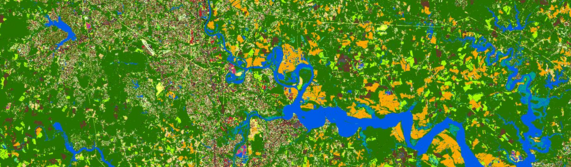 Planners across Virginia now have access to newly updated, high-resolution statewide land use data. This enhanced dataset is the result of a collaborative effort between DEQ, the Virginia Department of Conservation and Recreation, the U.S. Environmental Protection Agency, the Chesapeake Conservancy, University of Vermont’s Spatial Analysis Laboratory, and the Hampton Roads Planning District Commission. The Land Use/Land Cover dataset includes 56 distinct land use categories at a 1-meter resolution, derived from 2021 imagery. This update improves the ability of state and local governments in a variety of ways including addressing and improving water quality. The data is hosted by the Virginia Geographic Information Network, providing reliable and centralized access for users across the Commonwealth.
Sign up to receive Data & Analytics updates from DEQ if you would like to be the first to know about new and updated tools.
 |
|
Current VWP GP coverage will expire on Aug. 1, 2026. New GP regulations, approved by the State Water Control Board during their Nov. 18, 2025 meeting, will become effective on Aug. 2, 2026. For current projects that will not be completed by Aug. 1, 2026, permittees will need to apply for new coverage. Check DEQ's VWP webpage for more information and important dates. |
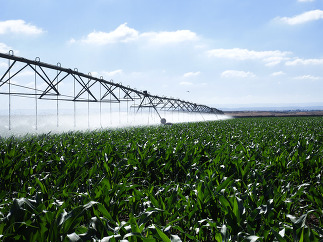
If you manage an agricultural facility in Virginia and are required to report the amount of water you withdraw, there’s a new Agricultural Water Estimation Tool available for facilities that do not use metering devices. If you don’t know whether you need to report your water withdrawal to DEQ, you can use your measured or estimated withdrawal volume and our Decision Tree to determine whether you are required to report. Typically, a withdrawal of one million gallons or more in a single month OR an average daily withdrawal over 10,000 gallons per day in any single month must be reported. Withdrawal reports for the previous calendar year must be provided to DEQ by Jan. 31 of each year. Even if you are exempt from reporting, DEQ recommends voluntarily reporting your water withdrawal. The data can be used to establish water needs and support future permitting, should a permit be needed.
|
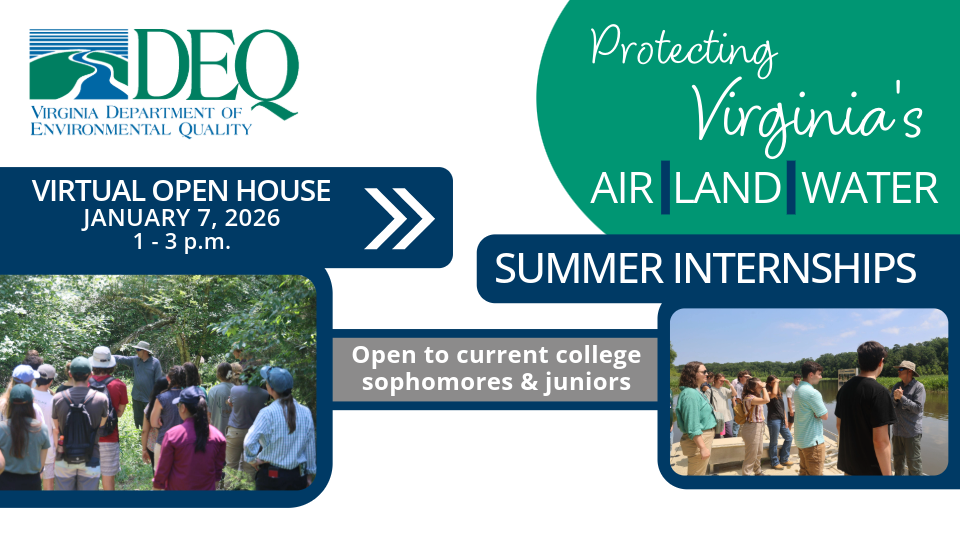 Are you interested in joining the DEQ team? On Jan. 7, 2026 at 1 p.m., DEQ will host a virtual summer internship open house for college sophomores and juniors that are passionate about protecting Virginia’s air, land, and water and interested in pursuing an environmental career. Our summer internship program offers a unique opportunity to gain hands-on experience and deepen your understanding of how DEQ safeguards the environment for the health and well-being of all Virginians. Work alongside dedicated environmental professionals, build valuable skills, and set yourself on a path to a successful career in the environmental field. The application period will open on Jan. 7, 2026, and close on Jan. 16, 2026. Internships will be offered at all six of DEQ’s regional offices, located in Abingdon, Glen Allen, Harrisonburg, Salem, Virginia Beach, and Woodbridge, and will run from June 1 to Aug. 7, 2026.
Learn more about DEQ's internship program by visiting our website.
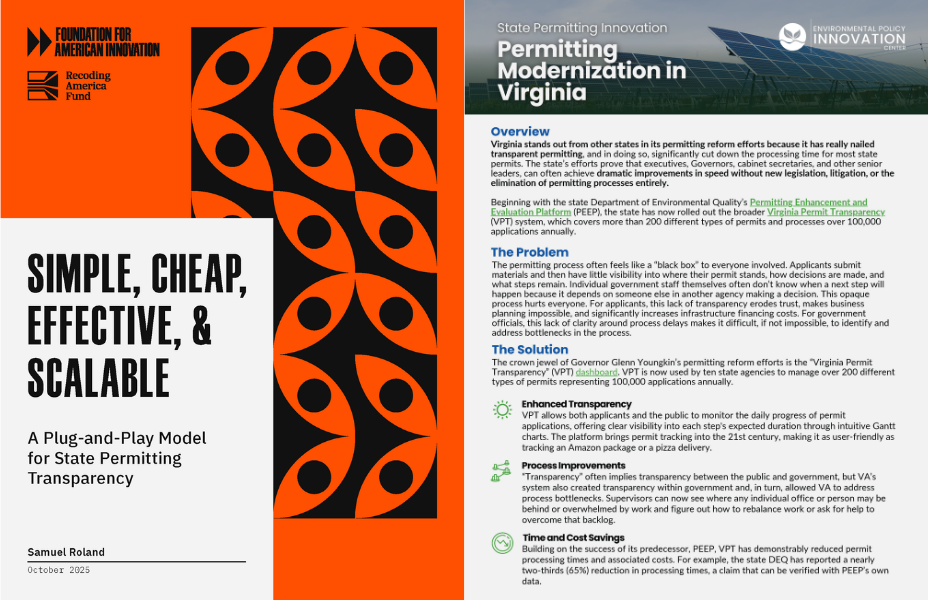
You know it, you love it: DEQ’s permitting transparency initiative, better known as PEEP, served as the catalyst for permitting reform across the country, contributing to a 65% reduction in DEQ's permit processing times. Using PEEP as the inspiration, Virginia has now launched the broader Virginia Permit Transparency (VPT) system, which has further reduced permit processing times and associated costs. Learn more about PEEP, VPT, and how these reforms were implemented in these latest reports:
On Dec. 2, 2025, the Chesapeake Bay Program (CBP) approved a revised Chesapeake Bay Watershed Agreement (Bay Agreement) that outlines the CBP partnership’s commitments, through 2040, to restore the Chesapeake Bay.
Under the revised agreement, the 31 outcomes listed in the 2014 Bay Agreement have been revised into 21 outcomes that are measurable, time-bound, and reflective of achievable targets. This reflects removal of completed outcomes and consolidation of others. Further, the original 10 goals have been condensed into four overarching goals: Thriving Habitats, Fisheries, and Wildlife; Clean Water; Healthy Landscapes; and Engaged Communities.
Virginia, one of six Chesapeake Bay watershed states and the District of Columbia, has achieved substantial progress toward its Phase III Watershed Implementation Plan goals—meeting 84% of total nitrogen reductions, 91% of total phosphorus reductions, and 100% of total sediment reductions. While these accomplishments are significant, continued effort is essential as development of the next Chesapeake Bay Model advances. This watershed model, among the most complex in the world, guides where pollution reductions are needed, where to focus restoration efforts, and how progress is measured, accounting for a watershed spanning roughly 64,000 square miles.
Until the new Bay model is complete, Virginia and other Bay jurisdictions will continue to focus on specific implementation actions via the current two-year programmatic goals or “Milestones.” Jurisdictions will also prepare two rounds of “Near-Term Milestones” for the periods 2026-2027 and 2028-2029. This will maintain member accountability until a revised set of water quality planning targets or new milestones are finalized by the CPB partnership.
By July 1, 2026, the partnership aims to simplify their governance and structure and develop recommendations, in collaboration with the federally recognized tribal nations of the Chesapeake Bay watershed, on how best to include tribes in the CBP moving forward. Within 18 months of revising the Bay Agreement, the CBP plans to update or develop “Management Strategies” that will outline how the outcomes and their targets can be achieved in support of the goals of the Bay Agreement.
The revised Bay Agreement is a result of more than three years of collective work of the partnership to revise and streamline the 2014 Bay Agreement by the end of 2025.
|
|