 We have updated our GP mythbuster on emergency care to include resuscitation and emergency medicines in GP surgeries.
We merged 2 of our existing mythbusters relating to resuscitation and emergency medicines to reflect changes to national guidance.
 Services are expected to operate in line with the Delegating Healthcare Activities Guiding Principles (Department of Health and Social Care and Skills for Care, 2024).
There have been several instances where no identified delegating healthcare professional is in place for delegated healthcare activities being carried out by staff working in services registered for personal care rather than in services registered to deliver treatment of disease, disorder and injury. In some cases, this has been due to confusion about the role of enteral feeding companies such as Nutricia Limited and Abbott, who may provide support but are not the delegating healthcare professionals.
Adult Social Care providers that are registered only for personal care and are unsure who the delegating healthcare professionals are for any delegated healthcare activities being delivered should contact their commissioners to confirm the local arrangements.
Integrated Care Boards are encouraged to review their commissioning arrangements to ensure there is clear identification of the delegating healthcare professionals.
Skills for Care provides a range of resources on this topic.
We have delivered training for inspection staff to increase awareness of delegated healthcare activities, and aims to take a supportive and proportionate approach to ensuring these principles are met.
We’ve revised our statutory guidance, Right Support, Right Care, Right Culture, which sets out our regulatory approach to services for autistic people and people with a learning disability.
The revision clarifies how we assess existing services that were developed as campus or congregate settings before this guidance was published. In these cases, we will continue to base our judgements on whether people are receiving safe, high-quality care that promotes their dignity, privacy and human rights, and maximises their choice, independence and control.
Right Support, Right Care, Right Culture makes our expectations clear for both new and existing providers.
Earlier this month, we hosted a workshop on our ambient voice technology (AVT) pilot. AVT is an artificial intelligence (AI) tool that can help capture and transcribe conversations.
Health and social care providers and representatives from the British Medical Association, the Department for Science Innovation and Technology, NHS England, and the Health Foundation joined us to discuss how AVT could enhance efficiency, and support staff wellbeing across different settings. Their insight will help us assess the pilot’s effectiveness and determine the safeguards needed for ethical, responsible, and sustainable AI use.
At the end of February, the 3-month pilot will launch with 30 inspectors across primary and community care, oral health, and hospital services. These inspectors will begin using Magic Notes, an AI tool developed by Beam, during a small sample of inspections.
Participating providers will be informed in advance when Magic Notes will be used and will be given the option to opt out. If you have any questions please get in touch.
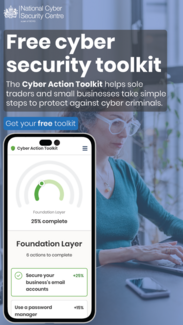
The UK continues to experience an increasingly hostile cyber threat landscape, with healthcare organisations frequently targeted. Strengthening cyber resilience remains essential to protect critical services, maintain public trust, and ensure continuity of care. The National Cyber Security Centre (NCSC) provides several practical tools to help organisations take immediate steps to improve their cyber security.
The Cyber Action Toolkit offers straightforward, prioritised guidance to help organisations – including those with limited resources – build strong foundational cyber hygiene. It outlines clear, step‑by‑step actions to reduce the risk of common threats such as phishing, email compromise and ransomware, and supports progress towards meeting the Cyber Essentials technical controls.
Cyber Essentials sets the UK Government‑backed minimum standard for defending against the most common cyber attacks. Certification demonstrates that essential controls are in place to protect sensitive information and maintain operational resilience. It also helps strengthen trust across supply chains and signals a commitment to safeguarding data and services.
The Early Warning Service provides organisations with alerts about potential cyber attacks by highlighting malicious activity detected across trusted intelligence sources. This early visibility enables organisations to investigate and mitigate issues before they escalate, supporting a more effective and timely response.
Together, these NCSC tools offer accessible, high‑impact support to strengthen cyber resilience across the healthcare sector.
|
|