Asymptomatic Heart Failure and Diabetes:
Pharmacists Call to Action
Our June newsletter focused on the American Diabetes Association consensus statement on heart failure published in Diabetes Care, June 2022. Key takeaways from that statement include:
- People with pre-diabetes, type 1, and type 2 diabetes have a two to four-fold increase in the risk of heart failure (HF).
- Heart failure Stages A and B are asymptomatic and if left untreated can progress to overt symptomatic HF, Stages C or D.
- At least yearly testing with natriuretic peptides or high sensitivity cardiac troponins is recommended for people with diabetes to assess changes in status over time.
- In people with diabetes, treatment using heart failure specific guideline directed therapy is recommended for hypertension, lipid disorders, and diabetes control and includes lifestyle interventions.
Focus on people with diabetes and HF Stages A or B

Reducing the incidence of new onset or worsening HF first involves addressing risk factors including hypertension, dyslipidemia, obesity, alcohol intake, and smoking, as well as maintaining adequate glucose control.
Intensive lifestyle intervention is recommended concomitantly with other treatments, and Social Determinants of Health (SDOH) should be considered in the decision-making process. People with type 1 and type 2 diabetes are equally susceptible to HF but will have different treatment strategies. This article speaks mainly to people with type 2 diabetes. Guidelines for treatment of heart failure stages C and D are available in the references listed below under guidelines and updates.
|
Stage A: This stage is asymptomatic with no detectable damage to the heart or elevated biomarkers. Reducing the impact of risk factors is paramount. Manage hypertension with angiotensin-converting enzyme inhibitors (ACEi) or angiotensin receptor blockers (ARB), lipids with statins if indicated, and glucose with sodium-glucose cotransporter-2 inhibitors (SGLT2i), glucagon-like-peptide-1 receptor agonists (GLP-1 RA), or metformin as first choices.
Stage B: Known as “pre-heart failure” is asymptomatic and defined by the presence of one of the following: structural heart damage, abnormal cardiac function, or elevated biomarkers such as BNP, NT-proBNP, or high sensitivity cardiac troponins. Use of an ACEi, ARB, or thiazide diuretic is preferred over a calcium channel blocker for treatment of hypertension. Initial glucose management choices are an SGLT-2i, with or without a GLP-1 RA, and metformin.
Other considerations: In HF stages B, C, and D, dipeptidyl-peptidase-4 enzyme inhibitors (DDP-4i) are not recommended. Thiazolidinediones (TZDs) and sulfonylureas should also be avoided. People with stages A or B and chronic kidney disease (CKD), may benefit from the non-steroidal mineralocorticoid receptor agonist (MRA) finerenone as it slows progression of both CKD and HF. In people with Stage B and reduced left ventricular ejection fraction (LVEF), beta blockers can slow progression of heart disease.
The 3-Minute extra Mile:
Take 3 minutes to:
- Encourage patients with diabetes who have no symptoms of heart failure to ask their provider about yearly HF testing. Diabetes increases the trajectory of heart failure so regular testing is imperative.
- Review charts and recommend guideline directed therapy for early stages of HF.
- Educate patients about the progression of heart disease and how treatment can prolong life and reduce hospitalization.
- Look at the patient’s chart to see if they are taking medications that aggravate heart failure such as those mentioned in this article.
- Educate on controlling modifiable lifestyle risk factors using Life’s Essential 8
- Reference the American Diabetes Association (ADA) living guidelines at ADA Guidelines and Updates to find the latest addendum on heart failure.
James Bennett BsPharm, CDCES, BCGP
Bozeman MT
The Role of Valved Holding Chambers in Pressurized Metered-Dose-Inhalers
Did you know pressurized metered-dose inhalers (pMDIs) can spray breathing medication as fast as 60 miles per hour?
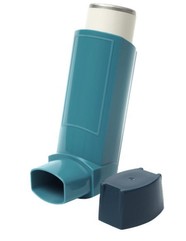
Imagine you are inhaling a medication moving that fast, and it must make an abrupt, near-90-degree turn to arrive at its destination. If you were driving a vehicle, this would be an unsafe and ineffective way of getting to where you need to be.
The best combination
 |
|
Think of this metaphor when caring for patients with asthma. Valved holding chambers (VHCs) assist in safely and effectively delivering pMDI medications.
Patients and healthcare professionals may misconceive valved holding chambers as devices only intended for children or adults who have difficulty coordinating inhalations with a pMDI actuation. While these populations may particularly benefit from these devices, anyone using a pMDI may benefit from using them in addition to other inhalation technique strategies.
|
Valved holding chamber
When discussing medical devices, VHCs are commonly called “spacers.” However, it is essential to note that “spacer” is a generic term for any tube placed on the mouthpiece of a pMDI to extend its distance from the mouth.
A VHC is a spacer with a one-way valve to regulate inspiratory flow and prevent medication loss through expiratory flow. The holding chamber may have an anti-static treatment to avoid medication loss by preventing the medication from adhering to the walls as the drug passes through more slowly.
Many VHCs also have a whistle or audible mechanism to provide feedback for correct inspiratory flow or breathing speed. The EPR 2020 Update favors VHCs over other spacers due to medication loss by clinging to different spacers or poorly timed exhalation into non-one-way valved spacers.
Though spacers and VHCs may be synonymous in conversation, it is crucial to understand them as separate terms. This confusion may lead to the belief that VHCs are not as important and influential as they are.
Current guidance
Guidelines vary in stressing the importance of using VHCs for inhaled therapy. However, they do agree the devices aid in preventing dysphonia and oral candidiasis associated with inhaled corticosteroids (ICS) by reducing the deposition of ICS in the oropharynx.
The 2022 GINA Main Report states that VHCs improve drug delivery.5 Using VHCs with pMDIs is undoubtedly beneficial. Hopefully, all guidelines will parallel those of the European Respiratory Society, which states, “Every patient treated with a pMDI should own and regularly use a spacer/VHC, and know how to use it properly, both for routine preventer therapy and in an emergency, and how to keep it clean and keep an eye out for faults”.
Correct Use of the MDI with VHC:
- Inspect the mouthpiece to ensure there are no foreign objects you might inhale.
- Remove the cap, shake, and insert the MDI into the non-mouthpiece opening.
- Activate the inhaler ONE time (do not spray two puffs at once) immediately after the start of a slow deep breath and continue to inhale for 3-5 seconds. If you hear the whistle, reduce the rate of inspiratory flow until the whistle disappears; this is the correct inspiratory flow.
- Hold the breath for 10 seconds or as long as comfortably possible.
- Repeat as prescribed.
Care and cleaning: Follow the manufacturer’s guides as cleaning instructions, frequency, and proper cleaning detergents and solutions vary depending on the materials used in the VHC and whether it has an anti-static coating.
Robert Hocker, Pharm D Candidate. Reviewed by Rachael Zins, PharmD, AE-C
|