 I want to wish everyone a very happy Independence Day this weekend as we celebrate the 250th anniversary of the signing of the Declaration of Independence. Its opening words – "We hold these truths to be self-evident, that all men are created equal, that they are endowed by their Creator with certain unalienable Rights, that among these are Life, Liberty and the pursuit of Happiness" – are the source for our nation's foundational commitments to freedom and equality and provide the basis for the most enduring experiment in self-government in history. It goes without saying that our nation has often failed – sometimes tragically – to live up to these ideals, but the ideals themselves provide the basis for self-correction and reform as we seek to form a more perfect union. We celebrate America not because it is perfect, but because it is innovative, it belongs to each and every one of us, and we all have a stake in making the reality of this nation match the idealistic rhetoric of its founding.
For those more cynical toward lofty expressions of patriotism, I'm reminded of the winner of the 2008 Freakonomics contest for a new six-word motto for the United States: "Our Worst Critics Prefer to Stay." There are plenty of things about America worth critiquing, and the wonderful thing about America is that we have the freedom to do so!
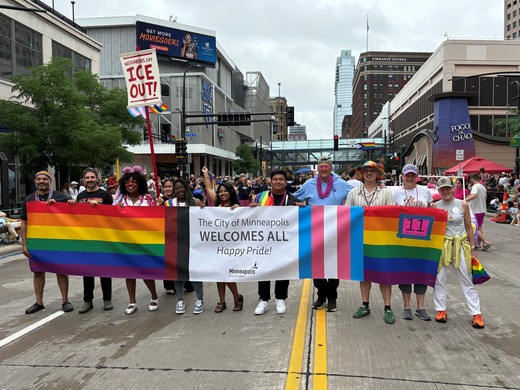 Even with it being a holiday week (and a “ward week” in council-speak), my office was hard at work for the residents of Ward 7. I started the week by celebrating Pride in Loring Park. It was inspiring to see the community come together by the thousands, and thankfully it did not rain on our parade as I marched with my council colleagues, the mayor, and other city staff down Hennepin. I also spent time visiting various booths and vendors in the park including Waymo, Friends of Loring Park, Dunwoody Institute, Meet Minneapolis, Power to the People stage and various retail tents.
 Another high point was taking a driving tour of projects around Ward 7 with Public Works Director Tim Sexton. Tim is a wealth of knowledge when it comes to the roads, bridges, bike lanes, storm drains and sewers that make up the core infrastructure of our city. Tim likes to brag that our streets are in much better shape than St. Paul's, but we are by no means resting on our laurels.
Car suspensions in mind, we drove the bumpier sections of parkways in Kenwood, Lowry Hill, East Isles, West Maka Ska, and CIDNA. We learned that many of the parkways pose a special maintenance challenge because they sit atop high water tables and dredged soils. We also mentioned how happy the residents of Loring Park and East Isles are that their streets are going to be resurfaced soon, but noted this will also cause justifiable "road envy" in Lowry Hill, and we drove Director Sexton around Irving, Humboldt, and Douglas to prove the point. We also visited the Cedar Lake Road bridge in Bryn Mawr that will be replaced in 2027, talked about possibility of adding sidewalks in West Maka Ska near 31st and Ewing (near the recent B-Line enhancements), and stopped by The Mall in Uptown to discuss the 2027 sewer project, along with residents' concerns about the Park Board’s proposed street closures.
Closer to downtown, we visited the Grant Street bike improvements and the Dunwoody I-94 underpass. We discussed creative options for enhancing its aesthetic appeal while also making it less attractive for encampments. One idea I shared came from a discussion with Bryn Mawr resident John Pierce, suggesting creative underlighting that would highlight the area as an entrance to Hennepin and the theater district. I also shared with Director Sexton that one of my top priorities for Ward 7 is repair and upgrades along the Loring Greenway, and we are actively involved in making sure that these issues, including the fountain and lighting, get addressed as soon as possible. I am meeting community onsite about this this afternoon.
 Finally, this week continued our focus on public safety, which felt especially pressing given that Minneapolis saw 8 shootings this past weekend, with one of the victims being a 15-year-old girl, shot near the intersection of Hennepin and Laurel.
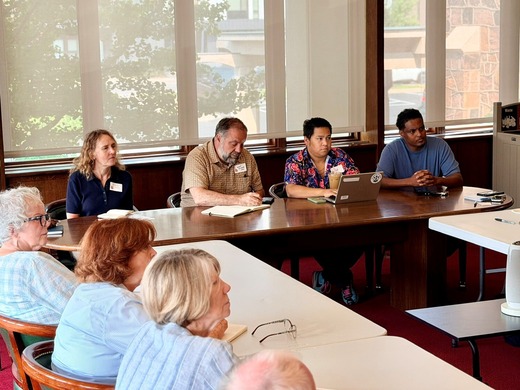
Public safety was the focus of our meeting at Plymouth Congregational Church with the reimagining public safety groups from both Plymouth Church and the League of Women Voters, to discuss their concerns related to public safety around Stevens Square and the relationship between the council, mayor, and MPD. Joining me was Council Vice President Osman – whose ward also includes Stevens Square– and a representative from the Attorney General's office. The feedback we received was a sobering reminder that people do watch council meetings, and they are not impressed with how this council treats the city’s professional staff, with attendees going so far as to say they think it is undermining the safety of our residents. They’re not alone in that assessment, and I will do my best to model how I want to see staff treated and help hold my colleagues to that same standard. Accountability and professionalism are not contradictory, but complementary.
I also heard a desire for more dedicated MPD patrols in the area and, ultimately, the return of beat cops, so those engaged in drug dealing and other illegal activity get the message that they are not welcome in the neighborhood. Public safety is not a privilege for those who live in wealthier parts of the city; it is a basic right for each and every resident, and I refuse to make excuses or accept the status quo. I will continue to work with the community, MPD, and my colleagues to ensure that we have the resources we need to keep our streets safe throughout the city.

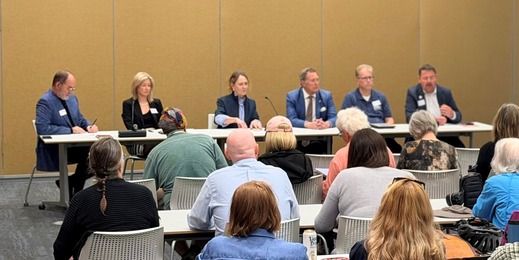 Special thanks to both our panelists and the roughly 70 people who made time to attend last week’s Community Conversations event on data centers. Councilmember Rainville and I moderated a panel of four experts, each of whom approached the subject from a different, informed perspective.
Don Kohlenberger, of Hightower Initiatives, spoke about the potential for data centers to reinvigorate the downtown Minneapolis economy and start reversing the sharp decline in commercial property values. Kathryn Hoffman, CEO of the Minnesota Center for Environmental Advocacy, spoke about environmental concerns related to data centers, and provided some helpful compare-and-contrast between so-called “hyperscale” data centers and smaller, urban facilities. John Marshall, from Xcel Energy, spoke about the strength and redundancy of the downtown electrical grid, and fielded questions about the impact of data centers on residential rates and supply. Lastly, Dan McConnell, president of the Minnesota State Building Trades Council, spoke about the demand that data center construction and maintenance creates for skilled union labor.
The last twenty minutes were reserved for audience questions, and while our panelists were able to field quite a few, there were many we couldn’t get to. Fortunately, we asked that audience questions be written down on cards, and we kept the cards and will be using them to create a FAQ sheet that should hopefully answer many of the questions that didn’t make it directly to the panelists. For those of you who couldn’t attend in person, we arranged for the event to be recorded, and you can view that recording here, or review this short written summary.
Expect to see more on data centers in the weeks and months ahead, as I’m leading the council effort to craft responsible data center regulations for the 21st century, along with Councilmember Chowdhury. Our goal is to have those new regulations finalized for passage in November, and that puts us on an aggressive schedule, with multiple opportunities for public comment, so stay tuned.
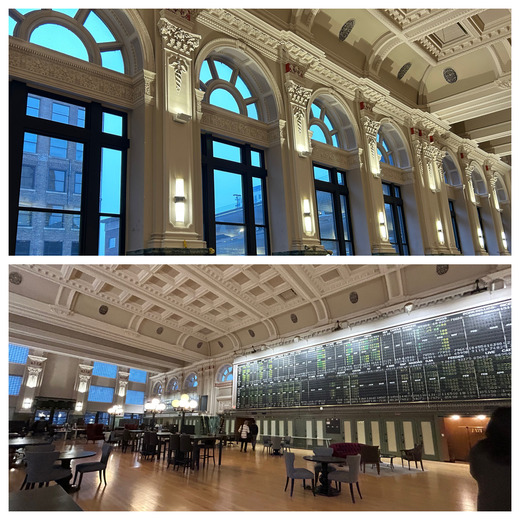 This morning I met with Dan Collison from Sherman Associates to talk about their plans for an office-to-housing conversion of the Grain Exchange building. Currently, this 425,000-square-foot building is only 20-25% leased, but after the conversion it will have approximately 230 affordable housing units, 90% of which will be at 60% Area Median Income. If all goes according to plan, Sherman will close on the property in September and break ground on the project in October. 55,000 square feet of the property will remain commercial space, including the historic trading floor.
Two items related to this are coming before the Business, Housing & Zoning Committee on Tuesday for approval: requests for $1.75 million in tax increment financing (TIF) and $39 million in bonding. These will help ensure the preservation of this historic property and increase our affordable housing supply for working-class residents.
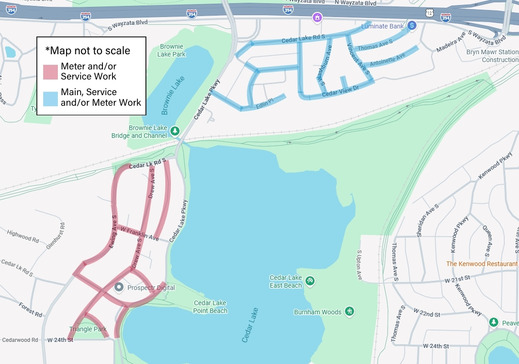 It’s shaping up to be a busy construction season in the Bryn Mawr neighborhood. As previewed in last week’s newsletter, CenterPoint will be doing major gas line and meter replacement work in the area south of I-394, starting July 6th. This is a significant project, particularly for residents of the area, but it is also expected to reach portions of France Ave. and Cedar Lake Parkway, so drivers should stay alert as well. For more information, please visit the project home page, which has contact information, and also please feel free to reach out to the Ward 7 office at any time.
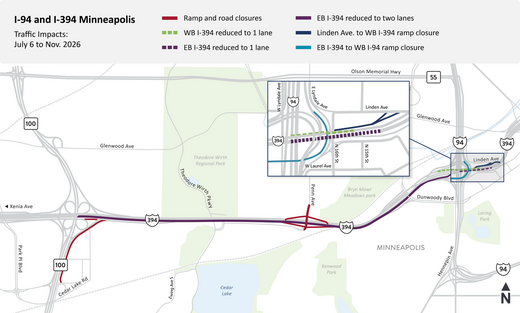 Meanwhile, two days later, on July 8, MNDOT marks a major milestone in its I-394 construction project, with work shifting from the westbound lanes of travel to the east. The Penn Ave. bridge will remain closed, but this is a reminder that work is happening steadily. For detailed information and updates, be sure to visit the project webpage. Do note from that map above that travel will be reduced to single lanes at various points around the 394/I-94 interchange downtown. This will end, but not today. Full completion is expected in November.
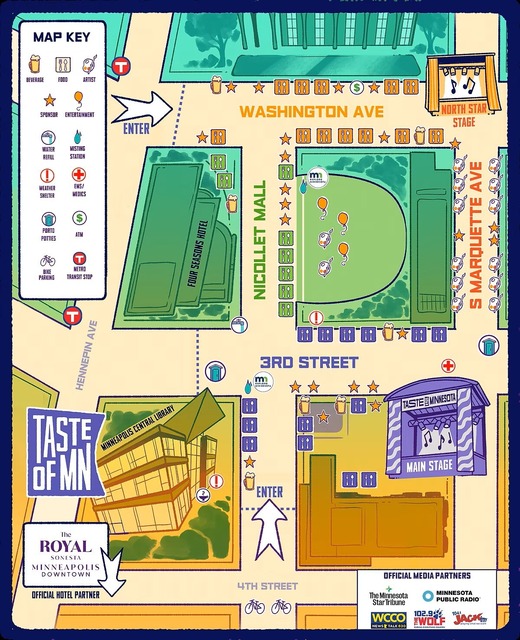 In your weekend holiday plans, make downtown a part of your fun! Food, entertainment and fireworks are all in the mix! The Taste of Minnesota, starts tomorrow July 3rd (4-10 p.m.), and concludes Saturday the 4th (12-10 p.m.). As you can see from the map, the event will take place on the northern edge of downtown, between 3rd and Washington, Nicollet and Marquette. The main stage, located on Third, will feature performances by Polica, Bad Bad Hats, Nur-D, Dessa, Brother Ali and more, ending at 10:00 p.m. on the 4th, just in time for the Red, White and Boom! fireworks display along the Mississippi riverfront.
If you prefer to walk or bike around Bde Maka Ska, this is your weekend! For the third year in a row, the Minneapolis Park and Recreation Board will be closing Bde Maka Ska parkway to vehicle traffic from 31st to 36th Streets on the east side, and the southern portion from Richfield Road to Xerxes. This gives non-motorized park visitors a chance to sprawl, and limiting vehicle traffic has played a helpful role in reducing some of the problematic behaviors we saw in the area in prior years. Thanks to MPRB and its staff for crafting a thoughtful and fun solution!
Tuesday, July 7: Lowry Hill Neighborhood Association monthly board meeting, 6:30 – 8:00 p.m., at the Kenwood Rec Center. Click here for more information.
Tuesday, July 7: Stevens Square Community Organization board of directors meeting, 6:00 – 8:00 p.m., Plymouth Congregational Church, 1900 Nicollet Ave., or by Zoom.
Wednesday, July 8: Bryn Mawr Neighborhood Association monthly meeting, 6:30 – 7:30 p.m. at Bryn Mawr Presbyterian Church, 420 Cedar Lake Road. Click here for more details.
Wednesday, July 8: Cedar-Isles-Dean Neighborhood Association monthly meeting, 6:00 – 7:30 p.m., Jones Harrison Senior Living, 3700 Cedar Lake Avenue. Click here for full details.
Monday, July 13: Citizens for a Loring Park Community board of directors meeting, 6:30 – 8:00 p.m., via Zoom.
Tuesday, July 14: West Maka Ska Neighborhood Council monthly meeting, 6 – 8 p.m., Bakken Museum Great Hall, 3527 Zenith Ave. S.
Tuesday, July 14: East Isles Neighborhood Association monthly meeting, 7:00 – 9:00 p.m., at Grace Trinity Church, 1430 W. 28th Street. Click here for more information.
The City of Minneapolis is working to end traffic deaths and serious injuries on city streets. We call this effort Vision Zero, and we want to hear your feedback on the draft of the next action plan to guide our work making traffic safer.
Traffic crashes more often impact people in neighborhoods with lower incomes, Native American and Black residents, and people walking and bicycling. Every year, about 175 people are seriously hurt or killed in traffic crashes in Minneapolis. That is unacceptable, but it is preventable.
Traffic safety for everyone
We are making gains. Since a spike in traffic deaths in 2019-2021, they have decreased every year.
The Vision Zero Action Plan includes more than 80 actions we’ll work on between 2026 and 2030. Our key actions for the next four years include:
- Making safety improvements on the streets where most serious and fatal crashes happen
- Making street changes that slow down speeding. Speeding increases crashes, injuries and deaths and is a factor in most fatal crashes.
- Evaluating the traffic safety camera pilot. If the program is working well, we plan to seek State authority to continue the program beyond the pilot period.
Read the draft Vision Zero Action Plan on the City website. |