|
Xcel Energy has shared the following information related to energy bill relief for customers.
We recognize the current situation has created additional hardships for customers in the Twin Cities, and we are here to support them. We have taken several actions to:
- Suspend all disconnections for residential and commercial customers in Minneapolis and St. Paul until the end of February.
- Train call center agents to provide the most flexible payment arrangements available for customers who contact us about their hardship.
- Offer digital tools to customers to monitor usage and payments, energy assistance information, and reminders about disconnection protections.
Cold Weather Rule
If electricity or natural gas is the customer's primary heating source, Minnesota’s Cold Weather Rule (CWR) protects residential customers from having their electric or natural gas service disconnected from October 1 through April 30. Customers are eligible for CWR protection even if they rent, as long as the account for the heat source is in their name. Income eligible customers are not required to pay more than 10% of their household income each month toward their Xcel Energy bill.
Additional Assistance Resources
Along with Xcel Energy’s own programs, customers may also qualify for state‑funded energy assistance. We encourage partners to share these options and help clients connect with programs to help pay their energy bills..
Where to Learn More
Nonprofit staff and clients can explore available programs, eligibility details, and application steps on our website:
Energy Assistance | Billing & Payment | Xcel Energy
Join the Seward Neighborhood Group in spreading messages of love with our neighbors who need it most right now. We will have a community craft activity, along with light bites and refreshments. This activity is in partnership with Common Bond and Seward Towers Corporation. All ages are welcome.
Please email lily@sng.org with any questions.
We’re looking for volunteers to help at this event! Roles include: Greeter, Craft Assistants, and Food Table Help. Sign up to volunteer here.
Spread the Love: Valentines for Neighbors
Hosted by the Seward Neighborhood Group, Common Bond, and Seward Towers Corporation
February 10th from 6-7:30
Seward Towers West (2515 South 9th St)
Poster for Spread the Love: Valentines for Neighbors event.
Seward Neighborhood Group is bringing back another night of Solidarity, Truth, Action, and Neighborhood Defense. Come learn from elected officials at the city, county, and state levels about local updates, and actions you can take to protect our Minnesota neighbors.
Use this link to submit questions to our panel of elected officials.
We’re looking for 4 volunteers to help at this event! Roles include: Greeter, Emcee, Floaters (to assist participants and answer questions). Sign up to volunteer
Take a S.T.A.N.D (Solidarity, Truth, Action, and Neighborhood Defense)
Hosted by the Seward Neighborhood Group
Wednesday February 11th from 5:30-7:30
Matthews Park Rec Center (2318 29th Ave S)
Poster for the S.T.A.N.D event.
We look to art in times of distress for comfort, rage, joy… anything really that brings us closer to a deeper understanding about injustice, resistance, and solidarity.
In this generative workshop, we will write to help clarify times that often feel beyond comprehension, with exercises to explore and express both our individual and collective anger and joy. We will use our writing as windows into protest and deepening the connections with our neighbors.
No prior writing experience is necessary. Simply bring a pen and paper, or your preferred writing tools. Note: I will try to make this as accessible to as many ages as I can, but will be best suited for ages 13+.
Bio: Hannah Gregory is a trans, queer writer, Seward resident, and an MFA in Creative Writing candidate at the University of Minnesota. Her work has appeared in or is forthcoming in Electric Literature, The Sun, and elsewhere.
Find us in the School Multipurpose room. Ask Rec Center front desk for help. Email lily@sng.org with additional questions. We’re looking for volunteers to help at this event! Roles include: Greeter, Tech Lead (to assist with virtual participation set up). Sign up to volunteer
Let Off Some Steam: Writing our Collective Joy
Hosted by the Seward Neighborhood Group
Wednesday February 13th from 6-7:30
Matthews Park Rec Center (2318 29th Ave S)
Our student community across both Augsburg and the University of Minnesota campuses have been deeply impacted by the ongoing occupation by federal ICE agents. ICE agents patrol neighborhoods surrounding both campuses, and have heavily targeted our Cedar Riverside community. Additionally, ICE agents have been residing in hotels near and on the U of M campuses. Hotel demonstrations in particular have resulted in massive disruptions that have been complemented with forceful militarized responses by ICE, Border Patrol, University of Minnesota Police, MPD, and the County Sheriffs. Student demonstrators have been arrested. Nearby residents have had to endure the deafening sounds of flash bangs, be assaulted, and harmed via the usage of acoustic weapons such as LRAD’s.
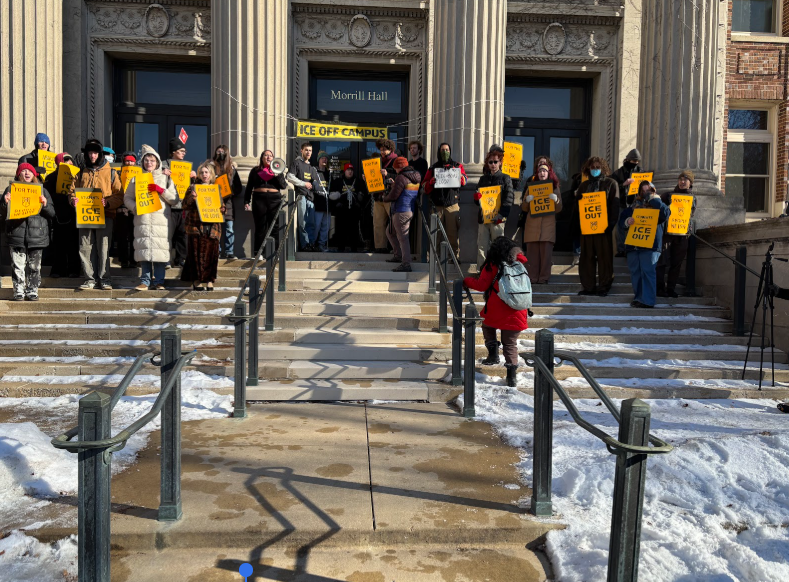
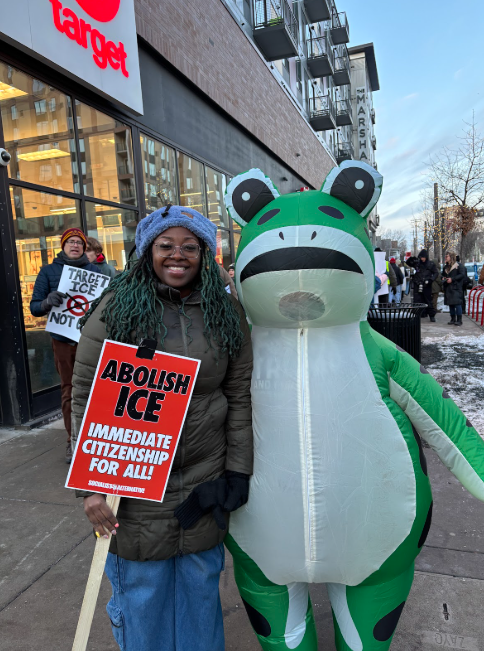
Since Trump was elected, students and faculty have pushed U of M president, Rebbeca Cunningham, and other university administrators to make the U of M a Sanctuary Campus. Their call to action has repeatedly been met with dismissal even while Trump has escalated attacks on our immigrant students, residents, and communities. This week, hundreds of students have organized to continue pressuring U of M leadership to grant the university sanctuary status and to get ICE out of Minnesota. These actions have included pickets outside of the Dinkytown Target, as Target has allowed ICE to stage in their parking lots and to detain individuals in their stores. Today, students protested outside of Morrill Hall. I stand with students in their demands for a Sanctuary Campus.
Council Member Wonsley with students urging the U to become a Sanctuary Campus.
Council Member Wonsley at the protest outside the Dinkytown Target.
Summary: I led the City Council to allocate $1 million to provide one-time rental assistance to residents facing eviction due to the impacts of Operation Metro Surge. This action was in response to Governor Walz declining to enact an eviction moratorium, leaving thousands of renters in the city vulnerable to eviction during the ongoing federal occupation.
Background: Operation Metro Surge has caused many families to lose income and need assistance paying their rent. For thousands of residents, simply leaving the house to go to work means facing harassment, violence, or abduction by ICE. Many residents are sheltering in place in fear, some have had their workplace close or hours reduced, lost access to childcare, or even had breadwinners taken by ICE.
A few weeks ago, I led the City Council to unanimously call on Governor Walz to pass an eviction moratorium and emergency rental assistance funding to protect families. The City of Saint Paul, Roseville, and several other cities have echoed that call. Governor Walz is the only person with the authority to enact an eviction moratorium and ensure that no family is evicted because of ICE, but so far he has declined to utilize that power. But Minneapolis renters cannot wait for Governor Walz to take action, and we can’t risk thousands of families being evicted. In response to community demands that local government take action, I and several of my colleagues brought forward a proposal to allocate $1 million for rental assistance for families impacted by ICE’s federal occupation of our city.
Council Members Osman, Chavez, Stevenson, Chavez and I proposed allocating the rental assistance from the City’s Contingency Fund. The Contingency Fund is set up to cover unanticipated urgent costs, and an occupation by the federal government clearly was an anticipated event that has created an emergency need in our city. Using Contingency Funds would also mean no cuts from any other programs or services that support vulnerable residents. Contingency Funds require 10 votes, but unfortunately this proposal failed 8-5.
Next, we considered a proposal by Council Member Whiting to allocate $1 million for rental assistance by cutting funding from the Affordable Housing Trust Fund (AHTF). The Council had a robust discussion about how cutting investments in affordable housing pits the most vulnerable communities and populations against each other. Council Members spoke clearly about how the impacts of cutting the AHTF would be felt years and decades from now when our neighborhoods are less affordable, less diverse, and less equitable. Council Members also spoke about how Mayor Frey has championed the AHTF as one of the best tools to improve affordability, and urged Council Members to invest in AHTF rather than passing policies like rent control. The AHTF proposal failed 6-7.
Ultimately, Council voted for a substitute proposal I authored with several colleagues to allocate the funding from the City’s unallocated General Fund cash balance. Like the Contingency Fund, the cash balance does not cut any existing services or programs, but unlike the Contingency Fund, this required only 7 votes to be approved. I want to be clear that Contingency was the more appropriate source for this allocation. I am pleased that my co-authors and I were able to bring forward the cash balance proposal as a backup given the fact that thousands of residents’ housing stability depends on this allocation.
Residents are doing a phenomenal job fundraising to support each other, but that isn’t a substitute for governmental action. Minneapolis residents have made international news because of their incredible response in supporting each other during this occupation, but it’s incredibly unfair and illogical to depend on the public to fully bear the cost of this federal occupation alone. Working class people paying each others’ rent is not sustainable. Not all impacted residents are plugged into mutual aid networks or are lucky enough to have a neighbor host a Go Fund Me for them. Many people are relying on their local government to help them during this crisis and I’m proud to have led the Council to set up and support our residents.
That said, the need for rental assistance is likely in the tens of millions and the City cannot address the impacts of this federal occupation alone. I am working with state legislators to advance significant investments in rental assistance as soon as the state legislature session starts in a few weeks. In the interim, this $1 million from the City can begin getting help to residents who need it.
During the discussion of the rental assistance proposals, some Council Members cast doubt on Hennepin County’s ability to disburse rental assistance in an unbiased and legally compliant way, even going so far as to imply that Hennepin County is committing fraud. It was incredibly disturbing to hear Council Members use rhetoric weaponized by right-winged officials and pundits to lay the groundwork for Trump’s enactment of Operation Metro Surge, which is what created the conditions for us to have to mobilize rental assistance funding to help protect residents from ICE.
The claims that Hennepin County cannot disburse rental assistance fairly could not be further from the truth. The County’s RentHelp program has a strong track record and has prevented thousands of evictions each year. I am grateful that Hennepin County was willing to work with the Council on this and utilize their strong internal and external infrastructure to get these funds to residents in our community in an efficient manner.
Key votes: Council voted 8-5 in support of my proposal to allocate $1 million in Contingency Funds for rental assistance, but the motion failed because Contingency Funds require 10 votes. Council Members Rainville, Vetaw, Warren, Shaffer, and Palmisano voted in opposition. Next, Council voted 6-7 against Council Member Whiting’s proposal to allocate rental assistance funds from the Affordable Housing Trust Fund. Council Members Stevenson, Chughtai, Chowdhury, Vice President Osman, President Payne and I voted in opposition. Finally, Council voted to approve my proposal to allocate rental assistance funds from the unallocated General Fund cash balance. Council Members Warren, Shaffer, Whiting, and Palmisano voted in opposition.
Summary: I authored an ordinance called Pause Eviction, Save Lives designed to give renters an extension period on eviction. Council did not approve an expedited process to vote on the ordinance, but it will be voted on and potentially passed in March, and be in effect until the end of July.
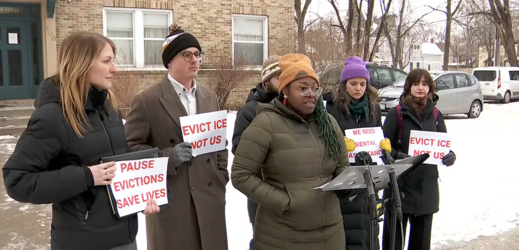
Background:I worked with my colleagues to create an ordinance called Pause Evictions, Save Lives, which is a temporary policy change that would extend the timeline for evictions to protect renters from the impacts of the ICE occupation.
Currently, if a landlord plans to file an eviction due to missed rent, they must give the renter 30-days notice prior to filing the eviction. Pause Evictions, Save Lives would temporarily increase the required notice from 30 days to 60 days. This gives families an extra month to acquire the funds needed to cover any missed rent and avoid the eviction being filed. The 60-day requirement would be in effect until July 31, unless Council takes action to extend it or end it earlier.
Rental assistance funding takes time to get to the renters who need it. Additionally, new financial resources could be available to families once the state legislative session begins on February 17th. Pause Evictions, Save Lives gives families more time to apply for and receive rental assistance funding, preventing evictions and protecting families.
My co-authors and I asked for council support to expedite consideration of this ordinance. Typically, an ordinance takes at least eight weeks to be approved, but evictions are facing our community now. The expedited timeline would allow Council to pass this crucial renter protection before March 1, the next date many residents in our city are expected to pay rent. This would literally make the difference for thousands of families entering into the eviction process, versus thousands of families having a protection in place when next months’ rent is due. I hoped that the Council as a whole would have wanted to take the opportunity to prevent potential evictions for thousands of renters in our city. t Unfortunately, some Council Members did not see value in expediting consideration of the ordinance and the vote failed. This either demonstrates a significant disconnect from the reality on the ground or a disinterest in meeting the moment and helping residents as they face the impacts of a federal occupation.
If there was ever a moment to expedite a process, this was it. I am incredibly frustrated that the decisions of some Council Members delayed a protection for thousands of families at risk of losing their homes. That said, this has not stopped Pause Evictions, Save Lives completely. The ordinance will continue on and could be passed in March. While this does cause a delay in the timeline, it would still deliver temporary relief for families struggling to maintain rent payments due to the federal occupation.
Key votes: Council voted 8-5 in favor of the expedited process, but the expedited process needed unanimous vote. Council Members Rainville, Vetaw, Warren, Shaffer, and Palmisano voted against the expedited process. The ordinance will continue on the standard process, tentatively with a vote in March. This will require a simple majority to pass.
Council Member Wonsley with Council Member Stevenson and community leaders supporting Pause Evictions, Save Lives.
Summary: Council Members Chavez and I brought forward a proposal to add $500,000 to the City’s current contracts for free immigration legal services to aid families being targeted by ICE.
Background: The City of Minneapolis partners with several nonprofit agencies that provide free legal services to Minneapolis residents navigating the immigration legal system. I’m proud to have partnered with my colleagues to increase the amount of funding for this important service over the last several years. Operation Metro Surge has significantly increased the need for these services, and Council Member Chavez brought forward a proposal to increase the City’s funding by $500,000. I joined him as a co-author on this proposal.
Immigration legal services are a tool to help keep families together. We see this more clearly than ever under the current ICE siege. One Council Member shared the story of local lawyers in the community who were able to stop the abduction of a 2 year old child by ICE. Local legal aid providers have also been able to use habeas corpus to limit the amount of time that families and neighbors are held in detention camps.
Council Member Chavez proposed funding the Immigration Legal Services funds by reducing the budget for the FIre Department, and replenishing the Fire Department Budget with some of the City’s unallocated Public Safety Aid dollars. This has a net zero impact on the fire department budget.
Over the course of the discussion, every council Member asked to join Council Member Chavez as a co-author and the item passed unanimously. This is one more way the City Council is stepping up to support our communities with real resources to survive the ICE occupation.
Key votes: Council voted unanimously in support of Council Member Chavez’ proposal to add $500,000 to Immigration Legal Services.
Summary: Council voted to delay consideration of two liquor licenses for hotels that have been housing ICE agents, and to hold a public hearing on February 17th for community members to share their perspectives.
Background: Every bar and restaurant in the city of Minneapolis has a liquor license that must be renewed annually by the City Council. The license renewal process is an opportunity for the City to address any concerns with the business, such as if a licensee is not complying with laws and regulations, creating safety or nuisance issues, or not paying license fees. There are limited reasons that Council can legally deny a license or impose conditions on a licensee. That said, having a liquor license is not a right– it is a privilege granted to businesses who show they are able to comply with regulations and public safety standards, which is why they must be renewed annually.
The City Council was asked to approve liquor license renewals for several hotels that have been housing federal agents participating in Operation Metro Surge. Council Members have received thousands of emails from constituents outlining the public safety concerns that have arisen from ICE staying at these hotels. In light of these concerns, Council Members Chowdhury and Chughtai proposed creating a public comment period so that residents can share their perspectives with Council.
I look forward to hearing resident perspectives during the public hearing on February 17th starting at 9:30am at City Hall. You can also submit comments to the public record via email to CouncilComment@minneapolismn.gov.
Key votes: Council voted 8-5 to delay consideration of the hotel liquor licenses and set a public hearing about them. Council Members Rainville, Vetaw, Warren, Shaffer, and Palmisano voted in opposition. The public hearing will take place at the Committee of the Whole on February 17th starting at 9:30am at City Hall. Comments can also be submitted in writing through February 17th via email to CouncilComment@minneapolismn.gov.
Summary: Council approved two contracts for training facilities for the Minneapolis Police Department. The contracts confirm that MPD’s training needs can be met through cost-effective ways instead of their $40 million proposal to build a Minneapolis Cop City.
Background: The Minneapolis Police Department has stated that they lack appropriate training facilities. The Frey administration has proposed that the solution to MPD’s facility and training needs is the development of an almost $40 million “Training and Wellness Center.” Council Members and community members have many concerns about this proposal for a Minneapolis version of Cop City. During the discussion of the 2026 City Budget, Council had a robust conversation about the logic and value in building a multi-million dollar MPD training facility and whether there were opportunities to utilize space and training from other agencies to meet the needs in a more cost-effective way. At the time, MPD and the Frey administration claimed that this massive expenditure was both the only way to fulfill the MPD settlement agreement and was the most cost efficient use of taxpayer dollars to do so.
This week, Council was asked to approve two contracts for MPD to meet their training needs through partnerships with other agencies, a lease agreement with the University of Minnesota for training site and a bid for Minneapolis Police Department Training Annex Project. These proposals reveal that the administration’s claims about the Training and Wellness Center proposal were simply untrue. Leasing space and making renovations to existing properties is a more efficient and effective use of resources and building a massive brand new facility is not the only option.
MPD leadership and the City Attorneys have pointed to the MPD settlement agreement as the pretext for the training center proposal, but the settlement agreement does not require us to build a Cop City. I hope that the Frey administration and MPD leadership is taking this time to seriously examine ways to meet MPD’s training and wellness needs using existing resources and partnerships. I look forward to further discussion on their plans related to public safety facilities during our work in the appropriate committees.
Key votes: Council unanimously approves MPD contracts to meet training needs through contract, reaffirming that the “Wellness and Training Center” is not needed.
Contact Ward 2
Visit: minneapolismn.gov/ward2
Email: ward2@minneapolismn.gov
Phone: 612-673-2202
City Hall
350 S. Fifth St., Room 370
Minneapolis, MN 55415
For reasonable accommodations or alternative format please contact 311. People who are deaf or hard of hearing can use a relay service to call 311 at 612-673-3000. Para ayuda, llame al 311. Rau kev pab, hu 311. Hadii aad caawimaad u baahantahay, wac 311. |