|
The Undergraduate Student Government hosted a Town Hall on Food Insecurity. I spoke alongside State Senator Doron Clark, State Representative Mohamud Noor, and UMN Regent James Farnsworth. Nearly a quarter of University of Minnesota Students struggle to access healthy, affordable food on a regular basis. This is unacceptable. I appreciate students continuing to advocate for their needs and work with stakeholders in the community and at multiple levels of government. I am excited to continue working with students and community on a municipal grocery store and other strategies to ensure every student has access to fresh, affordable groceries.
Council Member Wonsley with state legislators and student leaders at the Undergraduate Student Government Town Hall on Food Insecurity.
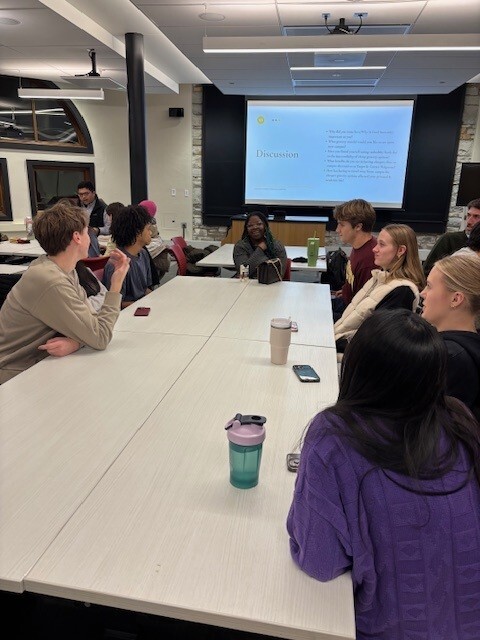
Council Member Wonsley speaking with University of Minnesota students at the Undergraduate Student Government Town Hall on Food Insecurity.
I had a great time at the annual holiday party hosted by the Minneapolis Regional Labor Federation. Thank you to the MRLF for bringing together labor leaders, union members, and elected officials in joy and solidarity!
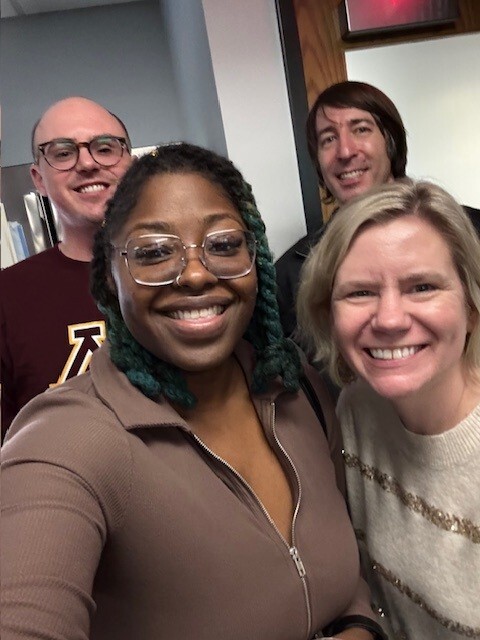
Council Member Wonsley with labor leaders and elected officials at the Minneapolis Regional Labor Federation holiday party.
Council Member Wonsley with labor leaders and elected officials at the Minneapolis Regional Labor Federation holiday party.
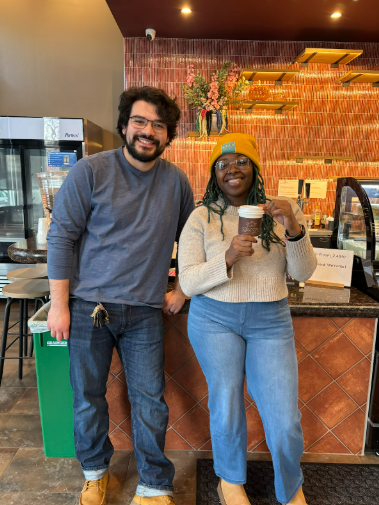
I had the opportunity to visit a new independent coffee shop in Ward 2 called Sip of Silk and discuss key priorities with the shops’ owner, Alejandro. My office is always excited to welcome and work with new businesses in the Ward, and look forward to continued partnership.
Council Member Wonsley at new Ward 2 coffee shop Sip of Silk with one of the store owners.
After several days of markup sessions, Council has adopted the City’s 2026 Budget. Council’s job is to represent residents, ensure that resident needs are resourced, and ensure public dollars are being spent in effective and measurable ways in all of our City services and programs.
My staff and I worked with diverse communities across Ward 2 and the city to identify gaps in the mayor’s proposed budget, and authored amendments to address the priorities of working class Minneapolis residents. I’m proud to share that all the amendments I brought forward were approved by Council and adopted unanimously in the 2026 Budget, totalling nearly $14 million towards resident needs. All budget amendments reprioritize funds that are already allocated within the budget and do not increase property taxes.
-
Restore Mayor’s Cuts to Emergency Housing Vouchers: Approved 7-6 for $1.4 million ongoing. Last year, the City Council funded a partnership with Minneapolis Public Housing Authority and Hennepin County that would provide permanent housing and wraparound social services to 50 individuals and 50 families experiencing chronic homelessness. Mayor Frey refused to implement the partnership and proposed cutting the funding in 2026. Council voted to restore this crucial Housing First program and collaborate with our government partners who are experts in housing vulnerable communities.
-
Reduce Gun Violence: Approved 8-4 for $1.7 million ongoing. Council allocated funds within MPD’s existing budget to create a Non-Fatal Shooting Task Force, a strategy Saint Paul implemented resulting in massive decreases in gun violence and historic lows in homicides.
-
Restoring Mayor’s Cuts to Civilian Investigators: Approved unanimously for $3.6 million ongoing. MPD has a backlog of thousands of unsolved cases, and has case closure rates below peer cities and our neighbors in St Paul. MPD has identified a need for more civilian investigators to help solve crimes. Council added five civilian investigators for the 2025 Budget, but Mayor Frey only authorized MPD to hire three and proposed cutting the other two. Throughout the 2026 Budget discussions, the Frey administration repeatedly referred to reducing funding for investigations next year. Council and the public have made it clear that it’s a priority for MPD to improve case closure rates. An effective public safety system doesn’t just patrol and respond to calls, it must actually solve cases. I led Council to restore funding for the two civilian investigators, with the recommended funding source from cutting the contract with ZenCity for Community Perception Surveying, which does not contribute to public safety. Over 2,000 residents have signed a petition asking Council to remove funding for this contract. Further, Council unanimously voted to earmark MPD’s current spending level for civilian investigations, $3.6 million, to ensure civilian investigations is not defunded by the mayor.
-
Invest in Childcare Workers: Approved 11-1 for $102,000 ongoing. I led Council to establish a full-time staff person on the City’s Employment and Training team to work with Minneapolis Public Schools, Minneapolis College and other partners to create pathways for members of the community who are interested in getting to the early care and education field.
-
Fees on MPD Off-Duty Side Gigs: Approved 11-1 for $329,000 ongoing. MPD officers can work “off-duty,” during which they use taxpayer-funded resources but profit personally. I led Council to pass an ordinance allowing the City to recoup the costs of public resources, which MPD estimates at around $1.4 million last year. MPD has resisted implementing these fees, so I led Council to earmark the MPD budget to ensure the funds required for implementation are reserved for this work.
-
Traffic Calming for All: Approved 7-5 for $5.5 million one-time. Safe streets and sidewalks are a top priority for residents. Council allocated significant increases in Neighborhood Traffic Calming, expanding replacement of ADA ramps, and expanding bike lane safety infrastructure. The funding comes from a proposal to build a Public Safety Training and Wellness Center. The Frey administration is proposing multiple, potentially duplicative public safety buildings, but the various proposals lack many details and lack fiscal efficiency.
-
Winter-Friendly Sidewalk Plowing: Approved 8-4 for $595,000 ongoing. Residents continue to highlight the need for the City to take a more active role in ensuring safe, accessible sidewalks throughout the winter. In 2024, Council budgeted to pilot several different strategies for sidewalk plowing, but Public Works reduced the pilot program. Council voted to restore the original funding to continue testing and evaluating sidewalk snow and ice removal approaches.
-
Public Housing Tenant Organizing: Approved 12-0 for $50,000 ongoing. The Minneapolis Highrise Representative Council (MHRC) the independent citywide public housing highrise tenant organization in Minneapolis. MHRC runs Project Lookout, a tenant-run neighborhood watch program inside the highrises. Council voted to run this uniquely successful community security program.
-
Fresh and Affordable Grocery Access: Approved 8-4 for $200,000 one-time. Food insecurity and food apartheid disproportionately impact marginalized residents in Minneapolis, and the private market has not solved or corrected this problem. Council allocated funding to support development for a grocery store, including a municipal grocery store, in partnership with stakeholders with funded pre-development initiatives.
-
Policy for the People: Approved 12-0 for $25,000 one-time. City Council and the Legislative Department have been working to add three policy specialists to help create a well-balanced government structure with a fully staffed legislative department that is able to support policymaking is crucial for empowering a racial-justice focused legislative branch to fulfill policy mandates.
-
Financial Controls Policies: Approved 11-0. Council is the budgetary authority of the city, but this past year the mayor circumvented the budget in several ways. One was by underspending or not spending resources allocated by Council, withholding the services that those resources funded. The technical term for this is “financial impoundment.” Mayor Frey impounded millions of dollars during 2025, refusing to spend Council-approved funding to provide permanent housing for unsheltered people, hire investigators to close unsolved crimes, and more. This is very unfortunate and uncollaborative, but due to a loophole within City financial policies it was not specifically prohibited. I worked with Vice President Chughtai to author a policy to limit financial impoundment by the mayor. The policy is similar to the regulations that exist at the federal level, which has been a core part of the balance of powers at the federal level for decades. The policy also includes requirements to prevent the mayor from massively overspending the budget. This year, the mayor allowed MPD to spend $19 million over their approved budget and utilize the city’s cash reserves without Council’s awareness or approval, which has massive impacts on the City’s financial health and taxpayers. Again, while this is horrific mismanagement, it was not illegal due to a loophole within City financial policies. Council approved much stronger financial controls to prevent the mayor from either overspending or underspending key services going forward.
-
Settlement Agreement Spending. Approved 11-0. In addition to stronger financial controls generally, I also led Council to require the mayor to do more thorough accounting of the full costs related to implementing the provisions of the settlement agreement between the City of Minneapolis and the Minnesota Department of Human Rights. The agreement will bring our police into compliance with human rights and constitutional law, and taxpayers need to know that the City is treating it as a set of specific obligations that we need to fulfill in the most cost-effective way possible, not as a blank check to MPD. This year, the mayor would make vague references to things being “for the settlement agreement” to become a trump card for endless funding. This policy is a commonsense way to ensure there is accurate, centralized, regular reporting on all the costs and forecasts related to settlement agreement implementation.
In addition to these ordinances, I was also proud to co-author two budget amendments with Council Member Chavez that significantly increased funding and staffing for the city’s Office of Immigration and Refugee Affairs. These services are imperative for supporting our immigrant residents who are currently being targeted by the Trump administration’s ICE agents.
Summary: Council responded to community demands and passed a significantly stronger policy preventing MPD or any City resources from collaborating with ICE, and urged the mayor to do the same.
Background: Minneapolis has a separation ordinance that affirms that federal immigration enforcement is not the City’s role, and prohibits City employees from asking about immigration status or performing the work of federal immigration agents. However, the ordinance was about 20 years old, and both community members and the City’s independent auditor noted the need for significant updates and improvements, particularly in the context of the current federal administration.
Council Members Chavez, Chughtai and Chowdhury led the effort to significantly strengthen the separation ordinance. Council heard from hundreds of residents in both written and spoken public testimony urging us to strengthen the separation ordinance, and we listened. Yesterday, Council unanimously approved what I believe is the strongest policy possible to protect our immigrant communities.
There should be no doubt in residents’ minds that MPD will never, in any way, facilitate or enable federal immigration enforcement. To underscore this, Council also adopted a resolution requesting that the mayor establish serious disciplinary consequences for any violations of the separation ordinance. The mayor is the sole authority over MPD policy. If you believe you see any City staff person including a sworn officer collaborating with federal agents, please document it and contact my office.
I have also heard from many residents in Ward 2 and across the city that they want to see MPD take a more active role regarding the potential for people to take advantage of the current moment to impersonate law enforcement and commit kidnappings. Residents deserve to know that the police are doing everything in their power to differentiate whether a situation is federal agents carrying out immigration enforcement or rogue kidnappings. If it is an act of immigration enforcement, then MPD should have nothing to do with it. If it is not a verified act of immigration enforcement, then MPD should assume it is a kidnapping and intervene to protect the victim. It’s not too much to expect both. If MPD’s mission is truly to protect residents, that includes protecting residents from kidnappings by people impersonating law enforcement, while also respecting the separation ordinance.
Council approved a resolution urging the mayor to publish an executive order establishing high law enforcement priority for kidnapping and impersonating law enforcement. The Mayor is the only person with the authority to give this direction.
Fascists target weakness. If fascist attacks like those we’re experiencing aren’t met with absolute resistance by those in leadership, it draws further attacks. Minneapolis residents have already shown their resistance day after day by standing proudly against the attacks on their neighbors. Council is using our authority to protect residents with the separation ordinance, the two resolutions call on the Mayor to do his part to protect immigrant communities too.
Key votes: Council unanimously approves the separation ordinance. Council voted 9-3 to approve a resolution supporting strong disciplinary consequences for any violations of the ordinance, and a resolution urging the mayor to direct MPD to make kidnapping the highest enforcement priority. Council Members Vetaw, Jenkins and Palmisano were the votes of opposition.
Summary: Council adopted an ordinance establishing standards for humane encampment response.
Background: Due to the housing affordability crisis, unsheltered homelessness has become a significant challenge for Minneapolis residents in recent years. Although Mayor Frey campaigned in 20017 on ending homelessness in five years, the population of unsheltered residents has not decreased.
Last year, Council approved an ordinance requiring the mayor to report on the costs and outcomes of evicting encampments. The data reported under this requirement during 2025 has affirmed that the mayor has used his operational authority to move encampments from one place to another, costing taxpayers millions without reducing homelessness. In light of this, Council has funded more data-backed and cost-effective approaches, like providing permanent housing and social services.
To continue Council’s efforts to improve the City’s response to unsheltered homelessness, this week the Council voted on the Humane Encampment Response Ordinance. The policy standardizes things like when bathrooms and handwashing stations need to be provided, timelines for notice of eviction, and requirements for the City to provide storage. In the past, the City has administered services without any standardization, evicting some encampments immediately and letting others stay for over 100 days. The Humane Encampment Response Ordinance will help encampment residents, housed neighbors near encampments, and service providers have a more predictable understanding of what to expect from the City.
Key votes: Council voted 8-5 to adopt the Humane Encampment Response Ordinance. Council Members Rainville, Vetaw, Cashman, Jenkins, and Palmisano voted in opposition.
With dangerous temperatures expected this weekend, Minneapolis City officials urge everyone to take precautions. Frostbite can occur in just minutes during extreme cold temperatures.
How to stay safe and warm
- Limit time spent outside.
- Dress in layers, wear mittens, scarves, and hats, and keep clothes and shoes dry.
- Check on family, friends, neighbors, and older adults who may live alone or need help.
- Avoid alcohol, caffeine and nicotine. Alcohol causes blood vessels to dilate (vasodilation), making you feel temporarily warmer while actually accelerating heat loss from your core. Nicotine and caffeine constrict blood vessels, particularly in your hands and feet, which increases the risk of frostbite.
- Know the symptoms of frostbite and hypothermia. Call your health care provider if symptoms are severe. Learn about frostbite and hypothermia
- Keep a winter survival kit in your car: blankets, extra warm clothing, snacks, bottled water, a shovel, flashlight, portable charger, and booster cables.
- Hennepin County, the Salvation Army, and other organizations in the Twin Cities metro area offer warming shelters when temperatures drop below zero.
Hennepin County, the Salvation Army, and other organizations in the Twin Cities metro area offer warming shelters when temperatures drop below zero.
Find a warming center in Hennepin County
Find warming centers in the Twin Cities metro area
Protection from heat shutoff
The Cold Weather Rule is now in effect through April 30. The rule prevents your heat from being shut off, even if you can’t pay your bill. Learn about the Cold Weather Rule
Information is also available in Español/Spanish, Hmoob/Hmong and Soomaali/Somali.
Heat your home safely during lower temperatures
There are ways to heat your home during cold temperatures to stay safe and avoid fire hazards.
- Keep anything that can catch fire at least three feet away from portable heaters, fireplaces, and furnaces.
- Do not use space heaters to dry wet items, such as gloves or towels.
- Turn portable heaters off when leaving the room or going to sleep.
- Always plug space heaters directly into an outlet, not an extension cord or outlet strip.
- Never use your oven to heat your home.
- Make sure your home has working smoke and carbon monoxide detectors.
- Clean and inspect your heating system and chimney annually. More than half of heating-related structure fires are caused by fireplaces and chimneys.
Watch our 'Heating Safety' video to learn how to protect yourself and your family during the cold season
Minimum heating requirements for rental properties
Rental properties must have safe and effective heating systems. The minimum heat requirement is 68°F from Oct. 1 to April 30.
If you are a renter and your heat isn’t working:
- Notify the property owner or manager right away.
- If they don’t take steps to fix it immediately, call 311 to report it.
- Outside of 311 hours, call 911 to report low heat or no heat. No matter the time of day, an inspector will follow up with you as soon as possible to address heat loss.
If you are a rental property owner or manager:
- Be sure that renters know how to reach you to report urgent issues.
- If a renter notifies you that their heat isn’t working, take immediate steps to fix it.
- If it can’t be fixed right away, provide space heaters for each affected unit until heat is restored.
Visit our web page if you have questions about your rights
Winter vehicle theft safety tips
During colder months, car thieves can take advantage of residents who leave their vehicles running unattended. Every year, running vehicles are stolen with dogs, and even children, still inside. Please note that even if you lock the doors, it only takes seconds to break a window or bypass a lock.
- Be aware that it is against City ordinance to leave your key in the ignition while you are not in your vehicle. In fact, if your car is reported stolen and your keys were in it, it may also invalidate your insurance coverage.
- It is legal to use a remote start because your key is not in the ignition and the vehicle cannot be moved.
- But do take your key fobs with you, and don’t keep extra fobs or keys in your car.
Please be mindful of Snow Emergency Notifications. Call 612-348-SNOW or visit the City’s website for more information.
Pets get cold too
Minneapolis Animal Care and Control reminds community members to keep pets inside. If it’s too cold for you, it’s too cold for them.
- Never leave pets unattended in a parked car for any amount of time.
- Like people, cats and dogs can get frostbite and hypothermia.
- Leaving pets outside in the cold can result in citations of $500 or more, seizure of the animal, or the death of the animal from the cold.
Anyone who sees an animal outside without shelter or in an unattended car can call Minneapolis Animal Care & Control immediately – in Minneapolis, that’s 311 (612-673-3000). If they believe the situation is life-threatening and the animal is unresponsive, they should call 911.
Contact Ward 2
Visit: minneapolismn.gov/ward2
Email: ward2@minneapolismn.gov
Phone: 612-673-2202
City Hall
350 S. Fifth St., Room 370
Minneapolis, MN 55415
For reasonable accommodations or alternative format please contact 311. People who are deaf or hard of hearing can use a relay service to call 311 at 612-673-3000. TTY users call 612-263-6850. Para ayuda, llame al 311. Rau kev pab, hu 311. Hadii aad caawimaad u baahantahay, wac 311. |