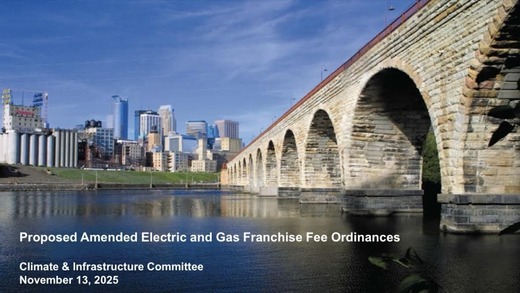
 The City of Minneapolis has agreements with energy companies, such as Xcel and CenterPoint, to provide their services in the city. These agreements are negotiated to identify when and how the energy companies are allowed to use public property to provide services. Once the companies pay the fees to the City, some of those fees are used to achieve our climate and energy goals.
At this week’s Climate and Infrastructure Committee meeting, we held a public hearing on renegotiated franchise fee agreements. More than 50 members of the public, including many from Ward 9, showed up to testify in favor of higher fees. Thank you to everyone that came out to show your support for higher investments in the Climate Legacy Initiative and the City’s Climate Equity Plan.
Over the past year, I have heard from many constituents that you support increased franchise fee funding to ensure all families can have access to clean energy homes. I agree with you, and that is why I will always support policies that will build towards a clean, local, affordable, equitable, and resilient energy future. Council will vote on the increased fees at next week’s meeting.
 The Affordable Housing Trust Fund (AHTF) Program provides gap financing that contributes to capital construction costs for the production or preservation of rental housing projects with ten units or more. The minimum qualifier for applying to the program is 20 percent of the project’s units must be affordable to households at or below 50 percent of the Area Median Income (AMI). Awards are structured as a deferred loan with a note and mortgage and require a minimum of 30 years of affordability. The AHTF consists of four funding sources: local funds, federal Community Development Block Grant funds, federal HOME Investment Partnership Program funds, and new this year, state Local Affordable Housing Aid.
At yesterday’s Business, Housing, and Zoning Committee, we moved forward with recommendations on AHTF awards. Among the nine recommendations that were made was $1.68 million in funding for the Hiawatha Commons Project, which is located at 2740 Minnehaha S. in Ward 9. The AHTF funding will support the rehabilitation of the Hiawatha project, which is home to 80 units: 48 units at 30 percent AMI; 15 units at 60 percent AMI, and; 17 units at 80 percent AMI.
Overall, we approved $14.4 million in awards. The presentation, which includes all of the projects that were awarded funding, can be found here.
I’m thankful for the advocacy from our community and tenants along with the work of City staff. I look forward to getting this across the finish line next week at full council. I will continue to advocate for deeply affordable housing along with the rehabilitation of our housing stock to prevent displacement and improve livability.
 Last summer, I authored—along with Council President Payne and Council Members Cashman and Chowdhury—a staff direction requesting an overview of the current public restroom situation in Minneapolis, including any relevant examples of seasonal standalone restrooms; a national landscape analysis of municipal standalone public restroom programs; and a review of applicable regulatory and zoning constraints and opportunities regarding standalone public restrooms in Minneapolis. We received that presentation at this week’s Public Health and Safety Committee meeting.
What we heard confirmed a lot of what we already knew: the lack of public restrooms in the city is a major problem and a serious public health risk. Based on what we learned in the presentation, there are a number of factors to consider around developing this type of city-wide policy. But we also learned that developing this type of city-wide policy is very doable. Going into next year, I am committed to working with my colleagues and City staff to find our way through any potential roadblocks so that we can get something done.
I am taking this issue seriously. Having public restrooms accessible in our communities is common sense. Such a policy is a key strategy in bringing more people downtown and into our cultural corridors. Perhaps most importantly, though, this is an issue about recognizing and respecting our collective humanity.
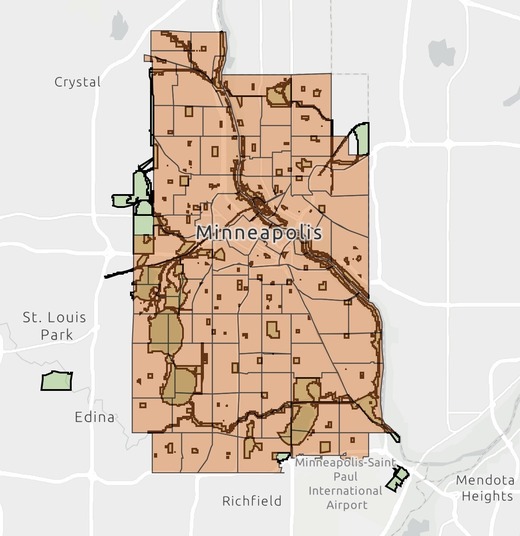 At last week’s full council meeting, we passed an ordinance that I authored to modify the definition of “affordable housing units” in the Parkland dedication fee ordinance to include units financed in whole or part by a tribe or tribal entity.
Under the existing code, there is an exemption to the parkland dedication fee when a project is financed in whole or in part by a local, state, or federal government entity for the purpose of creating housing affordable to and occupied by households earning sixty (60) percent AMI. This amendment to the ordinance simply adds tribal governments to the list of exempted entities, placing them on par with their local, state, and federal counterparts.
We must continue to address systemic racism, such as how our governmental exemption policy does not include tribal governments and those whose land we are on. An identical ordinance must be passed by the Minneapolis Park and Recreation Board, and once that occurs, it will become law in the City of Minneapolis.
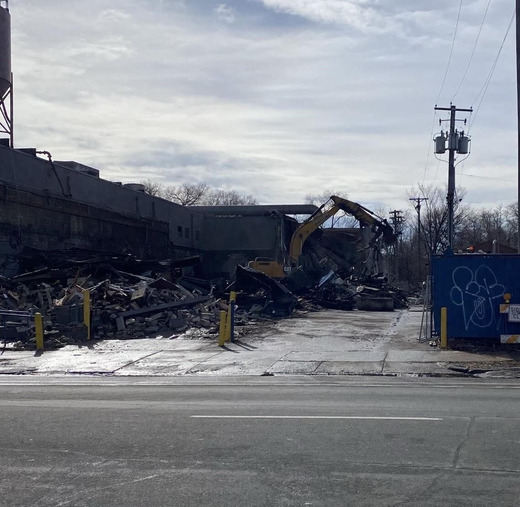 At this week’s BHZ Committee meeting, we set a public hearing for the wrecking provisions ordinance that I mentioned in a previous newsletter. The public hearing will occur at the Dec. 2 BHZ meeting. It will take place at 1:30 in the Public Service Center (250 S. 4th St.) in room 350. I encourage you to join us and speak out in favor of this ordinance, which will benefit the health and safety of residents who live near industrial and commercial sites as well as the city as a whole.
This ordinance came about after the demolition of Smith Foundry, where structures containing harmful materials were demolished with little-to-no notice to residents in the surrounding area.
Our office worked closely with City staff, the City Attorney’s Office, and community to develop a process by which a wrecking permit applicant must identify and disclose any potential materials or conditions that could cause adverse health impacts on residents during the wrecking process. This could include exposure to toxic or hazardous chemicals in building materials, mold, poor air quality, or other factors. The permit applicant would then be required to implement specific mitigation measures to protect public health and safety. Other provisions will also be considered to protect the well-being of our community.
The current ordinance is not strong enough to ensure the health and safety of nearby residents, which City staff said is a mistake, and the procedures used in the Smith Foundry demolition process need to be improved upon.
I want to thank the community, including neighbors and neighborhood associations in East Phillips and Midtown Phillips, who are leading these efforts and holding my office and City staff accountable to ensure we take action that will benefit the health and safety of residents throughout the city. I am also grateful that City staff are taking this seriously to the point that we now have an internal workgroup around this with department staff, community, and my office.
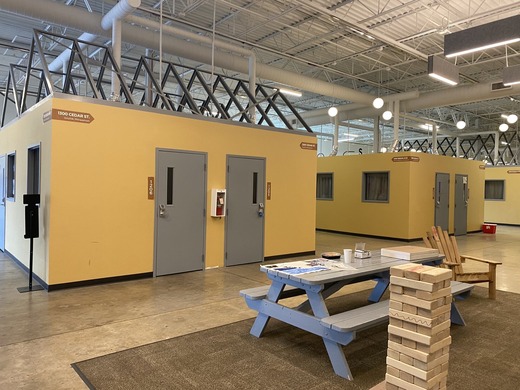 During last year’s budget amendment process, I joined Council Members Ellison and Chowdhury to author an amendment to provide $1.6 million to Avivo Village to cover the costs of stabilization and shelter operations so that they may continue providing services. Avivo Village is unique in the city and is designed to be a dignified and safe alternative to outdoor encampments. It is a low-barrier shelter that operates as a transitional housing and harm reduction model. It serves adults experiencing unsheltered homelessness in Minneapolis and Hennepin County. It offers dignity and access to essential services, like substance use disorder treatment, mental health therapy, medical care, and pathways to overall well-being. Residents there begin to discover next steps for permanent supportive housing, obtain employment, and receive healthy living support.
The action that we took at council last week approved the City to enter into two contracts with Avivo Village through capital investments and operations support. One contract will be up to $330,000 for new HVAC and washer/dryer units. The other contract will be up to $1.27 million with Hennepin County for direct administration to support Avivo.
As a result of these actions, the benefits will extend into broader economic and social realms. Providing stable housing and support services leads to improved health outcomes for residents, which reduces public health costs over time. Moreover, the engagement of unhoused individuals with support services through Avivo Village’s extensive existing services promotes social inclusion and opportunities for rehabilitation, education, and employment, further contributing to the overall health of our community.
Without this funding, one of the City’s most critical shelters addressing one of the City’s most critical issues would have been at risk of closure in the near future. If Avivo were to close, it would increase the number of individuals experiencing unsheltered homeless in the city.
I am so happy to see that the murals at the Hiawatha Lake underpass have been completed, and I was honored to participate in a ceremony marking the occasion. The project was a partnership between the City, Minnesota Department of Transportation, community organizations, and neighbors. The murals bring much life to our beautiful East Lake St. corridor.
This mural is grounded in the Medicine Wheel, a symbol of Indigenous communities worldwide. The Medicine Wheel offers an understanding of wellness and balance through the four directions, four peoples, four sacred colors, four plant medicines, and four aspects of wellbeing: mental, emotional, spiritual, and physical.
The artists engaged hundreds of students and community members about how they care for themselves and others. The responses guided the artwork’s content and spirit. The design reflects on personal wellness and the larger story of community wellness. Join me in giving a big thanks and shoutout to the artists which includes Natchez Beaulieu, Greta McLain, Pablo Kalaka, and Daniela Bianchinin.
These artists are Southsiders with a deep commitment to Minneapolis. They passionately combined community engagement, painting, and mosaics to uplift the Southside through symbols of community resilience, unity and pride.
Artists and artist teams are invited to apply to design and create an artwork to empower Native visibility, welcome cultural heritage, and honor Turtle Island. This is a Native-focused public art project located in the East Phillips neighborhood.
The selected artist or artist team will collaborate with Little Earth residents, the larger Native urban community and City staff to design the artwork.
Native American/American Indian/First Nations people are invited and encouraged to apply.
-
Read the Call for Artists: instructions on how to apply are on the City's website
-
Fill out the Intent to Apply form by December 5 at 4:00 p.m.
-
APPLICATION DEADLINE: December 7, 2025 4:00 p.m. Central Time
For more information contact Lydia Four Horns.
When the City of Minneapolis declares a snow emergency, parking rules take effect so plows can clear the streets. Know the rules so you can help crews do a complete job, and so you can avoid a ticket and tow.
Stay informed
- Call 612-348-SNOW (7669)
-
Go to the City website for more detailed information and to sign up for text, email and phone alerts.
- Download the MPLS Parking smartphone app for alerts.
- Text MPLSALERTS to 77295 for snow emergency alerts.
Remember to shovel sidewalks and around garbage carts
It’s the law and the neighborly thing to do.
Read more about snow emergencies on the City website.
A childhood home of Prince Rogers Nelson has been officially designated by the City Council and mayor as a local landmark in Minneapolis.
Prince lived, worked and performed all over Minneapolis during his lifetime. From the ages of 6 to 12, he lived with his family at 2620 Eighth Ave. N. in what is now the Willard-Hay neighborhood. While living here, Prince learned how to play piano and developed his songwriting, performing and singing abilities. These skills laid the foundation for his successful career.
Any future alterations to the property’s exterior will be reviewed by City Historic Preservation staff. This is one of the youngest properties to be individually designated by the City. It reflects ongoing efforts to recognize African American heritage in Minneapolis.
Learn more about the house’s history on the City of Minneapolis website.
 Winter market season begins this month in four locations around the city.
Winter farmers markets offer delicious ingredients including local produce, meats and baked goods. You can also find gifts and other handmade goods such as soap, jewelry and pottery. Shop at the winter farmers markets to pick up grocery staples and artisan goods and also to provide critical support to local producers and makers.
Find a farmers market.
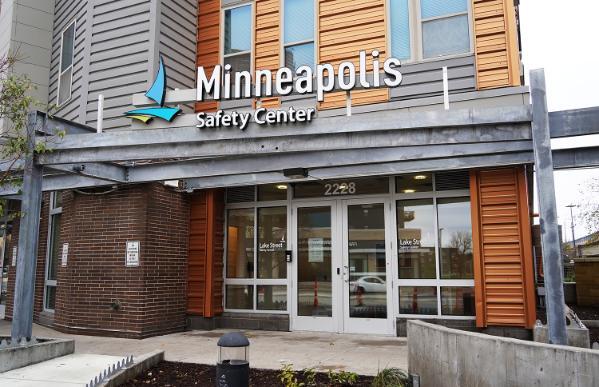 For a year now, the Lake Street Safety Center has provided vital resources, created a welcoming space for community members, and responded to community members’ needs. Hundreds of visitors have received information and direct access to support. The hub is designed for City, County, and community partners to work side by side and deliver services more efficiently.
Resources
The Lake Street Safety Center serves as a temporary home for City resources and community service providers until the South Minneapolis Community Safety Center opens some time in 2026. Partners and services include:
- Crime prevention specialists
- Lake Street safety coordinator
- Safety center agents
Video
Watch a video about this welcoming space with vital resources for the community.
Read more about the Lake Street Safety Center on the City website.
The State of Minnesota is urging eligible households to apply now for energy assistance through Minnesota’s federally funded Energy Assistance Program. The State recommends that households take the following steps to protect their heat and electricity from interruption:
-
Apply for the Energy Assistance Program. This will make sure your household is in the system when funds are available. The program is accepting and processing applications.
- Set up a payment plan with each utility company to get shut-off protection. Minnesota’s Cold Weather Rule offers some protection from utility shutoffs but requires households to set up and follow a payment plan. If you have questions, you can visit the Public Utilities Commission website or call 1-800-657-3782.
Visit the Citizens Utility Board website to find more resources.
Read more on the City website.
Contact the Ward 9 Office
Email: jason.chavez@minneapolismn.gov
Phone: 612-673-2209
City Hall
350 S. Fifth St., Room 370
Minneapolis, MN 55415
For reasonable accommodations or alternative format please contact 311. People who are deaf or hard of hearing can use a relay service to call 311 at 612-673-3000. TTY users call 612-263-6850. Para ayuda, llame al 311. Rau kev pab, hu 311. Hadii aad caawimaad u baahantahay, wac 311. |