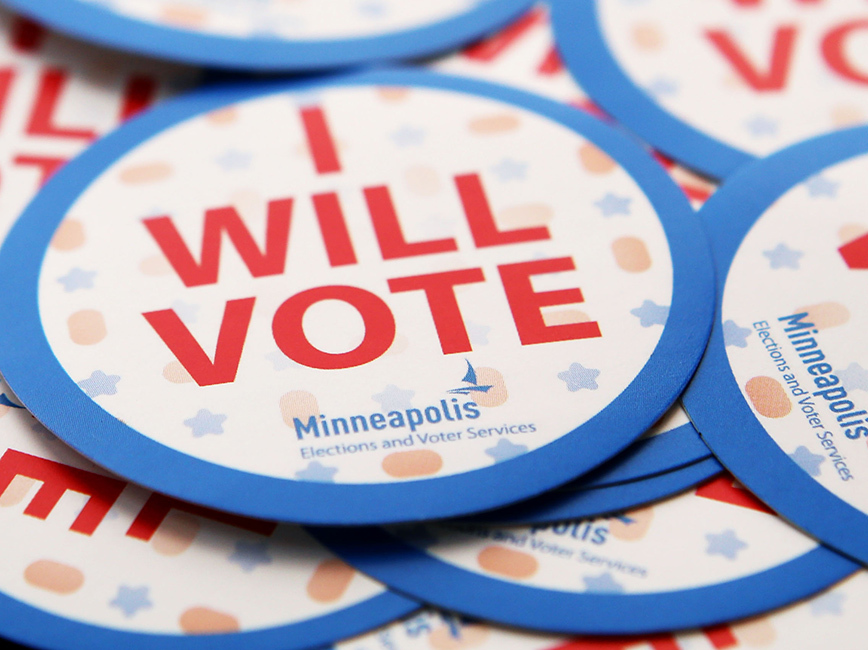
 You can vote early in person or you can vote at your polling place on Election Day, Nov. 4. Thousands of voters in Minneapolis have already cast their ballot in person or by mail.
Minneapolis Elections & Voter Services is located at 980 E. Hennepin, and they provide services including early in-person voting, ballot drop-off (until 5:00 p.m. on Election Day), voter registration, language support, and voting accommodations (ballot marking device, curbside voting). Their hours of operation for the remainder of the voting period are:
- Friday, Oct. 31: 8:00 a.m. - 6:00 p.m.
- Saturday and Sunday, Nov. 1 and 2: 9:00 a.m. - 6:00 p.m.
- Monday, Nov. 3: 7:00 a.m. - 5:00 p.m.
- Tuesday, Nov. 4 (Election Day): Closed for voting; ballot drop-off open until 5:00 p.m.
If you choose to vote in person on Election Day, find your polling place here.
I have spoken about Mariah Samuels in previous newsletters, but after reading this article that came out yesterday, I want to take this opportunity to reiterate my deepest condolences to those close to Mariah and repeat my call for changes within MPD so that nothing like this happens again.
Mariah Samuels was a 34-year old Black woman who was shot and killed in front of her father’s home by her abuser in September 2025, despite repeated attempts to receive help and protection from MPD. From the article, Samuels, a mother of two, was “a radiant spirit and devoted mother, who beamed with pride at seeing her eldest son recently graduate from high school. A lifelong animal lover, Samuels worked as a dog groomer at the Fridley Petco while also running her own grooming business. She owned four cats, one bearded dragon and a gecko.”
Mariah’s case, along with Allison Lussier’s and countless others, raises urgent concerns about MPD’s response to domestic violence, especially when the victims or potential victims are Black, Indigenous, and People of Color. Ever since the Minnesota Department of Human Rights found that the City of Minneapolis and MPD engage in a pattern or practice of race discrimination in violation of the Minnesota Human Rights Act, multiple families and communities who have lost loved ones to domestic violence after requesting protection from MPD that they did not receive.
The deaths of these two and other women were tragic and avoidable. The stories of Mariah and Allison and others fill me with a wide range of emotions. I’m angry that these lives were lost because of decisions made by City of Minneapolis staff. The lack of accountability with the Mayor and his administration only makes this worse.. I’m heartbroken for the families, friends, and communities who lost loved ones. And I’m determined to continue pushing this administration for answers and reforms so that justice can be found for all the victims of domestic violence.
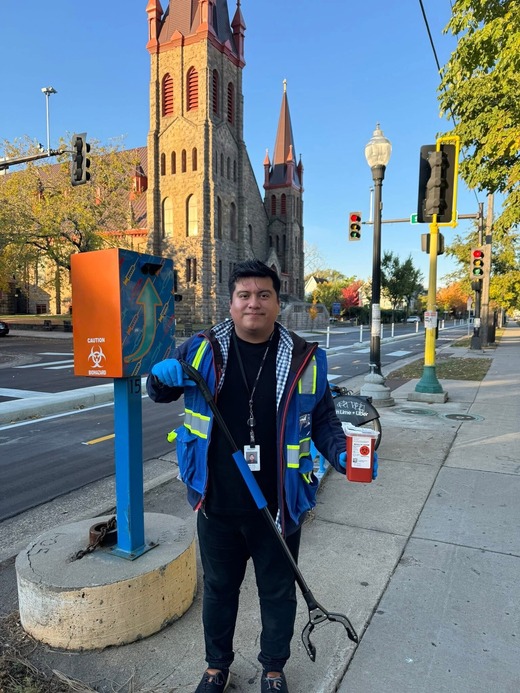 Earlier this week, I was able to do a syringe abatement ride along with the Health Department, and we were able to clean up needle litter in Phillips. I’m thankful to all that staff are doing to keep communities safe.
I am particularly proud that the City of Minneapolis has welcomed a new Public Health Specialist to advance harm reduction and community health initiatives to promote health, safety, and well-being. This new staff member will work closely with communities, schools, healthcare providers, and other partners in managing syringe mitigation, community training and education, coordination with our Mobile Medical Unit provider team, and more.
I was proud to help lead the City Council in establishing this new staff position in last year’s budget and I’m equally excited about the work ahead. If you need help with needle litter abatement, please call or contact 311 and send a photo of it.
At this week’s Business, Housing, and Zoning Committee, I brought forward an ordinance modifying the definition of “affordable housing units” in the Parkland dedication fee ordinance to include units financed in whole or part by a tribe or tribal entity.
Under the existing code, there is an exemption to the parkland dedication fee when a project is financed in whole or in part by a local, state, or federal government entity for the purpose of creating housing affordable to and occupied by households earning sixty (60) percent AMI. This amendment simply adds tribal governments to the list of exempted entities, placing them on par with their local, state, and federal counterparts.
We must continue to address systemic racism, such as how our governmental exemption policy does not include tribal governments and those whose land we are on. This passed unanimously in the Business, Housing, and Zoning Committee yesterday and will then come to a final vote at the full Council meeting next week.
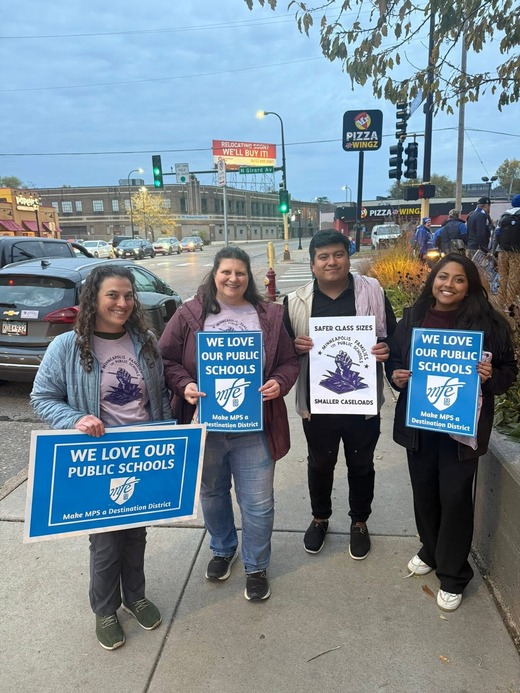 This week, 92% of MFE members participated in a strike vote, and 92% of voting members voted in favor of a strike. I was able to join educators on the picket lines and call upon Minneapolis Public Schools to settle a fair contract. Minneapolis educators deserve our entire support during this time.
Working together with neighborhood associations, the Health Department, and the City Attorney’s Office, we are close to finalizing language for an ordinance to update the wrecking provisions in the City code. Having been caught by surprise by the Smith demolition, we are taking steps to ensure that communities don’t face that kind of event in the future.
Final language of the amendments to the code will be publicly available soon, but in the meantime, I wanted to highlight some of the changes that will be made.
- Requirement for an environmental mitigation plan for building or structures that have been subject to past environmental issues;
- Increased notification requirements to all nearby businesses and residents, including renters, when the wrecking permit holder is subject to an environmental mitigation plan;
- Increased inspections by the Health Department when the wrecking permit holder is subject to an environmental mitigation plan
Timeline:
- Nov. 13 : Set public hearing (Business, Housing, and Zoning Committee)
- Dec. 2: Public hearing and approval (Business, Housing, and Zoning Committee)
- Folks can testify this day!
- Dec. 11 : Vote for final approval (full Council)
I want to highlight that these changes came about due to the advocacy of our neighbors in the community. Their relentless advocacy is going to lead to positive environmental justice changes that will protect the health and safety of all Minneapolis residents for decades to come. We all owe them a debt of gratitude.
The federal government has been shut down since Oct. 1 with no resolution in sight. City staff are monitoring ways the shutdown could affect us in Minneapolis. The City has continued to have enough cash on hand to keep City programs and services that depend on federal funding going temporarily despite a slowdown in payments from the federal government.
But with federal programs at growing risk as the shutdown continues – especially for food assistance – we’re sharing some key information our community should know.
Shutdown impacts to SNAP benefits
Food security is a critical priority and a real concern for many families in our community. Supplemental Nutrition Assistance Program benefits will not be issued beginning in November due to the federal shutdown. More than 60,000 of our Minneapolis community members, 14 percent of our city’s residents, will be affected by the lack of SNAP benefits.
On Oct. 27, Governor Tim Walz announced the State of Minnesota would provide $4 million in emergency funds to support food shelves.
Attorney General Keith Ellison is co-leading a coalition of 22 other attorneys general and three governors in filing suit against the U.S. Department of Agriculture, which is responsible for issuing SNAP benefits, and Secretary Brooke Rolling for unlawfully suspending SNAP. The lawsuit seeks a temporary restraining order, arguing that the USDA has repeatedly stated its authority to continue SNAP benefits during a shutdown.
The Minnesota Department of Children, Youth and Families is monitoring this situation and providing information to counties and tribal nations, which administer SNAP benefits in Minnesota. Find more information on the State’s website.
Food shelves
Minnesota has more than 300 food shelves and meal programs to help support families when they need help right away. Residents can find a local food shelf using the Hunger Solutions map or by calling 1-888-711-1151.
Nutrition and breastfeeding program
If you have children up to age 5, you may qualify for WIC. WIC is Hennepin County's Women, Infants and Children nutrition and breastfeeding program that can help get food on the table. Learn more about WIC on the Hennepin County website.
How to help support our community
You can consider donating your dollars or time to a nearby food shelf to support neighbors. Locally, Minneapolis food shelves buy food that meet the specific needs of the communities they serve. Cash donations have the greatest impact because they allow local food shelves to:
- Access wholesale and discounted prices so they can stretch your dollar
- Make purchases based on inventory and cultural needs
- Purchase fresh foods such as produce, eggs, meat and milk
Impact to family planning services
The City is monitoring potential impacts to the City’s family planning services. There have reportedly been mass layoffs to the U.S. Department of Health and Human Services Office of Population Affairs made during the shutdown.
OPA administers the nation’s Title X family-planning network, teen-pregnancy prevention, and LGBTQ+ health initiatives. If the program does not exist, it will affect City services provided at school-based clinics and jobs supported through OPA grants. The Minneapolis Health Department has identified one-time bridge funding that will allow services to continue through December.
When you’re done with your carved pumpkins and other gourds, you can put them in your green organics recycling cart. They don’t need to be bagged. Remember to remove any candles or lights first. If you haven’t signed up for organics recycling, you can put carved pumpkins and other gourds with your other yard waste.
Added synthetic materials such as paint, permanent markers, glitter or jewels make pumpkins non-compostable, and then they have to go in the black garbage cart. Wrappers from Halloween candy go in the garbage. They are not recyclable or compostable.
Find more information about organics recycling on the City website.
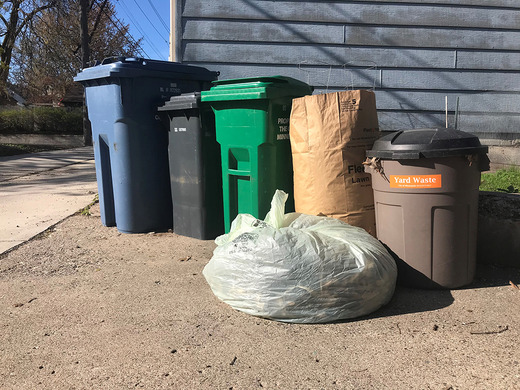 Yard waste collection goes through November. City customers’ collection day the week of Nov. 24-29 will be their last 2025 pickup of leaves, brush and other yard trimmings. Minneapolis Solid Waste & Recycling customers can set properly prepared yard waste at their alley or curb line next to their garbage carts by 6 a.m. on their pickup day. Set yard waste out in a reusable container, in compostable bags (paper or BPI-certified compostable plastic bags – look for the BPI logo) or bundled with string or twine (no wire or tape).
Other requirements
- Max weight of 40 lbs. for bags, reusable containers or bundled brush.
- Brush must be shorter than 3 feet long and each branch less than 3 inches in diameter.
- Brush must be in a container or bundled with string or twine (no wire or tape).
- Bags marked “biodegradable” or “degradable” do not meet the State law and are not accepted.
- Reusable container must be between 26-32 inches high, between 32 and 38 gallons in size, with sturdy handles and no wheels.
- Yard waste is not allowed in City-provided containers.
City customers are encouraged to set out properly prepared yard waste as soon as possible. There will be no additional 2025 yard waste service after the last scheduled pickup. Raking leaves into the street is against the law and bad for our lakes, creeks and river.
For questions about leaf and brush pickup, customers can check the City website or call Solid Waste & Recycling at 612-673-2917 Monday-Friday.
Minneapolis Edible Boulevards (MEB) are an initiative devoted to dismantling food apartheid policies and creating self-sustainability in Green Zone neighborhoods in North, Northeast, and South Minneapolis. Over the last few years, they have partnered with Little Earth Urban Farm, Growing North Minneapolis and their Step-Up youth, and Tamales y Bicicletas to teach participants how to create gardens on their boulevards. By teaching people how to create their own gardens and grow their own food, participants use these skills again and become mentors in the community.
Through this "shared fruit" vision, participants have access to the produce they grow while also sharing it with passersby, whether it be someone who doesn't have access to land for growing their own or someone who is curious about trying something new. MEB are changing our broken food system, neighborhood by neighborhood, block by block, boulevard garden by boulevard garden.
MEB are excited to welcome back Wisiniig's Derek Nicholas for their next free cooking class in November. This class will be a Zoom cook along class, which means you can gather your groceries in advance to cook along from home, or simply tune in to watch and enjoy.
Here are the details:
Who: Derek Nicholas and you!
What: Zoom Cook Along — learn to make a seasonal fall polenta dish, and be inspired by Derek's stories about food, culture, and community.
Where: Zoom--Register here
When: Saturday, November 8, from 11:00 a.m.-12:00 p.m.
Why: To learn how to turn garden-fresh ingredients into a delicious, nutritious, easy and affordable plant-based meal!
Contact the Ward 9 Office
Email: jason.chavez@minneapolismn.gov
Phone: 612-673-2209
City Hall
350 S. Fifth St., Room 370
Minneapolis, MN 55415
For reasonable accommodations or alternative format please contact 311. People who are deaf or hard of hearing can use a relay service to call 311 at 612-673-3000. TTY users call 612-263-6850. Para ayuda, llame al 311. Rau kev pab, hu 311. Hadii aad caawimaad u baahantahay, wac 311. |