|
Summary: The Administration and Enterprise Oversight Committee (AEO) held the second of two public hearings on the proposed police contract. The Council will take a final vote on July 18th. More of my thoughts on the contract can be read in my Star Tribune op-ed.
Background: Council is considering the tentative agreement between the Minneapolis Police Officers Federation and the City. I chair the Administration and Enterprise Oversight Committee, which considers the city’s labor contracts. The City Council has had an unfortunate history of rubber stamping police contracts, and I took steps to ensure that the AEO Committee meetings created ample time for Council Members to discuss the contract with city staff and experts in public, as well as provide accessible opportunities for community members to learn about the contract and share their thoughts.
At the second public hearing, the Committee heard a presentation from Communities United Against Police Brutality as well as testimony from about 35 residents. The committee has also received well over 250 written comments about the contract.
In a 5-0 vote, the contract was forwarded without recommendation to the Full Council for final consideration. The contract will be voted on by the Council on July 18th.
After several weeks of reviewing the contract and listening to Ward 2 residents and other public experts, I’ve come to understand that this contract does not include the permanent, robust reforms needed to substantially improve public safety. While the contract includes a few positive changes, like the suspension of the 70/30 provision and opportunity to expand the role of civilian investigators, these provisions will all expire by 2026. That said, Mayor Frey is essentially asking Council to agree to institute permanent raises for temporary changes in the hopes that the Police Officers Federation will be open to agreeing to more permanent changes in the next 18 months when the police contract will be up for negotiations again.
You can read more about my thoughts on the police contract in the op-ed in today’s Star Tribune.
Key votes: Council will vote on the police contract on July 18th at 9:30am.
Summary: I am authoring an ordinance to increase fines on properties that are condemned or vacant and hazardous for prolonged periods of time.
Background: One of my top priorities is reducing the number of vacant properties in the city. Residents from across the city have repeatedly contacted my office with frustration at the vacant properties in their neighborhoods. Apartments that could be homes for families and storefronts that could be utilized by small businesses are sitting empty year after year. When a property is hazardous or condemned, there are also negative impacts on the economic development, public health, public safety, and property values of the surrounding area.
The city has a program called the Vacant Building Registry (VBR), which deals with properties that are vacant and condemned, boarded up, or hazardous. When a property is in the VBR program, the property owner pays the city a flat fee of about $7,000 per year to cover some of the costs for city staff to maintain the property and support the owner with rehabilitating or demolishing the property. The VBR program has helped provide many property owners with resources and support to convert hazardous vacant properties into active assets in the community. But there are still too many condemned and boarded properties that are hurting our neighborhoods, especially Black, brown and working class neighborhoods.
For the past year, I’ve worked with city staff on authoring an ordinance to limit the amount of time that a property can be in the VBR program. After two years, a property will be removed from the VBR program. If they have made substantial progress towards rehabilitation, they may apply for a one-year extension. After a maximum of three years, all properties will be removed from the VBR program and fined standard administrative citations for all violations. These citations start at $250 and double every month until they reach $2000/month. This means a property owner will be charged up to $24,000 per year rather than $7,000.
I am confident that the ordinance change will help address some of these chronic vacancies and lead to more housing, more commercial space, and fewer of the problematic hazardous properties in our neighborhoods.
This is just the first of several steps we are going to take to reduce vacancy across the city, and I am looking forward to continuing this work. Thanks to city staff, to my co-author Council Member Ellison, and to all those who have organized around vacancy issues.
You can watch a presentation on the ordinance and the public testimony in support of it here starting at 0:41:00.
Key votes: The Business Housing and Zoning Committee voted unanimously in support of the VBR time limitation ordinance. The full Council will vote on the ordinance on July 18th at 9:30am.
Background: Council Member Wonsley is authoring an ordinance that requires landlords disclose their recent and current code violations to a prospective tenant before they sign a lease, and give every new tenant a list of their renters rights and enforcement tools. Submit public comment to CouncilComment@minneapolismn.gov or testify in support of the ordinance on July 23rd at 1:30pm.
The Renters’ Rights Mandatory Disclosure ordinance has two parts. The first part requires that landlords disclose the name of the property owner, contact information for the property owner, their current rental license tier status and any violations that contributed to that status, and any current violations or tags on the property. This gives prospective tenants the opportunity to have basic information about the property to make an informed decision about signing the lease. Many landlords run credit checks on prospective tenants or call their previous landlords. This policy levels the playing field by allowing tenants to also get basic information about their prospective landlord.
The second part of the ordinance is based on the idea that the only rights you have are the ones you’re aware of. Minneapolis and the state of Minnesota have several strong renters’ rights policies, yet too many renters don’t know that they have these rights or how to enforce them. The new ordinance will require every landlord to provide every new tenant with a standardized flier that lists the key rights that they have as renters under local, state, and federal law and who to contact if those rights are not being fulfilled. In Seattle, a similar policy helped contribute to nearly doubling the numbers of calls that renters made to the city for help with problematic landlords. You can read the ordinance language here.
Codifying mandatory disclosure of this information will help:
- Encourage landlords to commit fewer violations and resolve violations more quickly in order to be more attractive to prospective tenants
- Ensure all tenants have the basic information needed to make informed choices
- Give tenants the right to terminate a lease after 30 days’ notice if they were not given the basic information needed to make an informed choice
- Educate renters on their rights
- Give renters contact information for city and state enforcement agencies if their rights are violated
- Show all landlords that the city is serious about educating renters on their rights and enforcing them
There will be a public hearing on July 23rd at 1:30pm where anyone can come speak for two minutes about why this issue matters to you. You can also submit written public comment any time to CouncilComment@minneapolismn.gov. Add your voice to help support this policy!
Key votes: The Business, Housing and Zoning Committee will hold a public hearing and vote on the ordinance on July 23rd at 1:30pm where anyone can testify for two minutes. You can also submit written public comment any time to CouncilComment@minneapolismn.gov. The full Council will vote on the ordinance on August 1st.
Summary: Staff presented that it will cost $15 million to complete the backlog of over 850 traffic calming projects in 2025, or $7 million annually for the next three years to complete the backlogged and future requests.
Background: Traffic calming infrastructure like roundabouts, speed bumps, and bump-outs are a high priority to residents in neighborhoods across the city. They are crucial for improving pedestrian and bike safety, slowing dangerous driving, and creating safer and more livable neighborhoods for all residents.
The city implemented a standardized, equitable process for residents to request traffic calming. Thousands of residents submitted applications, but the city only had funding to complete a few dozen the first year. Last year, I worked with my colleagues on a budget amendment to double the number of projects that would be completed in 2024. This still leaves a backlog of over 850 projects. I authored a legislative directive for staff to present Council with what resources they would need to completely address the backlog.
The presentation indicated that it would cost $15 million to complete the backlog of over 850 traffic calming projects in 2025, or $7 million annually for the next three years to complete the backlogged and future requests, which are estimated to total around 1,500 requests.
I am dedicated to working with my colleagues to address the backlog of traffic calming requests as quickly as possible to improve our neighborhoods and safety.
Key votes: No votes taken
Summary: City staff presented an update on the progress of the Community Commission for Police Oversight (CCPO), this includes challenges faced, updates on the progress of the backlog of police complaints, and answered questions on how to better support the commission in the future.
Background: The Community Commission for Police Oversight has had a tumultuous start since it began to meet in May of 2023. Over the last few decades, the city has had multiple civilian police oversight bodies that have operated with varying degrees of success.
City staff presented an update on the work of the Community Commission for Police Oversight (CCPO). It is no secret that in the past year, the CCPO has unfortunately faced significant challenges and barriers to do their work effectively. Some of these challenges included lack of training by city staff on various topics that were required before serving on the board, unanswered communications from MPD and other city leadership, as well as the lack of support in infrastructure to provide policy recommendations and other duties given to them through the ordinance passed by council in late 2022.
I want to emphasize that the lack of progress on the CCPO is not due to the energy or drive of commissioners, but due to lack of organization on the administrative side to provide effective support and resources to the body. Several colleagues and I have attempted to troubleshoot some of these problems on behalf of our appointees as well as respond to concerns from the public.
During the presentation, staff acknowledged many of the issues were due to lack of support from the city, and pledged to do better. I am committed to holding those commitments accountable and continuing to have dialogue with the Ward 2 representative who has spent significant time and energy on behalf of Ward 2 to ensure progress is being made at a systemic level.
Currently, the board will have several new appointments that will be coming to Full Council next week. When those appointees are seated, the CCPO will continue to work to advance the priorities outlined in a resolution they passed at their April meeting. Additionally, Council President Payne has been working with several commissioners to improve the CCPO ordinance. These changes include accounting for recent changes at the state legislature as well feedback received from commissioners on how the board could be more effective. I look forward to those conversations and will update you when those amendments come through the PHS committee.
With that, I also would like to include a message from our Ward 2 CCPO Commissioner, Mara Schanfield. Commissioner Schanfield sits on the CCPO and is also the Chair of the Police Policy, Research and Recommendations workgroup.
Community feedback plays an important role in police accountability and a safer, more inclusive environment for everyone. The Community Commission on Police Oversight (CCPO) invites you to comment on MPD’s draft Use of Force policies and share your suggestions with the City. Please provide your feedback by July 21st, 2024. If you have any questions or find it easier to provide comments via email, please reach out to our Ward 2 CCPO representative, Mara Schanfield (mara.schanfield@minneapolismn.gov), and she can assist you.
MPD Policies Page
MPD Feedback Form
Key votes: No votes taken. The next meeting of the CCPO will be on August 5th at 6pm. Residents can attend in person at the Council Chambers, and meets are streamed on the city youtube channel.
Background: The Public Health and Safety (PHS) Committee received a report on ways to improve MPD’s efficiency and efficacy by analyzing responses to different types of calls. The conversation will continue at the next PHS Committee meeting.
Last term in early 2022, the Public Health and Safety committee received a report from a city commissioned study that provided recommendations to improve efficiency and effectiveness of the city’s staffing and organization of the police department. It also provided recommendations on how to improve response times and provide relief for sworn officers responding to calls that could otherwise be responded by civilian employees.
When this study was first presented to the council, I was looking forward to seeing many of these recommendations implemented since they offered solutions to what continues to be a staffing crisis. Even though these recommendations were given to the administration in January 2022, it was unclear if any movement had happened. However, Council did learn that MPD has partnered with the original contractor to carry out an updated staffing study that incorporates changes made since 2020.
To better understand how this study was shaping our police staffing, I authored a legislative directive earlier this year asking for information including an update on implementation. On Wednesday, July 10, staff came back to present on the directive at the PHS committee. The presentation included a large amount of important information, including response times of each precinct, and sharing that fourteen civilian criminal investigators have been added to the police department to support the backlog of investigations.
Ward 2 falls into the Second and Third Precinct boundaries. For calls related to calls in the top 5 911 priority calls, the Second Precinct had a response time of 4.4 minutes. The 3rd precinct had a response time of 12.4 minutes.
The committee ran long, and Council Members were unable to ask all our questions due to time constraints. The committee will continue the conversation at the next PHS meeting, July 24th, 2024 at 1:30 to engage staff on questions, concerns, and feedback.
I look forward to continued conversation on this topic. I have a variety of questions and will plan to share in that week’s newsletter.
Summary: PHS committee members received an update implementation of staffing recommendations made to the administration in 2022. Due to timing, the conversation will continue at the next PHS meeting, July 24, 2024.
Key votes: This presentation was a receive and file. No votes were taken.
Summary: Staff gave an updated presentation on the results of the community engagement on the 3rd Precinct/South Minneapolis Community Safety Center at 2633 Minnehaha Ave. There are still a number of outstanding questions about what this building will contain and how it will embody our new comprehensive public safety center.
Background: Mayor Frey has proposed building a new 3rd Precinct and “Community Safety Center” at 2633 Minnehaha Ave in Seward.
The City Council has been clear that this building needs to represent and embody the city’s new model of comprehensive public safety instead of just rebranding a police precinct. On July 10th, city staff presented updates on what non-police services might be located in the building.
During the presentation and discussion, we learned for the first time that the Precinct is projected to take up 60-65% of the building, with the remaining 35-40% for non-police purposes. The building's total square foot is around 78,000. The proposed percentages means that the 3rd Precinct will occupy around 40,000 square feet of space, including indoor parking within the safety center. The former 3rd Precinct at Lake and Minnehaha was 38,000 square feet; that said, the administration’s layout proposal will give the 3rd Precinct more space to be relegated for parking, lockers, showers, and other operational needs.
For the non-police programing, staff presented an expansive list of 15 possible services, ranging from affordable housing, mental health, childcare, a large public kitchen and meeting room, legal services, substance abuse treatment services, and more. There are a number of outstanding questions on how these services could be co-located with police, with each other, within the neighborhood, and within the 30,000 square feet of non-MPD occupied space
I hosted a Seward neighborhood meeting yesterday to hear from the residents nearest to the Precinct/Safety Center about their thoughts and questions. Residents raised serious concerns about whether residents seeking these services will feel comfortable going into a building with police, and concerns around police surveillance of vulnerable residents who are accessing things like substance abuse treatment and legal services. It is also unclear if there are service providers who will be willing to co-locate with MPD for these reasons. Attendees also expressed interest in seeing the creation of a community advisory board that would help oversee and support the safety center itself and the activities within it. My office looks forward to bringing many of the concerns and ideas raised at this meeting back to City Hall, and to city staff.
Staff will soon be issuing Requests for Information (RFI) to relevant service providers who are interested in co-locating with the 3rd Precinct and a Request for Proposals (RFP) for design contractors who can develop a more specific layout plan. City staff shared at Wednesday’s PHS presentation that Council should expect both items to be brought to us for consideration and a vote in August.
Furthermore, Council will be continuing to protect funding for unarmed initiatives in the building, which is crucial for ensuring that it does not revert to being a status quo police precinct. Currently, Mayor Frey is proposing to take all of the funding that Council appropriated towards pilot programs for unarmed public safety at the South Minneapolis Community Safety Center as well as all the funding for other comprehensive safety solutions such as hate crime response, public transit safety, and cultural corridor ambassadors, and redirect those dollars towards the sole needs of Minneapolis police officers.
Key votes: No votes taken. Notes from my Safety Center/3rd Precinct Community meeting can be viewed here.
In 2023, the City of Minneapolis began drafting design guidelines for the Dinkytown Commercial Historic District. Community input and participation at engagement meetings in Fall 2023 helped shape the final design guidelines.
The final draft design guidelines for the Dinkytown Commercial Historic District will be presented to the Heritage Preservation Commission (HPC) in a public hearing on July 23, 2024. Design guidelines affect changes to buildings, structures, and landscapes. They help ensure that the historic district retains historic materials, character, and features.
How to comment on the final draft design guidelines:
At the July 23 meeting, the HPC will vote on whether or not to adopt these guidelines.
View a map of the Dinkytown Commercial Historic District
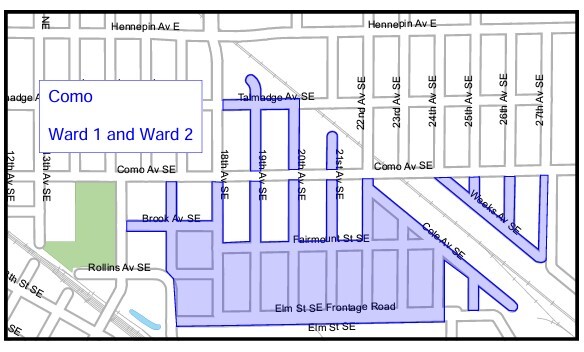
The Climate and Infrastructure Committee has voted to approve the replacement of street lights in Como and Marcy Holmes. This is a high priority for residents and has huge impacts on livability and safety. I look forward to continuing to explore ways to get more pedestrian-level lighting in the UMN area to compliment this new street lighting.
Maps of the approved areas are included below. You can read a list of the street light locations here.
Map of como light replacements
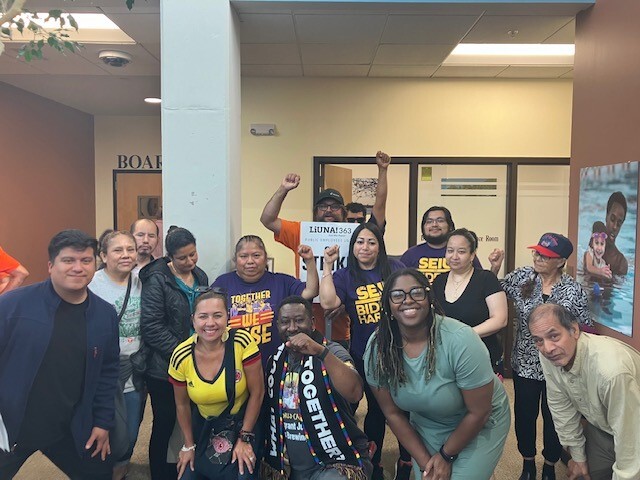
I hosted a meeting for Seward neighbors to discuss the new 3rd Precinct/Community Safety Center at 2633 Minnehaha Avenue. About 20 neighbors attended and we had a great conversation. Key themes included:
- Confusion between the names and functions of the Lake Street Safety Center, South Minneapolis Community Safety Center/3rd Precinct, and the former 3rd Precinct.
- Frustration at lack of clarity on the purpose of each building and how they relate to each other.
- Concerns about the effectiveness of co-locating services like substance abuse treatment, legal services, and mental health services in a building with police, which may deter individuals in need from accessing those services.
- Concerns about MPD’s use of surveillance or inappropriate engagement with vulnerable individuals accessing services; concerns about creating a “trap” for people to encounter police while trying to have basic needs met.
- Support for a Safety Center on E Lake Street that can address some of the social and crime challenges, desire for the center to be permanent and not just for two years.
- Frustration with the continued presence of 3000 Minnehaha with barbed wire and inactive space.
- Range of opinions about suitability of a voter center versus a use that honors the history of police brutality against Black and brown residents of the 3rd precinct.
- Desire for mental health resources for police and other public safety workers.
Council is still learning more specifics about the Mayor’s administration’s proposed plan for 2633 Minnehaha. You can read more in the 3rd Precinct/Community Safety Center updates section of this newsletter.
Thank you to everyone who came out to share your thoughts.
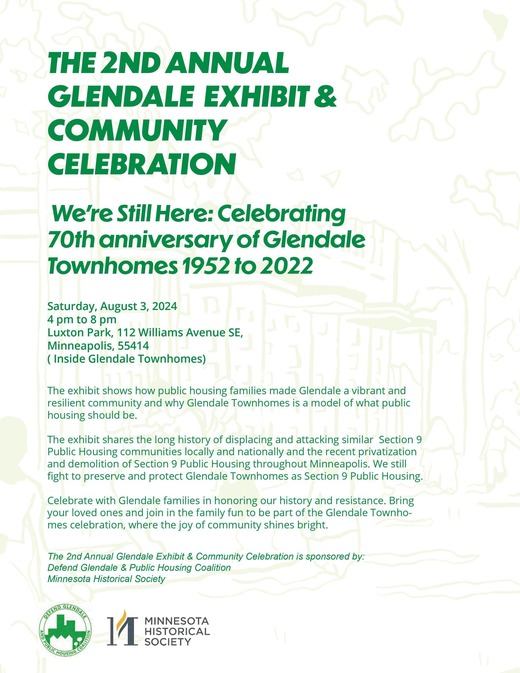
Join Glendale residents and community for a celebration of the history of Glendale, the resistance throughout the decades, the different generations, and the beautiful families that made Glendale home.
The exhibit shows how public housing families made Glendale a vibrant and resilient community and why Glendale Townhomes is a model of what public housing should be.
Glendale event flyer
2nd Annual Glendale Exhibit and Community Celebration
We’re Still Here: Celebrating 70th Anniversary of Glendale Townhomes 1952-2022
Saturday August 3rd 2024
4pm-8pm
Luxton Park, 112 Williams Ave SE (inside Glendale Townhomes)
The exhibit shares the long history of displacing and attacking similar Section 9 Public Housing communities locally and nationally and the recent privatization and demolition of Section 9 Public Housing throughout Minneapolis. We still fight to preserve and protect Glendale Townhomes as Section 9 Public Housing.
We want to commemorate this milestone with our dedicated public housing families who fought to save their homes and allies who have stood with us unwaveringly. We are grateful for your commitment to standing with us to stop the Section 9 public housing demolitions. We are urging to build more Section 9 public housing to address houslessness among our community members, families with young children, people with disabilities, and our elderly on social security.
Celebrate with Glendal families in honoring our history and resistance. Bring your loved ones and join in the family fun to be part of the Glendale Townhomes celebration, where the joy of community shines bright.
The Surface Water and Sewers Division of Public Works is preparing to smoke test a portion of the sanitary sewers in Como. Since 2007 the City has been smoke testing to identify and eliminate connections of “clear” stormwater from the sanitary sewer. During smoke testing non-toxic smoke is used to identify leaks or faulty connections that may allow rainwater into the sanitary sewer system, which can overflow in a significant storm. This work minimizes risks to human and environmental health posed by overflows and reduces costs to the City to treat water at the wastewater treatment plant.
Smoke test starts the week of August 5. Testing on each block only takes a few days and city-wide smoke testing will be complete by early November. A written notice about smoke testing will be mailed to all impacted properties and the city will provide door hangers prior to testing with information on where to call with questions/concerns.
Contact Ward 2
Visit: minneapolismn.gov/ward2
Email: ward2@minneapolismn.gov
Phone: 612-673-2202
We've moved while work is being done in City Hall. Our office is in:
Room 100, Public Service Center
250 South 4th St.
Get directions
For reasonable accommodations or alternative format please contact 311. People who are deaf or hard of hearing can use a relay service to call 311 at 612-673-3000. TTY users call 612-263-6850. Para ayuda, llame al 311. Rau kev pab, hu 311. Hadii aad caawimaad u baahantahay, wac 311. |