|
Dear Friends and Neighbors,
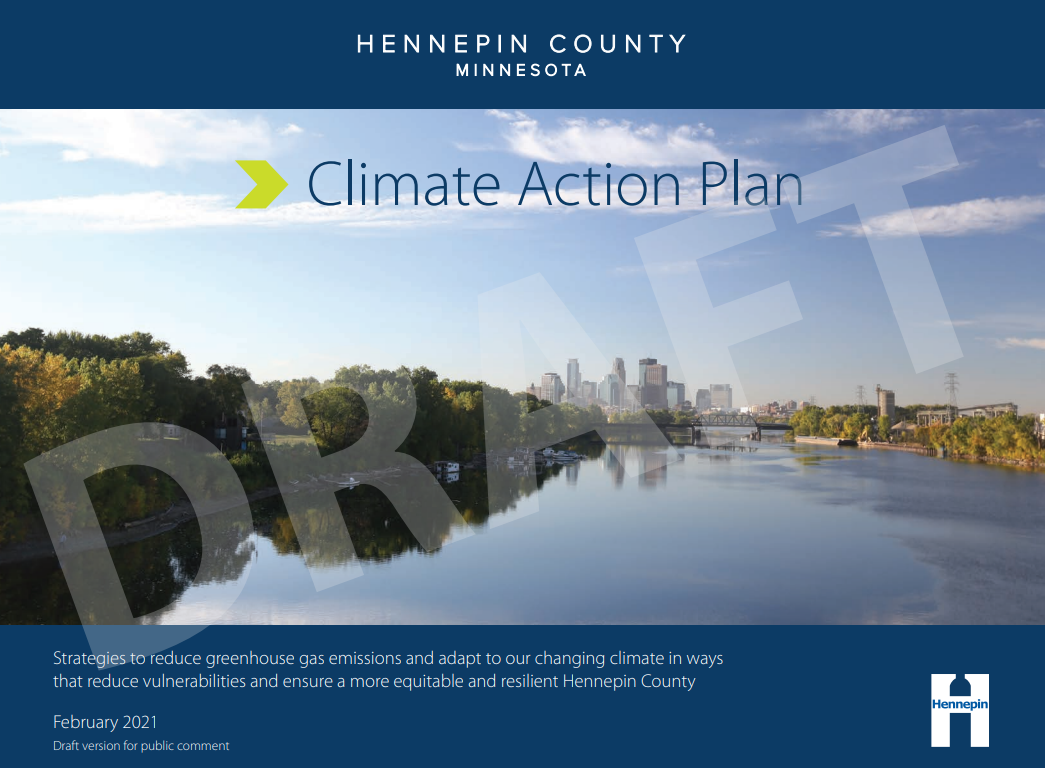
After almost two years of planning, community engagement, drafting, and multiple rounds of internal and public feedback, I'm excited to share that Hennepin County has published a final draft Climate Action Plan. The action plan outlines a framework for the county to cut greenhouse gas emissions and adapt to the changing climate in ways that reduce vulnerabilities and ensure a more equitable, interconnected, and resilient Hennepin County.
The plan will come to the board at our Public Works Committee meeting on Tuesday, April 13. Here are four highlights:
- This plan is driven by the county’s priority of reducing racial disparities. With this plan, the county centers that the ways we address climate change must intersect at every step with our work to advance racial equity.
- The plan updates county goals to reduce greenhouse gas emissions by 45% from 2010 levels by 2030 and achieve net zero emissions by 2050.
- The plan acknowledges that Hennepin County, as the second most densely populated county in the state of Minnesota, has a responsibility to aggressively reduce vehicle miles traveled (VMT) to support the statewide goal of 20% reduction in VMT by 2050.
- The plan includes a commitment to a modal hierarchy framework that prioritizes transit, pedestrians and bicyclists and in urban and suburban settings.
This newsletter shares highlights, outlines the plan's foundational categories, and shares the changes sparked by the robust feedback process. (Big thanks to my many constituents who shared their feedback with me in the rounds of public engagement.) Fair warning: this section of the newsletter is long— but every detail matters as we more aggressively take on climate change to build a healthier, more sustainable, and more equitable region for generations to come.
As always, thank you for your engagement.
My best,
Thank you for sharing feedback on the Hennepin County Climate Action Plan draft
New version of the plan available
A new version of the Climate Action Plan (PDF) is now available. This version of the plan has been submitted to me and my colleagues on the Hennepin County Board of Commissioners for consideration and adoption. Learn more about the plan development process.
Key findings and calls to action from the public comment period
In February 2021, the county’s draft Climate Action Plan was shared with the public, and the second phase of public engagement was held. Feedback was gathered through March 3 from community meetings, an online comment form, and a survey for public entity partners.
Anyone interested in the county’s response to climate change was encouraged to attend an online meeting or submit comments. Feedback was received from residents, representatives of community organizations and advocacy groups, and staff from state agencies, cities, and watershed districts.
This public engagement process generated more than 1,000 ideas and comments that informed updates to the plan and will guide the county’s climate action work going forward.
Staff analyzed the feedback and created a report (PDF) summarizing the key findings and calls to action. The report and an Appendix (PDF) that included all of the verbatim comments was shared with county leadership and climate action teams to respond and suggest changes needed to the plan. Staff then made final revisions to the plan and submitted it to the board for consideration and adoption.
Significant changes made in the plan
The following are key changes that were made to the plan based on the feedback from the public and commissioners:
- Set a more ambitious overall goal to reduce greenhouse gas emissions to net zero by 2050.
- Added new strategies in the Goal: Enhance public safety to more clearly define the need to support a stronger energy infrastructure and disaster plans that support basic lifesaving resources.
- Expanded on the strategies for protecting natural resources, using green infrastructure, planting and maintaining trees, and increasing carbon sequestration.
- Made the following significant updates to the Goal: Reduce greenhouse gas emissions:
- Carbon-free electricity in county operations by 2035
- Regional on-site solar goal of 10% by 2030
- Net zero county fleet by 2050
- Plant 1 million trees by 2030
- Acquire 6,000 additional acres of conservation easements by 2040
- Defined stretch goals in a number of key metrics:
- Added a strategy to advance the Minnesota Department of Transportation (MnDOT) goal of 20% reduction in vehicle miles traveled by 2050 by developing a more ambitious goal for Hennepin County that reflects our role in the state as a more densely populated county and also reflects rural, suburban, and urban contexts within the county.
- Added a strategy to update the county’s Complete Streets policy to develop a modal hierarchy framework that prioritizes transit, pedestrians, and bicyclists.
- Added strategies to advance fuel-switching (building electrification) and getting to carbon-free electricity.
- Added strategies to achieve zero-waste goals faster, including more specifics about organics recycling services, ways to reduce gaps in recycling service at multi-unit housing, and policy advocacy work. Staff also defined the county’s position on the Hennepin Energy Recovery Center (HERC) and its role in mitigating climate change.
- Expanded on carbon sequestration strategies to highlight opportunities both on county properties and in partnership with private landowners.
More details on the key themes of the calls to action provided by the public and how staff addressed those items in the plan are outlined below.
Timeline toward board adoption
The Climate Action Plan will be considered in the Hennepin County Board of Commissioners Public Works Committee on April 13, and the board is anticipated to vote on plan adoption at the board meeting on April 20.
Learn more about the public participation process at board meetings. See the section: Committee meetings and HRA - April 13, 2021, for how to watch the meetings online and record a comment to play during open forum.
You can also share your feedback on the plan with your county commissioner.
Public feedback results in meaningful changes in the climate action plan
During the public comment process, we heard in many instances that we are generally on the right track, and the community supports us in taking bold and urgent action. We heard the community wants us to be more bold, more urgent, and more aggressive with our emission reduction strategies.
We need to provide more specifics about how the work will be accomplished, and we need to establish metrics and reporting requirements to ensure accountability. We heard the importance of taking an intersectional approach to ensure our climate action plan responds to issues of racial and environmental justice, health, workforce development and other topics.
The following statements are key findings from the public comment process, and the bullets summarize how the plan was changed based on public and commissioner feedback.
Ensure the plan results in meaningful action that meets the urgency of the climate crisis
- Provided more context in the introduction sections to more clearly communicate the urgency of addressing climate change and that humans are responsible for climate change pollution (pages 3 to 7).
- Added stronger language acknowledging that the impacts of the climate crisis are not felt equally, making the response to climate change a justice issue that requires authentically engaging with communities, advancing efforts to dismantle systemic racism, and reducing disparities (throughout plan).
Set bigger goals and define performance metrics, timelines, and responsibilities
- Set a more ambitious overall goal to reduce greenhouse gas emissions to net zero by 2050, as well as an interim goal of 45% reduction by 2030 from a 2010 baseline (page 13).
- Provided more context on what is next in implementing the plan to demonstrate our commitment to advancing the work after plan adoption (page 11).
- Included the assumptions behind the planning exercise that illustrates a path to net zero for the county (pages 82 to 91).
Put greater emphasis on reducing greenhouse gas emissions
Defined new stretch goals in several key metrics in the Goal: Reduce greenhouse gas emissions:
- Carbon-free electricity in county operations by 2035 (page 49)
- Regional on-site solar goal of 10% by 2030 (page 49)
- Net zero county fleet by 2050 (page 54)
- Plant 1 million trees by 2030 (page 61)
- Acquire 6,000 additional acres of conservation easements by 2040 (page 61)
Added more background context and strategies in the following focus areas:
Buildings and energy use
- Added background context (pages 45 to 47) and strategies to advance fuel-switching (or building electrification) and getting to carbon-free electricity (pages 48 and 49).
- Added a strategy to advance energy efficiency and energy resilience investments where energy-cost burdens are greatest (page 49)
- Defined the county’s position on the Hennepin Energy Recovery Center (HERC) and its role in as a waste management facility, not as a solution to meeting renewable energy goals (page 47).
Transportation
- Added background context (pages 50 and 51) and new strategies to develop a plan by June 2022 to set a more ambitious goal to decrease vehicle miles traveled in support of MnDOT’s goal and develop strategies to achieve it along with participating in MnDOT’s Statewide Multimodal Plan in 2021 (page 52).
- Added a strategy to update the county’s Complete Streets policy to develop a modal hierarchy framework that prioritizes transit, pedestrians, and bicyclists in urban and suburban contexts. (page 52).
- Added a strategy to reduce employee vehicle use for county business purposes.
Waste and material use
- Added background context (pages 56 and 57) and strategies to achieve zero-waste goals faster, including more specifics about organics recycling services, ways to reduce gaps in recycling service at multi-unit housing, and policy advocacy work (pages 58 and 59).
- Further defined the county’s position on the Hennepin Energy Recovery Center (HERC) and its role in mitigating climate change (pages 57).
Carbon sequestration
- Added background context on carbon capture technology and expanded strategies to highlight opportunities both on county properties and in partnership with private landowners. (pages 60 and 61).
Elevate the role that natural resources play in addressing climate change
- Renamed the third goal from “Protect building sites, roads, infrastructure and natural resources” to “Increase resilience of the built environment and protect natural resources” to more accurately describe this section.
- Expanded strategies for protecting natural resources, managing water resources, using green infrastructure, planting and maintaining trees, and increasing carbon sequestration (pages 32 to 43).
Ensure capacity to respond to natural disasters
- Added new strategies in the Goal: Enhance public safety to more clearly define the need to support a stronger energy infrastructure and disaster plans that support basic lifesaving resources (page 30).
Define the county’s role, scope, and capacity
- Provided additional background context to help readers understand the county’s role, current authorities, and opportunities to influence others (throughout the plan).
- Included a new section – 2021 and beyond (page 11) – to provide more context on what is next in implementing the plan. This includes:
- Developing work plans with timelines, budgets, and responsibilities for the strategies identified in this plan.
- Convening partners to further develop action plans for strategies, pursue collaborations for greater impact, and raise a collective voice for climate policy.
- Developing a climate analysis framework, which builds on the Race Equity Impact Tool, that can be applied in budgets and planning work. This will be critical to advancing this work with tight budgets.
Increase engagement to build community buy-in and trust
- Established the county’s new role in climate education to help our residents understand the impacts from climate change, help residents, businesses, and organizations take action, and build support for collective action that is necessary to drive systems change (page 26).
- Defined how we will use the county’s Race Equity Impact Tool to guide how we engage with community, particularly those most impacted by a policy, program, or budget decision, and ensure that we consider how the community may benefit or be burdened by those decisions (page 11).
- Further defined the strategy to facilitate community involvement in measuring progress toward meeting the established goals to ensure accountability (page 64).
Added an appendix to show the alignment of the climate action strategies with the relevant disparity reduction domains (pages 78 to 81).
This year, we are making pedestrian and bikeway safety improvements at seven Midtown Greenway crossing locations. I wanted to get this project on your radar should you receive any questions when we begin construction. Improvements will focus on safety for the Greenway users and the planned improvements are on the project website: www.hennepin.us/residents/transportation/midtown-greenway-improvements.
The intersection locations in District 3 include:
- James Avenue
- Irving Avenue
- Humboldt Avenue
Construction activities could begin as soon as May. Project staff is coordinating the construction timeline with the contractor.
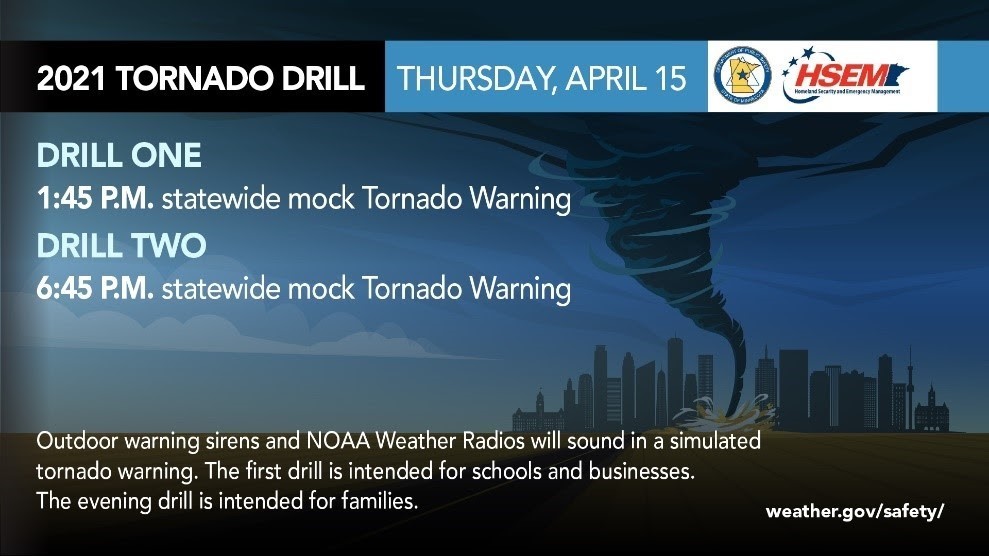
April 15 is the Minnesota Statewide Tornado Drill day! Hennepin County will be participating by sounding outdoor warning sirens twice, once at 1:45 p.m. for those in schools or businesses and a second time at 6:45 p.m. for families. #mnwx #TornadoDrillDay
A new statewide COVID-19 emergency rental assistance portal is expected to open soon.
In two weeks, Hennepin County received 3,737 applications, showing the level of urgent need in our community. The county and City of Minneapolis are providing more staff and resources to process applications as quickly as possible.
Check your application status and learn about other county emergency assistance programs.
Hennepin County is offering the Moderna COVID-19 vaccine to people who register and meet current eligibility guidelines. Vaccine clinics are by appointment only. No walk-ins accepted.
Upcoming vaccine clinics:
Register for the vaccine
You do not need to be a Hennepin County resident to register.
Once signed up, you will be contacted to make an appointment when you meet eligibility guidelines and we have availability for you.
Registering for Hennepin County's vaccine program does not make you ineligible to sign up for other vaccine tools, including Minnesota's Vaccine Connector.
Learn more about Hennepin County’s role in vaccination administration, including the number of vaccine doses we’ve administered: hennepin.us/vaccinationupdates
Sign up to receive this data weekly, via email or text.
Hennepin County’s No Wrong Door welcomes you to attend an online fair to learn about resources for victims and survivors of sexual assault and commemorate the 20th anniversary of National Sexual Assault Awareness Month.
Hosted in partnership with: City of Richfield, Joint Community Police Partnership and Richfield Police Department. Other partners include Hennepin County Domestic Abuse Service Center, Hennepin Assault Response Team, The Annex Teen Clinic, and more.
Contact us
Marion Greene
Commissioner, 3rd District
612-348-7883
Elie Farhat
Principal Aide
612-348-7125
Laura Hoffman
District Aide
612-348-0863
|