Browntail Moth Update #6: June 6, 2025
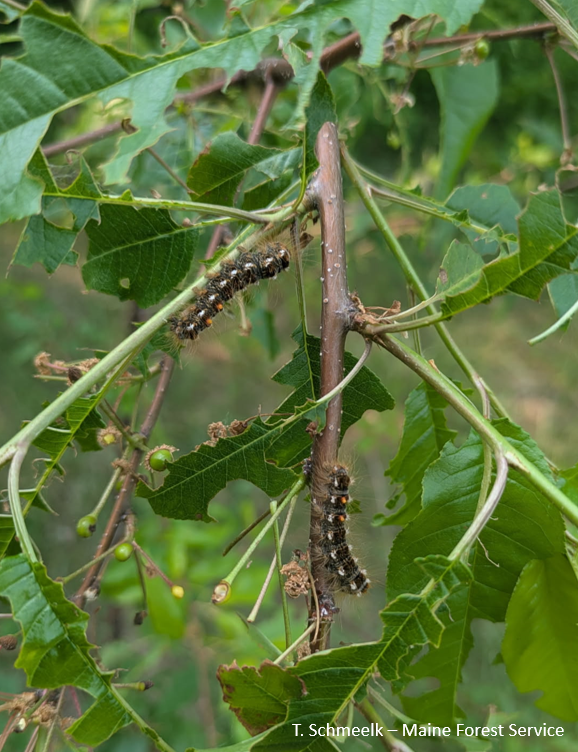
At this stage in their lifecycle, browntail moth caterpillars have grown enough that they are becoming less gregarious and are no longer returning to their web. When the caterpillars reach this size, they begin to wander in search of other food sources or as an escape from any predators/parasitoids that might be attracted to their feeding damage.
This week, we were not able to locate any caterpillars at some of our sites. This has happened during previous monitoring surveys and could be caused by the caterpillars wandering off the host trees, or from mortality due to predation or infection from pathogens. We observed some parasitic wasps flying around as well as a predatory stink bug feeding on a nearby eastern tent caterpillar.
Image: Browntail moth caterpillars wandering among damaged leaves, Turner ME.
In addition to host trees having more apparent feeding damage, we also found noticeable size differences between the caterpillars within the same monitoring sites. This developmental anomaly can signify parasitism or infection, or result from altered food availability. At our Ellsworth monitoring site, the caterpillars have consistently been smaller than caterpillars at some of the other northern sites.
Image: Small underdeveloped browntail caterpillar in the foreground with a larger mature caterpillar in the background, Turner ME.
If you have browntail caterpillars wandering on your house or car:
- Use a strong jet of water to knock them off
- Use a wet/dry vacuum with a few inches of soapy water and a HEPA filter, then let them soak for several days
- Keep windows closed to prevent caterpillars and hairs from being blown inside
We're looking for diseased browntail caterpillars!
We have not observed evidence of any pathogens causing disease in browntail caterpillars at our monitoring sites this year to date.
We welcome any reports from the public of diseased caterpillars. Please include a photo or two in your report so we may confirm pathogen presence.
Some signs of pathogens may be:
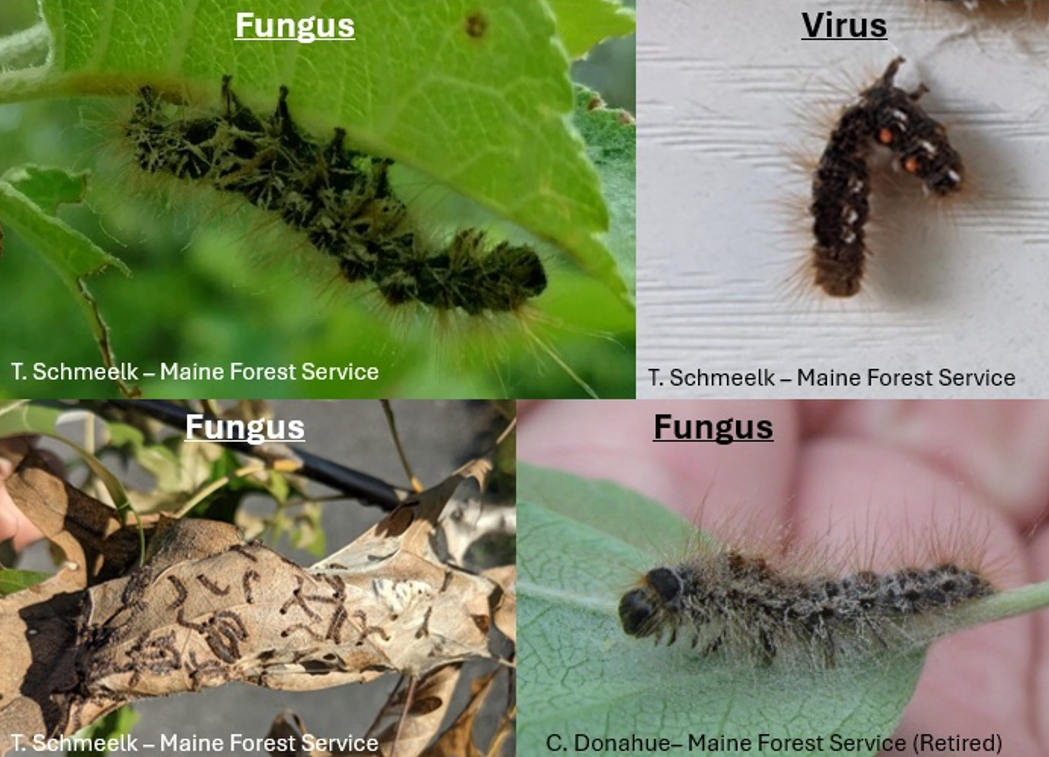
- White/yellow fungal spores on caterpillars (Fungus)
- Swollen, puffy caterpillars (Virus & Fungus)
- Liquid expulsion of the caterpillar guts, often the caterpillar rests in an upside-down "V" shape (Virus)
- Caterpillars hanging onto branches with just their rear prolegs (leg like extensions of the exoskeleton) (Fungus)
- Dead caterpillars
See photos below for examples of pathogen killed browntail moth caterpillars.
Image: Examples of pathogen killed caterpillars. Note the upside down "V" shape indicative of the virus in the top right photo.
|