 Friday, October 28, 2022
Public Health News & Alerts
Louisville organizations urge residents, healthcare providers
and property owners to help prevent childhood lead poisoning
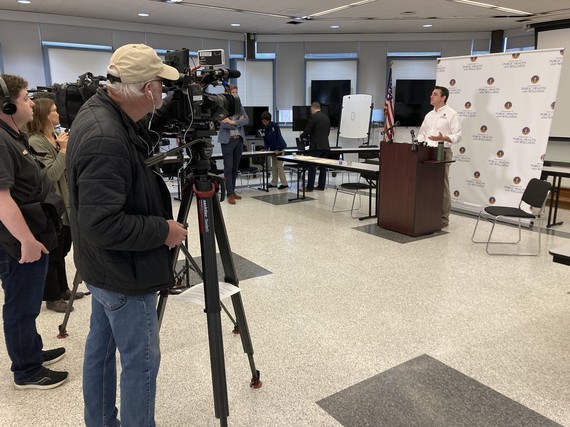 LMPHW's Assistant Director of the Environmental Health Program Nick Hart addressed the media about the dangers of lead poisoning on Wednesday.
During National Lead Poisoning Prevention Week (Oct. 23 – 29), the Louisville Metro Department of Public Health and Wellness (LMPHW), Lead Safe Louisville, the University of Louisville’s School of Public Health and Information Sciences, Metro United Way and other organizations are raising awareness about the dangers of lead poisoning and preventative measures you can take to reduce the risk for you and your family.
Lead can be harmful to a child’s growth, behavior and ability to learn. According to the CDC, no amount of lead in the body is safe. Children under the age of 6 are at the greatest risk of developing health issues caused by lead exposure. Pregnant individuals can also be affected by lead and pass it on to their unborn baby, causing issues like premature birth, low birth weight, learning and behavior problems and even miscarriage and stillbirth.
Lead can enter the body when someone inhales or ingests particles found in lead-contaminated paint, dust, soil or drinking water. Before 1978, lead-based paint was frequently used in homes. Many homes in Jefferson County, built before 1978, still have old lead paint in and around them.
Routine testing is the best way to know if you or your child has been exposed to lead. Ask your primary healthcare provider for a lead test. If lead is detected, contact Public Health and Wellness at 502-574-6644. The health department will help you find where the exposure is coming from and perform environmental interventions.
Here are additional steps you can take to help prevent lead poisoning:
- Clean frequently with a wet mop or sponge to control dust.
- Wash hands and toys often.
- Look out for chipping paint inside and outside your home or apartment where kids might be exposed.
- Wipe and remove shoes before entering the home.
- Eat healthy meals. Children will absorb less lead when they eat food that is low in fat and high in iron.
- Check to see if Louisville Water has a record of a lead pipe on your property and learn how to request a free water quality test by visiting louisvillewater.com or calling 502-569-0897. Louisville’s drinking water does not contain lead when it leaves the treatment plants. The risk for lead to enter drinking water comes from pipes and plumbing. Louisville Water Company has replaced all its known lead service lines, but there could be lead pipes and plumbing on the customer’s property.
For more information about lead poisoning and preventative measures, call 502-574-6644, email LMPHWCLPPP@louisvilleky.gov or visit stopleadlou.com. To see if you qualify for assistance from Lead Safe Louisville, review the eligibility criteria online at louisvilleky.gov or call 502-574-5850.
Beware of fake prescription pills
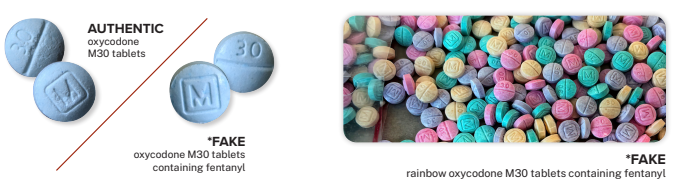 Photo courtesy of DEA.gov
The only safe medications are ones that come from licensed and accredited medical professionals. Pills purchased outside of a licensed pharmacy are illegal, dangerous, and potentially lethal. Beware of deadly synthetic opioids that are being pressed into fake pills or cut into heroin, cocaine and other street drugs to drive addiction.
If you or someone who you know needs help, our Outreach Services provide a wide array of supportive services, including linkage to substance use treatment programs, screening and linkage to care for HIV and viral hepatitis, naloxone distribution and education about overdose prevention, referrals to other social, mental health, and medical resources.
You can visit the DEA or our harm reduction websites for more information.
To request a Narcan kit, call Louisville Metro Department of Public Health Wellness at 502-574-8800 or contact the Kentucky Harm Reduction Coalition at 502-537-6061.
Keep yourself and children safe from the ‘tripledemic’
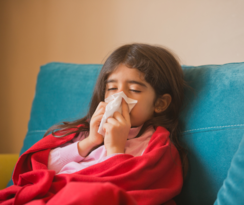
An unseasonably early and severe surge of respiratory syncytial virus (RSV) is overwhelming children's hospitals and boosting the risk of a "tripledemic" combined with flu and COVID-19.
Hospitals typically see a jump in RSV cases in late winter. This year, cases began appearing this summer and have steadily increased, creating significant capacity issues at local children's hospitals and across the country.
RSV can spread when:
- An infected person coughs or sneezes.
- You get virus droplets from a cough or sneeze in your eyes, nose, or mouth.
- You touch a surface that has the virus on it, like a doorknob, and then touch your face before washing your hands.
- You have direct contact with the virus, like kissing the face of a child with RSV.
Families can take preventive measures to avoid RSV infection, such as keeping their children home from day care or school if they are sick, regularly practicing good hand hygiene, and regularly disinfecting household items. Children with RSV symptoms should visit a pediatrician for testing.
Vaccines for COVID-19 and flu, while they may not prevent infection, still offer the best protection against severe illness and death.
Please visit vaccines.gov to find a COVID-19 and flu vaccine location near you.
|
Enjoy a spook-tacular – and healthy – Halloween
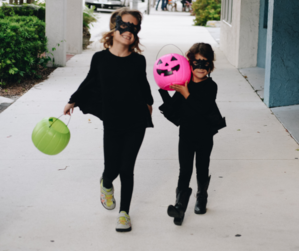
Over the past two-plus years, we’ve learned new ways to enjoy pandemic holidays, and “outside is always safer” has been the mantra for these holiday gatherings. That’s easy to do on Halloween, because trick-or-treating generally involves plenty of outdoor time. But that doesn’t mean it’s totally risk-free.
Here are some tips for reducing risk of becoming sick with COVID, flu or RSV this Halloween.
-
Stay home if you’re sick. Skip the Halloween party if you aren’t feeling well.
-
Get tested if you or your child have symptoms.
-
Louisville’s COVID level is green. If you are immune compromised or at high risk of severe illness, take precautions in crowded or indoor events. Consider wearing a high-quality mask (Halloween masks don’t count). You could make the mask part of the costume—like a doctor, nurse, ninja, or cowboy.
-
If you’re hosting celebrations, review options for improving ventilation in your home. This can help you reduce virus particles in your home.
-
Keep your hands clean. If you’re out trick-or-treating, bring hand sanitizer. If you’re giving out candy, wash your hands frequently.
And of course, the best way to protect yourself and others from severe illness from respiratory viruses on Halloween (and every day) is to stay up to date on your COVID-19 and flu vaccinations. Use this tool to find out where you can get vaccinated. Unfortunately, there is no vaccine for RSV.
CDC recently has recommended updated (bivalent) COVID-19 boosters for children ages 5 years and older.
|
|