The recent poor air quality is a result of smoke from the Canadian wildfires. Please see below, for additional information on how to stay informed about local air quality and what precautions to take.
Why is air quality important?
Air quality can change from day to day. Many people live in areas where air pollution can cause serious health problems. Poor air quality can be hazardous to anyone, especially people with lung and heart diseases, older people, teenagers, and children. Poor air quality can cause headaches, irritated eyes and sinuses, fatigue, difficulty breathing, chest pains and asthma attacks, irritated throats, and coughing.
What is the Air Quality Index (AQI)?
The AQI is the U.S. Environmental Protection Agency’s tool for communicating daily air quality. It uses color-coded categories and provides statements for each category that tell you about air quality in your area, which groups of people may be affected, and steps you can take to reduce your exposure to air pollution. The AQI monitors five major pollutants: ground-level ozone, particle pollution, carbon monoxide, sulfur dioxide, and nitrogen dioxide.
AQI ranges from 0 to 500. The higher the number, the greater the health concern. AQI of 100 or below are generally satisfactory.
How do I monitor air quality in my area?
- Visit AirNow.gov. Enter your location to see air quality data.
- Read about the current air quality in your area to learn who is affected and what you can do to stay healthy and safe.
- Sign up for air quality notifications at enviroflash.info/signup.cfm
|
 |

The Lake County Health Department is excited to announce that Sam Johnson MBA LCPC, has stepped into his new role of Deputy Executive Director effective June 1st. Johnson previously served as the agency's Director of Behavioral Health and most recently the Interim Executive Director.
As the Deputy Executive Director, Johnson will be working closely with the Executive Director, and Executive Team, to align planning, people, processes, and policies to advance the mission of the Health Department in a fiscally responsible way. Executive Director Chris Hoff shared that he "appreciates Sam’s service to the organization and to the community while filling the interim Executive Director role and looks forward to his contributions to keeping the organization moving in a positive direction. I’m confident that his unique combination of expertise and experience will help me better lead the organization and support our collective work."
"I am grateful to step into the role of Deputy Executive Director and look forward to working alongside Executive Director Hoff for the people of Lake County," said Johnson of his new role. "I have had the privilege to lead our Behavioral Health Services team for 6 years and am excited for this new opportunity."
|
|
 Health Department staff from many programs attended the Waukegan Pride Parade on Saturday, May 31!
Pride month is celebrated annually in June. At the Health Department, we strive to offer an inclusive and respectful environment for all who seek care through our programs.
We are proud to offer gender-affirming care for all individuals as well as comprehensive HIV care and prevention, including pre-exposure prophylaxis (PrEP) and transgender health services. Our confidential support services can help all people navigate healthcare with support. Call (847) 377-8450 for more information.
|
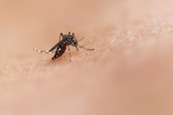
It’s that time of year again— longer days, warmer weather, and mosquitoes. Did you know that mosquitoes go through four life stages, spending the majority of their life stages in water? Stay in control of your yard and disrupt the mosquito's life cycle by eliminating standing water in buckets, flowerpots, trash cans, and other containers.
Mosquitoes are more than just a nuisance; they can also carry dangerous diseases that can be harmful and, in some cases, deadly. One of those diseases is called West Nile Virus (WNV). West Nile Virus is the leading cause of mosquito-borne disease.
During warmer months, practice the “4 Ds of Defense” to protect yourself and your family from mosquitoes:
- Drain: Drain standing water from items around your home, yard, and business.
- Defend: When outdoors, use an insect repellent containing DEET, picaridin, oil of lemon eucalyptus, 2-undecanone, or IR3535 and reapply according to label directions.
- Dawn and Dusk: Protect yourself all day and night, and wear repellent outdoors during these prime times for mosquito activity.
- Dress: Wear long sleeves, pants, and closed-toe shoes when outdoors to cover your skin.
For more ways to defend against mosquitoes, visit FightTheBiteNow.com
|
|

It’s that time of year again where warm weather and weekends beckon people to pools and beaches to pass the day. Whether you are swimming at your local pool or enjoying time at your favorite beach, it is important to protect yourself from illness, prevent the spread of gems, and practice safe swimming.
The Health Department monitors lake water for E.coli bacteria in over 100 Lake Michigan and inland lake beaches to ensure that the water is acceptable for swimming. From Memorial Day to Labor Day, beach closure information can be found on the Health Department’s Beach Monitoring and Advisories web page, which is updated daily by 10:00 a.m.
Read the full press release for more information and tips on how to swim safely at pools and lakes.
|
|
Get ahead of the game! Even though the school year just ended, it is not too early to schedule an appointment with your child’s primary healthcare provider to ensure they are up to date on routine vaccinations and have an updated school and sports physical. You can find resources around Lake County for vaccines, dental, hearing, and vision on this list. |
|
 |
|
|
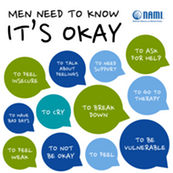
Men’s Health Month
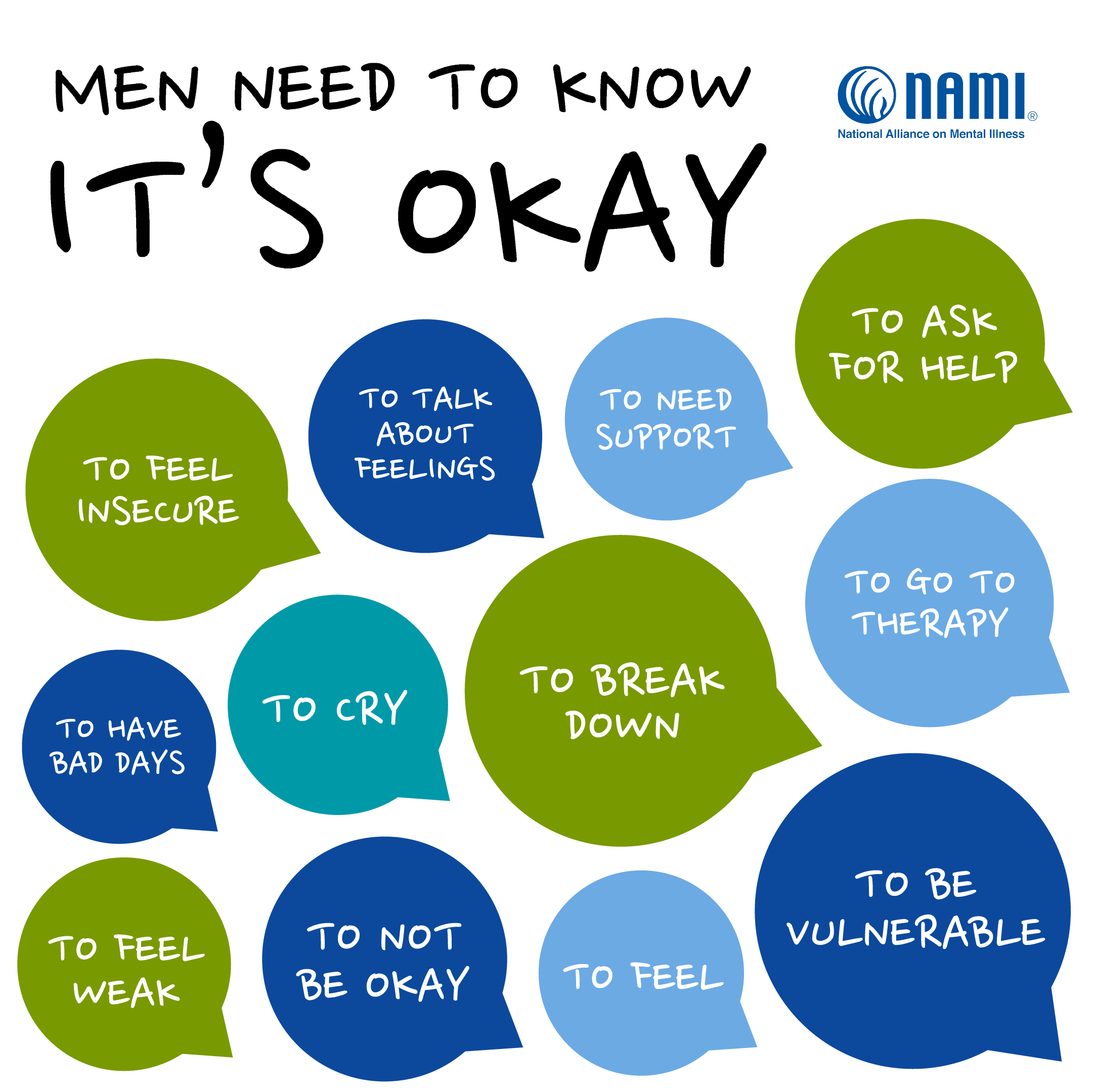
June is Men's Health Month. During this annual observance, men and boys are encouraged to be proactive in their health by implementing healthy living decisions. According to the American Foundation for Suicide Prevention, men are almost four times more likely to die by suicide than women, and more than 6 million men in the U.S. experience symptoms of depression every year. Organizations like Heads Up Guys offer free online depression self-check tools to help you identify warning signs.
Even though Men's Mental Health Month is observed in June, healthy habits should be practiced year-round by:
- Getting regular checkups
- Eating a healthy diet
- Staying active
- Avoid smoking and exposure to secondhand smoke
- Limiting alcohol consumption
- Managing stress
To learn more about how to take charge of your health, visit the U.S. Department of Health and Human Services.
|
|
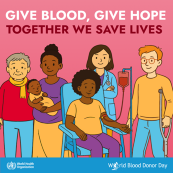
World Blood Donor Day
Did you know a single donation can help save up to three lives? Annually on June 14, World Blood Donor Day is recognized to celebrate blood donors worldwide while promoting the continuous need for regular, healthy blood donations. Regular donation is the key to building a safe and sustainable supply. Blood is needed by women with complications during pregnancy and childbirth, children with severe anemia, often resulting from malaria or malnutrition, accident victims, and surgical and cancer patients.
To learn more about World Blood Donor Day.
|
|
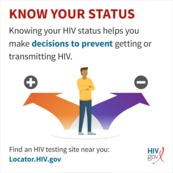
National HIV Testing Day
National HIV Testing Day occurs annually on June 27. Getting tested for HIV can help a person know their status, and no matter the results, getting tested for HIV is the first step to staying healthy. At this time, the Lake County Health Department offers free HIV self-testing kits so you can test when and where it is convenient for you. HIV testing is a critical tool to help end the HIV epidemic in the United States. Visit the CDC to find an HIV testing site near you, or call the Health Department at (847) 377-8450 for more information about HIV testing.
Visit the CDC for more information about HIV.
|
|
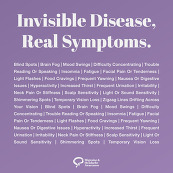
Headache and Migraine Awareness Month
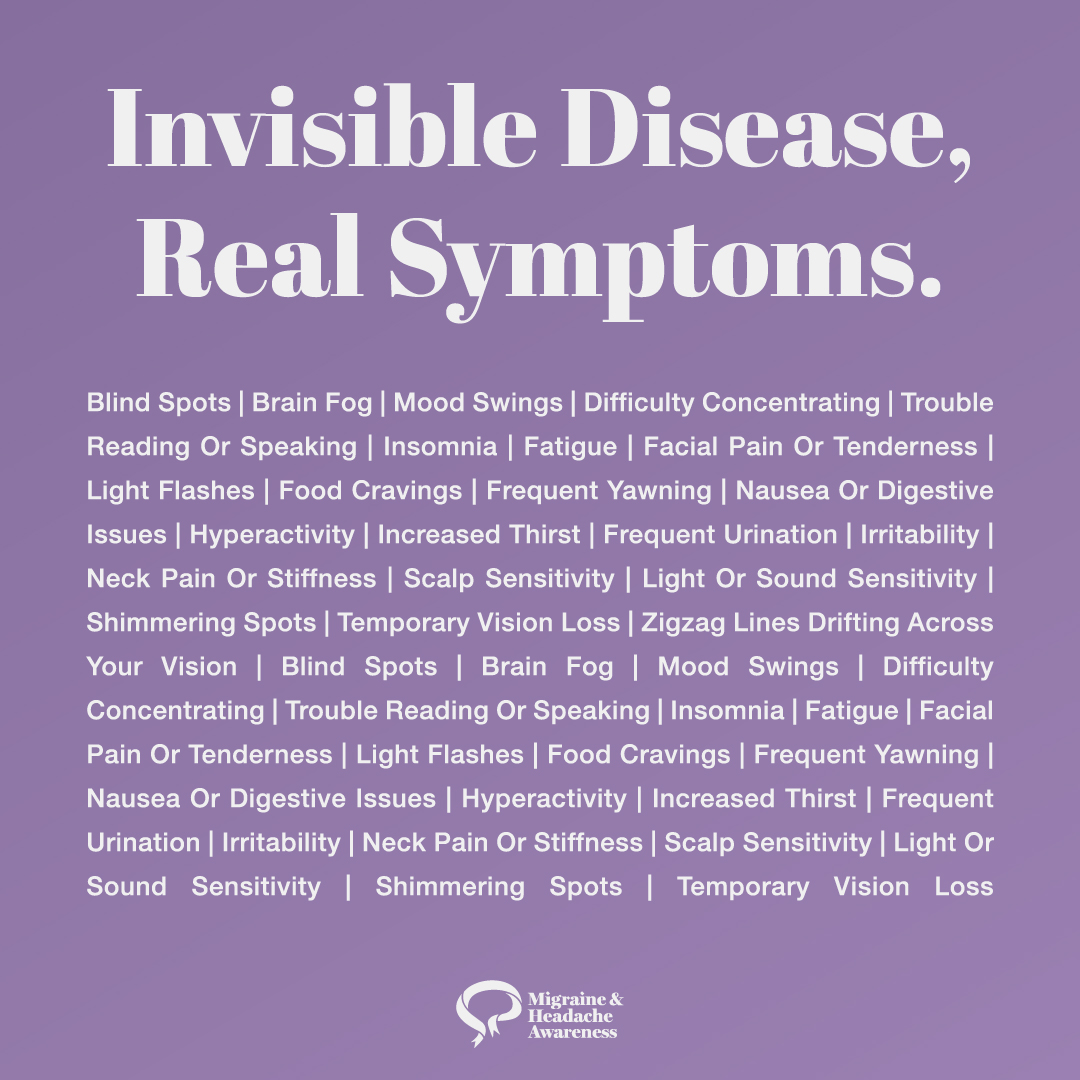
Every June, Headache and Migraine Awareness Month recognizes that countless individuals are impacted by headaches and migraines. This month is an opportunity for the community to come together to support those living with headache and migraine disease, and to educate everyone about the significant impact they can have.
Headaches are one of the most common causes of pain and a major reason people miss work or school. Headaches vary in how often they happen and how much pain they cause. Some headaches may happen repeatedly (episodic) or last for days or weeks at a time (chronic). There are three groups of headaches:
-
Primary headaches: happen on their own
-
Secondary headaches: happen because of some other medical condition
-
Neuropathies, facial pains, and other headaches: happen because of nerve damage or cause head pain that doesn’t fit under the symptoms of primary or secondary headaches.
Migraines are a specific type of severe headache. Did you know there are 10 types of migraines with even more subtypes? The two main categories of migraines are those with and without aura. Aura is a term that describes a sensory change that happens before a migraine, like with your hearing, vision or speech.
Several factors can trigger a migraine and can vary person to person.
If you are struggling with headaches or migraines, schedule a visit with your primary care provider.
|
|
Where do I find information about...
Who can I contact to ask a question about...
-
Lake County Health Department Services: Call (847) 377-8000
-
COVID-19 in Illinois: Contact the Illinois Department of Public Health at 1-800-889-3931 or DPH.SICK@ILLINOIS.GOV
|