|
Habitat is the Key!
Mike Wallace, Conservation Director
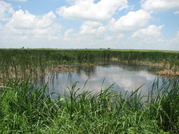
For about a week in mid-July we were entertained by a Bobwhite Quail roosting in our trees and shrubs at Forest Park Museum. The Bobwhite was actually hanging around close to our main entrance area and parking lot. In the morning coming to work its “bob white” call welcomed us. It’s really not that unusual to hear quail in this area, but most of the time it’s about a ½ mile down the road on the RRVT that the quail are normally found. I guess that spending some time visiting “Forest Park” Museum was justifiable and appropriate for a bobwhite quail.
So, does this sound familiar? Other than using July instead of August, the above paragraph was from an article back in 2016 which was titled “Habitat is the Key!” The bobwhite continues to remind me (sometimes in July and sometimes in August) of the fact that habitat is the key. You would not be able to enjoy the birds, mammals, reptiles, amphibians, insects, fish, etc. if important factors for our wildlife were not in place.
|
|
|
|
Click to view Stivers Ford website
|
|
Click to view Kyle's Bikes website
|
|
Fall Colors Tour Guide
Curt Cable, Deputy Director/Biologist
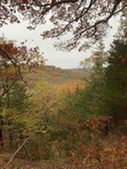
One of the most captivating experiences that occurs each year is the vibrant display of colors produced by deciduous trees (trees that lose their leaves each year). This experience can be shared by everyone, but location and timing are major factors in what your experience is. For some, it happens on the streets of the city they live in, while others seek out special places for fall color viewing.
|
|
|
|
Click to view Spurgeon Manor website
|
|
Click to view Moss Bros. website
|
|
WILDERNESS - MOWOTANANI
Chris Adkins, Environmental Program Coordinator
Wilderness (noun): a tract or region uncultivated and uninhabited by humans or an empty, pathless area or region (definition from the Merriam-Webster dictionary).
Many of my past conversations in these newsletter articles have often involved this word - wilderness. With great regularity, DCCB invites you to visit the WILDS of Dallas County. We work to construct experiences that engage you in the rewilding of your place and yourself. But what exactly is “wilderness?” This question has traveled with me the last 28 years as I led backpacking treks to the largest federally designated wilderness, the Selway-Bitterroot Frank Church Wilderness of north central Idaho. I have been on a decades-long search to define this word. Webster’s definition doesn’t do it for me.
|
|
|
Click to view Elite Electric website
|
|
Click to view Shottenkirk website
|
|
Things are Changing
Pete Malmberg, Museum Curator
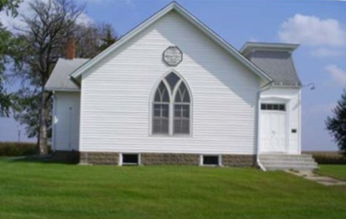
This has been a summer of big changes for our area. At Forest Park Museum, I have been inundated with researchers, donors and concerned area residents eager to save artifacts, memories and even buildings from being lost to time. Each week has brought some new development as changes occur at what seem like increasingly rapid rates.
|
|
|
|
Click to view Van Wall website
|
|
Click to view EBC Website
|
|
Why Wilderness?
Zach Moss, Naturalist/Natural Resource Manager
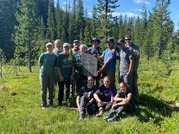
This summer, for the 29th year running, Dallas County Conservation Board sent a group of Central Iowans into the largest wilderness complex in the lower 48 (3.9 million acres!) for 6 days of backpacking, volunteer trail work, and environmental education. These 9 adventurous and passionate teenagers each challenged themselves and grew in their own unique way—mentally, socially, physically, emotionally, academically, and spiritually. They each gifted co-leader Bob Myers and me with learning and growth of our own by spending this time with them. I’d also like to brag on their behalf that this group cleared 155 trees off the trail, surpassing Dallas County’s previous record of 106!
|
|
|
Calendar of Events

We offer many educational public programs to help you experience the wilds of Dallas County! Click below to see the details of all our public programs coming up in October, November, and December.
|
|
|
Fall Tree Planting
Matt Merrick, Natural Resource Manager
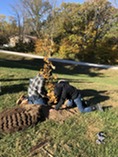
In early fall, there is no better time to assess the toll of a long, hot summer. Many people leave planting trees and shrubs for the springtime, but I find that early fall is an ideal time to add to your collection or replace what you may have lost this summer. There are numerous benefits and advantages to fall planting that you should consider.
|
|
|
Summer Youth Slays
Mike Havlik, Naturalist
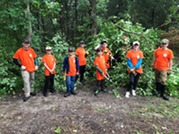
This past summer, I was facilitating a team-building exercise with participants in the DCCB Summer Youth program. One of the activities was to create a visual contract with positive characteristics on the inside of a circle and negative ones on the outside. The students, who range from 10 to 13 years old, were generating words and then writing them on a large easel pad. The group had generated a large list and was running out of ideas. One of the 13-year-old girls chimed in, “Slay”. Several of the other children repeated it, “Slay”. I asked, “What is ‘slay?’” She told me it meant “to do good” or “to do something especially well.” She added the phrase “slay the day” as context, which someone had written on her shoe (a very teenage thing to do). I thought about the physical task we had waiting for us: removing invasive species with hand saws and loppers from an oak savanna. The word seemed wonderfully appropriate. I commented that indeed we would be slaying honeysuckle and cedar trees, and she wrote it in the interior of the circle.
|
|
|
Five Senses of Fall
Greg Sieck, Natural Resource Manager
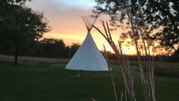
Like clockwork, fall arrives distinctly, engulfing us and engaging our senses. It all begins with what we witness visually, as our eyes take in the gradual evolution. The environment shifts from the vibrant greens of summer to a spectrum of warm shades of autumn. As the days shorten, nature's brush paints strokes across the landscape. Every leaf has its moment in time where it hangs as a piece of artwork. The air itself even appears to change, hinting at the cool breeze of autumn.
|
|
|
New Staff Welcome
As our programs and protected areas continue to grow, so does our staff! We added two full-time Natural Resource Technicians this summer as well as a new Outreach Coordinator. Click below to learn more about them!
|
|
|
Click here for more info on DCCB rentals
|
|
The Dallas County Conservation Board was established in 1962 to protect, preserve, and enhance our natural resources by providing opportunities to improve the public's quality of life through environmental education, ecosystem management, outdoor recreation, and historic preservation. |
|
|
|
|