By Baker Geist, Weld County Communications Specialist; Photos by Kristen Sigg, Weld County Communications Specialist
In 2013, Weld County was enjoying an oil and gas boom. Projections estimated that by year’s end, the county could very well produce 80% of Colorado’s supply.
As the Wattenburg Field in the Denver-Julesburg Basin fueled production, there was only one problem. The industry needed workers … and quickly.
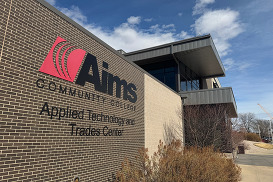
Aims Community College in Greeley answered the call, debuting an oil and gas program in 2012, with the goal of helping people gain critical skills they could use to be employed in an evolving industry. A year later, it launched fully on the college’s Fort Lupton campus.
Although a need was seen by the program’s advisory committee for the program to address the shortfall of workers available, early indications were that success was slow. The number of enrollees in the certificate-based program was just seven in 2012 and 30 in the fall of 2013.
But for what the program lacked initially in numbers, it made up for in enthusiasm, a trait that’s continued for 14 years. The oil and gas program, which is now paired with an industrial technology program, and now on the Greeley campus, boasts a combined 150 enrollees. It’s a number Program Chair Dave Sordi said could easily double in the coming years.
“Since I started here in 2022, our program has grown 400 or 500%,” he said, explaining the overall goals of both degree-based programs are to help make students stronger candidates for jobs in the industry. “The goal is to get students to understand (industry) language, what they’re looking at and really how to learn, because we want them to get up to speed very quickly when they get out into the field.”
What’s led and sustained the success of both programs? There’s not one specific thing to pinpoint. There’s certainly the expertise of faculty — Sordi has 35 years of experience in environmental engineering, while others bring experience from the oil and gas industry or various aspects of manufacturing and technology.
There’s the depth each program offers while being adaptable to particular skill sets. Each can cater to those already experienced in the oil and gas industry or assist those new to it looking for their start.
The continued appeal of each can more easily be explained by looking at success points. That’s what draws a smile from Sordi and his colleague Megan Blaser, who works directly with students on curriculum and helps them identify career or internship opportunities in oil and gas.
“When students come here, their end goal is to get a good, fulfilling career,” Blaser said. “When you get that opportunity to make that connection happen, they’re reaching that end goal. Seeing that happen is really rewarding.”
Blaser’s statement holds even more weight when she and Sordi list the career paths of former students — some excelling in the oil and gas industry and others in various forms of engineering or manufacturing, often stemming from internships or apprenticeships earned through Aims' programs.
Not achieved alone
“For someone who likes working with circuits, this place is like heaven.”
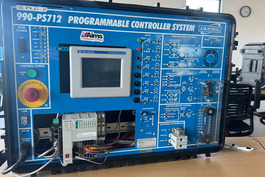
It’s hard to argue with Sordi’s statement, as he walks through two large equipment labs full of circuit stations, programmable controls, and other equipment and technology students work with every day. It’s evidence that continuing to adapt to technology is critical to long-term success.
“Those who go through our programs take a lot of technology courses, focused on things like electronics, process control, programming — all of which prepare them when they go into oil and gas," Sordi said.
|