|
Are you interested in learning more about foster care? Register for orientation to learn more about foster care and the certification process.
 Upcoming options:
Wednesday, Jan. 7, 2026, 4:30 to 6 p.m., virtual via Microsoft Teams.
Wednesday, Feb. 4, 2026, 4:30 to 6 p.m., Weld County Human Services, Building A, 315 N. 11th Ave., Greeley
Already attended orientation? Register for pre-certification training by contacting your foster care coordinator or Kristy DeAnda.
Upcoming pre-certification training options: Choose one cohort to meet training requirements
January 2026 Cohort - Intensive
Friday, Jan. 23, 8:30 a.m. to 5:30 p.m.
Saturday, Jan. 24, 8:30 a.m. to 5:30 p.m.
Friday, Jan. 30, 9 a.m. to 1 p.m.
Location for all three sessions: Weld County Training Center, 1104 H St., Greeley
March 2026 Cohort - Tuesdays and Thursdays
Tuesday, March 3, 5 to 9 p.m., Weld County Training Center
Thursday, March 5, 6 to 9 p.m., virtual via Microsoft Teams
Tuesday, March 10, 6 to 9 p.m., virtual via Microsoft Teams
Thursday, March 12, 6 to 9 p.m., virtual via Microsoft Teams
Tuesday, March 24, 6 to 9 p.m., virtual via Microsoft Teams
Thursday, March 26, 5 to 9 p.m., Weld County Training Center
Note: There will be no meetings the week of March 15 due to spring break.
Consider becoming a therapeutic foster home
Anyone can become a therapeutic foster parent with the necessary experience and training. Therapeutic foster care certification requires an additional 12 hours of specialized training and bi-weekly visits from our support team. Contact Kelly Krause for more information.
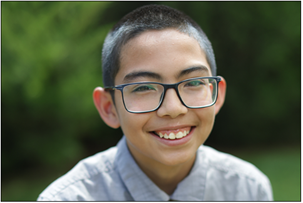
Meet Richard, age 14!
Visit Weld County’s Waiting Kids for more information about children and youth waiting for a foster adoptive family.
|
Tip of the Month
The Adolescent Brain, Stress and Systems that Support Young People.
Lisa Lawson, Annie E. Casey Foundation president and CEO, talks with UCLA psychology professor Adriana Galván, whose pioneering research on the adolescent brain has shaped how policymakers, educators and youth-serving systems understand this critical stage of development.
Key themes from the conversation:
-
Adolescence as a uniquely human strength: Galván and Lawson note that humans have the longest adolescence of any species — more than a decade of brain development designed to prepare young people for adulthood.
-
Risk as exploration, not recklessness: What adults may label as impulsive behavior is often healthy curiosity and exploration — traits that help young people form identities, build skills and take the risks that lead to opportunity.
-
The impact of stress and adversity: Chronic stress reshapes the adolescent brain, making it harder for young people to focus on learning and relationships. Systems must provide scaffolding to help youth facing adversity navigate the “bridge” to adulthood.
Listen to the podcast to learn more about why understanding adolescent brain science matters.
Mark your calendar for opportunities for learning, connection with other families, and respite opportunities!
Trust-Based Relational Intervention (TBRI)

Children who have experienced trauma (neglect, abuse, institutionalization) benefit from caregivers who understand the impact of that trauma. TBRI is a training that teaches practical strategies to help children through self-regulation and building trust — and it is backed by neuroscience.
In just 20 hours (that’s essentially the time it takes to watch every "Bluey" episode), you will learn how trauma impacts the brain and behaviors, the “why” behind challenging behaviors, strategies you can use right away for connection and regulation, and more! Also, the sessions are virtual, so you can tune in from the comfort of your home. Sign up for the winter session, beginning on Jan. 7 and running every Wednesday through Feb. 25, from 5:30 to 8 p.m.
Can’t make the winter session work? No problem! There are four sessions throughout the year, so register for the one that best fits your schedule:
Spring: Thursdays, April 2 through May 21, 6 to 8:30 p.m.
Summer: Mondays, June 1 through July 27, 5:30 to 8 p.m.
Fall: Tuesdays, Sept. 1 through Oct. 20, 6 to 8:30 p.m.
|
Kids at Heart 2026 Programs
Kids at Heart offers programming that seeks to establish positive networks of support for foster, adoptive, and kinship children and families, including a respite program for all ages (newborn to 17) and activities specifically for teens.
Learn more about upcoming opportunities in 2026 by visiting the Kids at Heart website.
Be the Source - The Learning Source
Children deserve to heal, and adults that continue to engage in trauma- and evidence-informed training can be that healing source. The Learning Source offers on-demand training in English and Spanish that is free for Colorado foster and kinship parents. Check out and complete training courses at your own pace. Foster care training credits can be earned by completing courses.
The Ambassador Project: January Event
Join us for a joyful morning created just for foster and kinship families. The Playground is opening its doors for a private play session filled with climbing, jumping, sensory fun, and imaginative play for kids of all ages. Caregivers can relax, connect, and enjoy a stress-free morning while little ones explore this bright and welcoming indoor space.
Sunday, Jan. 4, 10 a.m. to noon, The Playground (193 Greeley Mall #23, Greeley)
Foster and kinship families are invited to enjoy free admission, snacks, and time to connect with other local families. This event is open to all families in the Weld County area and surrounding communities, even if you do not have an active placement. Please RSVP to save your spot!
|
Foster & Adoptive Care Coalition
Licensed foster parents are required to complete 20 hours of ongoing training per year. The Foster & Adoptive Care Coalition hosts virtual training regularly to help you meet this requirement. To learn more, visit the Training for Parents webpage.
Bridge the Gap Resource Map
Bridge the Gap is a new Northern Colorado nonprofit connecting with individuals, organizations, and churches across Northern Colorado to inspire, equip, and support initiatives that serve children and families impacted by the child welfare system (foster, kinship, adoptive, and bio). Needing support? Check out the Resource Map or contact someone through the website who can help you navigate available help.
988 Suicide and Crisis Lifeline
The Colorado Behavioral Health Administration (BHA) and 988 Crisis Hotline Enterprise proudly announce the launch of a campaign to increase awareness and utilization of the 988 Colorado Mental Health Line (988). The service connects people in Colorado to trained crisis specialists offering compassionate mental health, emotional, and substance use support via call, text, and chat. For foster parents, this could serve as an alternative to contacting law enforcement in crisis situations which do not include imminent risk of danger, preventing unnecessary exposure to police interaction. Be sure to add this to your emergency contacts and an accessible place in your home in case it’s needed!
Referral Incentives
Foster parents are the best recruiters!
Weld County foster parents can refer a family, up to five per calendar year, and receive $100 upon placement. The referred family must name you at inquiry or by their orientation. Have your friends and family visit www.weld.gov/go/fostercare for more information and to register for orientation.
Help Kids in Foster Care – Donate Today
Weld County is proud to work with Realities For Children, a nonprofit group that helps kids and teens in foster care. Your donation gives emergency help to local youth who have been abused, neglected, or are at risk.
All donations are tax-deductible, and 100% of your gift goes directly to Weld County foster care.
Visit the Foster Care webpage for more information.
|
|