|
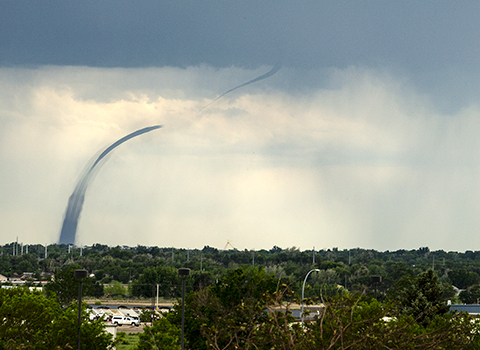
Last summer, as motorists pulled off roads to get a better glimpse of what was forming north of Firestone turning a relatively ordinary day in June into something far more serious, meteorologists at the National Weather Service (NWS) in Boulder were busy compiling information. It’s often thought that their knowledge of the weather combined with high-tech satellites and weather radar can give them enough solid information to push a watch or warning out to those in the path of a tornado.
However, June 7, 2021, was different. The tornado — which began as a mild thunderstorm before morphing into a landspout tornado and being classified as an EF2 causing up to 122 mile-per-hour peak winds and damaging seven properties — wasn’t easily detected on radar. In that moment, the knowledge of trained weather spotters throughout the Front Range proved vital in keeping people safe.
“We had a lot of eyes on that tornado. We had folks sending in tornado pictures from all over — Longmont to DIA to Greeley,” said Scott Entrekin, Meteorologist for the NWS. “That helped us a lot because what we could see on radar was fairly weak. So, without all that spotter information, we may not have issued a tornado warning during the storm.”
It’s not just information that weather spotters can relay but also context that can’t be determined by technology.
“Without our weather spotters, we would be a little bit blind,” Entrekin said, explaining that the further distance away a storm is from radar, the beam will overshoot the storm due to the curvature of the earth, meaning the NWS will lose valuable information about a storm structure closer to the ground. “Weather spotting is a vital part of our process. Sometimes, when we look at radar there might be a circulation occurring, but it’s not discernable if that circulation is a tornado and what kind of impact the storm might be having closer to the ground. Spotter network volunteers can provide valuable ground truth information of what’s happening.”
|
While weather spotters are often credited with providing key observations of what is happening beyond the reach of radar, their ability to do so comes from having a solid understanding of what’s above them before severe weather is present. For example, cloud-type identification — shelf, cumulonimbus, anvil and wall clouds — can help determine what kind of weather to expect. Spotters are also trained on how to determine if the storm circulation is a supercell tornado, landspout tornado or simply a gustnado by being able to identify the different characteristics of each. Knowing this information can help people be better prepared for severe weather. Additionally, the NWS uses information from weather spotters to provide depth and perspective to the watches and warnings it issues. It’s information that could just save a life.
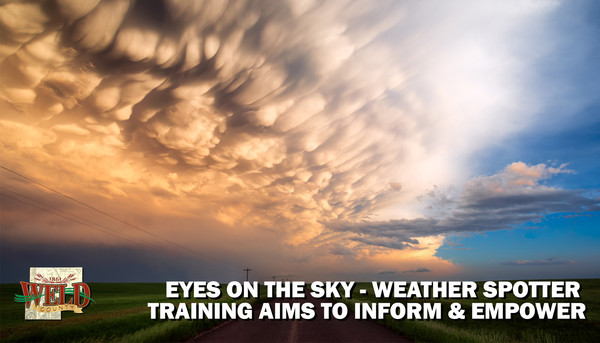
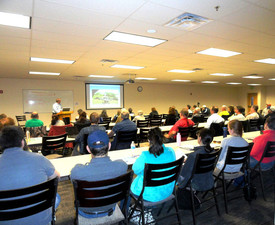
This year, residents have the opportunity to enhance their spring and summer weather knowledge, and gain certification as a weather spotter (if they choose), by attending Weld County’s free in-person weather spotting training on March 22, from 6:30 to 9:00 p.m. in the Events Room of the Weld County Administration Building, located at 1150 O St. in Greeley.
|
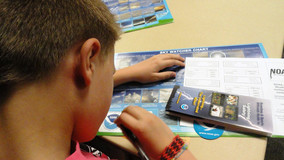
For those nervous about needing a certain level of experience in order to take the course, Entrekin said the class is presented in a way that experienced weather spotters and newcomers can feel comfortable. The class seeks to encourage learning by allowing participants to work through various scenarios and ask questions. The class aims to eliminate the “severe weather will never impact me” point of view — one that both Entrekin and Weld County Office of Emergency Management (OEM) Director Roy Rudisill warn is not realistic. In a county stretching nearly 4,000 square miles and susceptible to tornadoes (Weld County leads the nation in tornado activity with 292 since 1950) hail, thunder, lightning and flooding, the two-and-a-half-hour class provides the knowledge and insight needed to react appropriately when severe weather occurs.
“To be prepared for changing weather and have an understanding of what could happen is helpful in staying prepared and ready to act if severe weather presents itself,” Rudisill said. “It comes down to what we’re always trying to do in our educational outreach throughout the year, which is to give people the tools to be informed about emergencies and knowledge to help them stay safe.”
Severe weather can be unpredictable and at times scary. However, weather spotting classes are one way to educate, inform and empower others to make a difference when it matters most.
“Participants walk away with a better understanding of how weather works in Weld County and the NWS’s operations,” Entrekin said. “It’s a good knowledge enhancer.”
|
By Baker Geist, Weld County Communications Specialist
|
|
Entrekin has worked for the NWS since 1990. Weld County Government has partnered with the NWS to offer the training since the mid-’90s. |
Those who simply want to take the class but don’t want to become certified weather spotters are also encouraged to attend. |
|
The class, which is free, is geared to both newcomers and experienced weather watchers.
|
|
|
Weld County's 2022 12 Months of Emergency Preparedness Tips
What would you do if your important documents were destroyed in a disaster? Give yourself some peace of mind by ensuring you can always access your documents no matter what happens to your home or business.
Be sure to check out this month’s emergency preparedness tip for ideas on what documents to have copies of should you need them following an emergency event. Find this tip under the “12 months of emergency preparedness tab” at https://www.weldgov.com/go/pio.
|
|
|
Question: How can I stay up to date on construction projects and closures on Weld County roads?
There are several ways to stay informed of different road projects occurring throughout Weld County. The PDF in the blue box on Public Works' webpage is a great place to start. Updated weekly, the PDF of road closures, construction and reclamation projects contains the locations of construction projects, estimated length of closures and a brief description of the work being done. Additionally, during construction season (March until November, weather depending) county closures and maintenance can also be viewed on Weld County’s Public Infrastructure Map.
Lastly, don’t forget to check our news releases on the homepage at www.weldgov.com or posts on our social media pages (Twitter: @weldgov; Facebook: @weldcountygovernment) for information on bigger, lengthier closures.
|
|

Get a glimpse into what the Weld County Youth Conservation Corps (WCYCC) offers young adults looking for that next step in life but unsure where to go. The WCYCC is currently recruiting new members ages 16-25. In the next issue of County Roots, read what past and current corps members have to say about their experience, and learn how young people could benefit from this unique hands-on work opportunity.
|
|
|
|
Welcome to County Roots, the official newsletter of Weld County Government. For those of us who work in county government, we think what we do is pretty interesting. So the goal of this newsletter is to highlight some of the partnerships, technology and efficiencies we are using to make government stronger and more effective for its residents.
Our goal is to establish regular communication with residents, spur interest in county projects, highlight county accomplishments and provide meaningful information to the public. In fact, our goal is to live up to the name “County Roots.” Want to know more about the meaning behind the name? Please visit our webpage, where you can also find previous editions of this newsletter.
If you have a topic idea or general feedback about this new venture, please let us know at jfinch@weldgov.com.
|
|
|
|
|