On Oct. 23, 1947, Auburn Fire Chief Henry Gietzen reminded readers of the Auburn Journal that Halloween decorations used in public places must be fireproof. He stated in the Auburn Journal article that: “The law applies particularly to nightclubs, restaurants, cafes, dance halls, theatres, auditoriums and schools.”
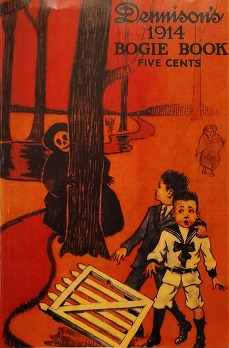
Halloween decorations were made easy to acquire by Dennison’s Bogie Book, which was published between 1909 and 1935. Bogie Books had a catalog section where one could order Halloween decorations or even paper costumes by mail.
They also provided guidance for hosting a Halloween party, which included games and suggestions for snacks and refreshments. Most of the decorations one could purchase from the Bogie Book were made from highly flammable crepe paper.
The popularity of the Bogie Book waned as trick-or-treating became the focus for children and department stores began offering Halloween decorations themselves. Many of these decorations, as well as the costumes, were flammable.
Several fatalities and injuries due to flammable Halloween costumes led to the Flammable Fabrics Act of 1953 and the establishment of the U.S. Consumer Product Safety Commission in 1972. Local laws and ordinances, such as the one Gietzen reminded Auburn citizens about, focused on public fire safety, which included using fire-retardant materials for decorations in public places.
If you would like to view our interpretive copy of a 1914 Bogie Book, it is on display in the Placer County Museum located on the first floor of the historic Auburn Courthouse.
Photo: Cover of the 1914 Dennison’s Bogie Book
|