|
In May, the Wyoming Game and Fish Department stocked 2,500 channel catfish in Sloan's Lake in Cheyenne. The tank of catfish traveled from Arkansas, part of a fish swap where Wyoming traded 24,000 rainbow trout for 70,000 channel catfish (and 40,000 white crappie, coming this fall).
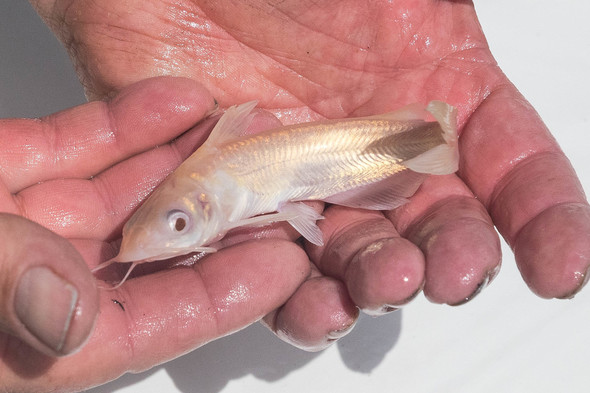
In the load was a special find--a rare albino catfish. The albino's white/peach color is due to lack of pigmentation caused by a recessive allele.
"They are pretty rare in the wild but it can occur. They are sometimes bred to carry the albino allele for aquarium fish, and it happens more often in aquaculture situations than in the wild due to the high density of fish spawned and raised," said Joe Adams, the manager of Arkansas Game and Fish Commission Charlie Craig State Fish Hatchery.
Learn more about Wyoming's fish stocking and hatcheries on our website, and visit a hatchery this summer>
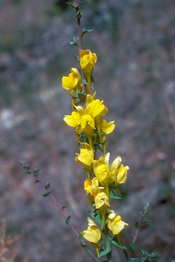 Dalmatian toadflax, a perennial native to southeastern Europe, was introduced into North America in the late 1800’s as an ornamental plant due to its showy, snapdragon-like flowers. One of the most aggressive perennial weeds found in Wyoming, Toadflax has proven to be very difficult to control, mostly due to its extensive and deep root system>
(Photo: Bob Nowierski, Montana State University, Bugwood.org)
|
 Ian, why are wetlands important habitats in Wyoming?
Wetlands are extremely important for Wyoming’s wildlife. Ninety percent of wildlife species in Wyoming use wetlands and riparian habitats either everyday or every season, but less than two percent of the surface of the state is classified as wetland habitat. Wetlands are crucial, too, because Wyoming is the fifth driest state, with a statewide average yearly rainfall of only 16.8 inches. Here are some of the great benefits of wetlands>
|
|