|
|
We live in the information age, and although deer hunting is a tradition that is as old as time, it's not exempt. More information and data are available now than ever – just think about how trail cameras have revolutionized scouting. Sifting through all this information, though, can be tedious and overwhelming. In this month's Cooperator Update, we'll help you hone in on exactly what data to collect and review before, during and after your hunt.
 DMAP 2.0 Survey
We want your feedback on what you would be interested in seeing in your Annual Harvest Report as part of the upcoming changes to DMAP! We are also looking at developing an Annual Habitat Report to help you track habitat projects over time. The Annual Harvest Report was initially only available to level 2 and 3 members, but both reports will be provided with every future membership. In addition to needing your feedback on our custom property reports, we're also interested in hearing what our database, MyDMAP, could provide to help you achieve your herd or habitat management goals.
Please complete the survey below to help us develop reports and a database that provides the most value for you.
Deer Harvest And Observation Data Tracking
Tracking deer harvest and observation data can be a great way to learn more about your deer herd and help guide your management decisions. The Harvest and Observations tab of MyDMAP is here to help. Here, you can track your harvest across time, including deer characteristics, to see how well your management is working. Plus, any information you add will be used to personalize your Annual Deer Harvest Report.
Enter your Deer Harvest and Observation data online.
Hat Ordering For The Holidays
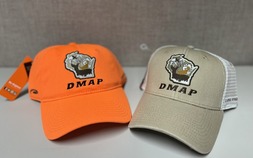
Are you looking for the perfect stocking stuffer or simply want to rep DMAP this season? Our hats come in orange and tan and are the perfect way to show your support and look great while in the field. Whether you're hunting or implementing management projects, a DMAP hat is the perfect addition to your gear. Plus, they're only $10 (shipping, handling and tax included).
You can order yours by filling out the order form found in the DMAP resources tab.
|
|
|

The Bucks Are Running: Factors That Influence Deer Movement And Activity
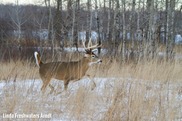
How does deer movement change in the face of predators? At our "Bucks Are Running" workshop earlier this month, Jamie Goethlich, Ph.D. candidate at UW-Madison, shared research that answers just that question. Using recent scientific research, Jamie also provided insights into how deer movement and activity are influenced by human presence, hunting pressure, temperature, weather conditions and moon phase, to name a few. To find answers to all these questions and more, check out the recording of our "Bucks Are Running" workshop.
Watch "Bucks Are Running"
|
|
Photo Credit: Linda Freshwaters Arndt
|
|
|
 Better Management Start With Data
Matt Esser, Southwest DMAP Biologist
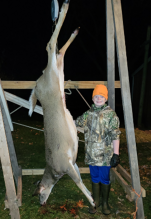
Whether you have just purchased a property or have owned one for years, it's important to establish realistic and obtainable management goals. From habitat goals aimed at increasing the amount of young forest on the property to deer management goals intended to increase antlerless harvest, there is a lot of potential data to collect to see how you're doing at obtaining your goals. So, you may ask yourself, "What data should I collect?" In this article, DMAP Biologist Matt Esser will walk you through exactly what data to collect as well as when and how to collect it.
Read Better Management Starts With Data
|
|
|
 Making The Comparison
Haley Frater, DMAP/Private Lands Coordinator
Have you ever wondered how your hunt compares to others? Or, maybe, how does this year's hunt compare to one 10 years ago? Whether you're looking for historical data, the most recent harvest numbers or trends specific to your property, here are some great resources:
Historical Data
The DNR's Deer Metrics system houses a plethora of deer data. Whether you're interested in harvest trends by year, county, weapon, sex, DMU or looking for the number of deer seen per hunter hour or winter severity index, Deer Metrics has it. With most data going back to the early 2000s or earlier, Deer Metrics is a great place to look at historical trends.
Visit the DNR's Deer Metrics system.
Current Data
Want to know how many deer were harvested during this year's youth hunt? The Wisconsin Deer Harvest Summary webpage is a great resource. Updated every Tuesday throughout the hunting season, the Wisconsin Deer Harvest Summary contains the most up-to-date info on deer harvest by season and weapon. Plus, it provides a snapshot of how this year's 9-day gun deer season compares to previous years.
Visit the DNR's Wisconsin Deer Harvest Summary webpage.
Your Property’s Data
Looking for something specific to your property? By entering your deer harvest and observation data into MyDMAP's "Harvest and Observations page," we'll create a custom property report that compares your hunts across time, including deer seen per hour and biological info like deer age, weight and antler characteristics. The report also compares your harvest to the Deer Management Zone and state by weapon.
Login to MyDMAP
|
|
 This Month's Question
With Wisconsin's deer season in full swing and firearm season right around the corner, November is a great time to evaluate past deer seasons. As hunters, we often talk about the greatest years of hunting. This begs the question, how do you evaluate a "great" deer season? For simplicity, we can look at the highest total deer harvested in a year. Out of the top four total deer harvest years in Wisconsin since 1960, listed below, which do you think had the highest number of deer harvested?
a. 2004
b. 2007
c. 2000
d. 2006
Last Month's Answer
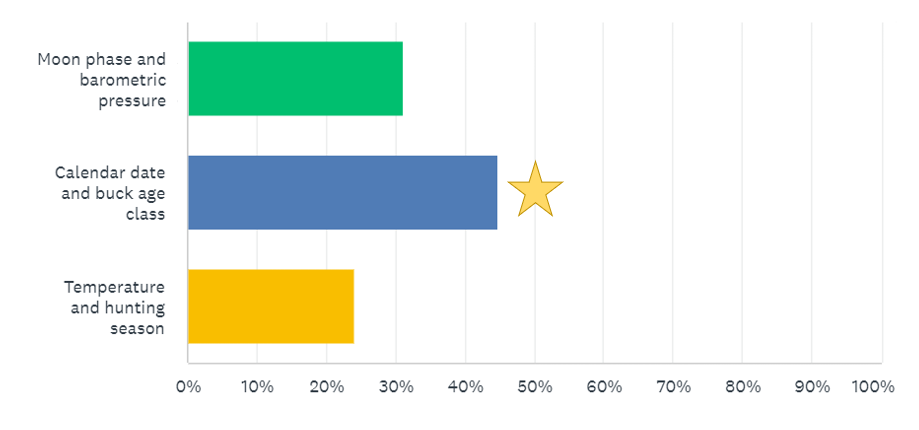
Last month, we asked you what two factors you believe influence daily movement rates and range size during the rut, and according to the research linked below, calendar date and age class are the correct answers.
Deer breeding season is timed to allow fawns the best chance of survival. For Wisconsin, this means births in late May and early June since deer gestation is approximately 200 days. Neither temperature, moon phase nor any other environmental factor ensure consistent timing of fawn births. The calendar date is a proxy for photoperiod (the length of time the sun is out each day) and a large driver of rut-based deer movement. Photoperiod changes are consistent, and deer biology, like many animals, is strongly affected by it, making the rut consistent.
Age class was also seen to impact buck movement. Researchers used yearling, two-year-old and then three-year-old and older age classes to compare rut-based movement. Two-year-old bucks, on average, have a peak movement rate of more than 10% higher than both yearlings and older bucks. The key here is that these are averages across all bucks daily, within each age class, which doesn't tell us the whole story. Older bucks may have lower average movement rates because they're often more successful at tending and mating with does. A buck tending a doe will have a much lower movement rate than a buck actively searching for a receptive doe. So, there's a greater percentage of older bucks during the rut that will be tending rather than searching, causing a lower movement rate.
To learn more about this research, check out our December 2023 Field Notes Newsletter.
|
|
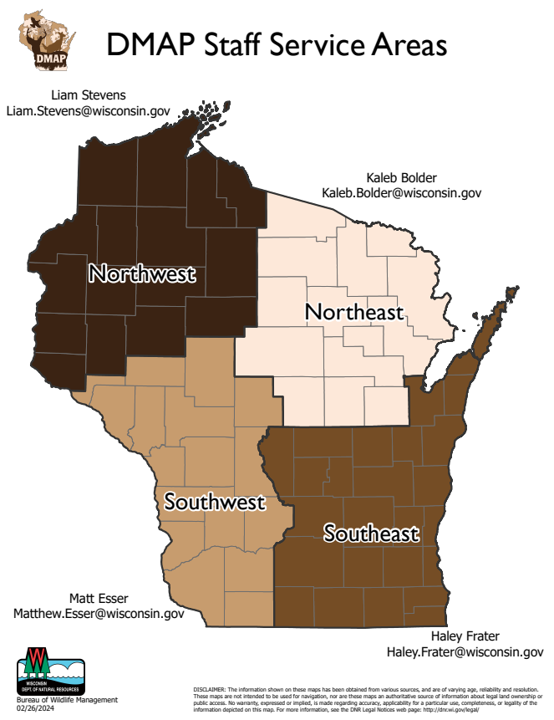
 Have questions or suggestions? Reach out to your local DMAP biologist.
|
|
|
|
|