|
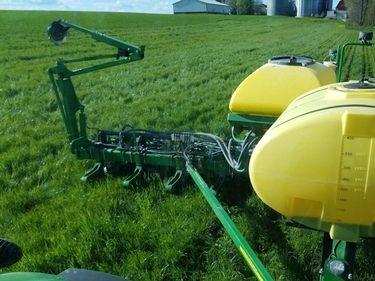
Tony Peirick's corn planter setup. Tony is helping lead the soil health and water quality efforts of the Dodge County Farmer-Led initiative. Tony and his brother operate a dairy outside of Watertown and employ a number of innovative practices on their farm. For example, they have found planting corn into green cereal rye cover offers excellent weed supression, builds organic matter, and protects the soil surface over autumn, through winter, and into spring. Note: planting into living cover can be tricky and requires a lot of experience to perfect.
With field season nearly upon us, farmers are getting ready for planting by checking all their equipment and implements, reviewing crop planting and field rotations, and closely monitoring field and weather conditions. Numerous farmer-led soil health initiatives are kicking off the plans they developed over the winter. The following have field days, cropping trials, and various nutrient management and conservation practices planned;
- Dodge County Farmer-Led Initiative
- Oconomowoc Water Friendly Farms
- Yahara Pride Farms
We'll continue to share information, as available, for events that are open to everyone. We have received requests to remind people that while farmers appreciate the growing interest in innovative things they are trying out, please remember that some of the events are really intended for farmers. Please be respectful of their private property, recognize space is often limited, and farming equipment and operations can be hazardous.
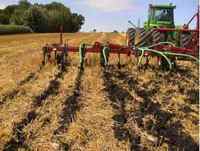
Nutrient Management Farmer Education Grants cover costs for entities to conduct farmer nutrient management training courses that enable farmers to become qualified to write their own nutrient management plans for their farms. Producer-led groups that meet the qualifications in the Request for Applications are also eligible to apply for this funding.
The Soil Health Partnership is a farmer-led initiative of the National Corn Growers Association that brings together diverse partner organizations including federal agencies, universities and environmental groups to work toward the common goal of improving soil health. We have a demonstration site network of 65 farmers across the Midwest testing practices that can improve soil health, including:
- Reduced tillage
- Advanced nutrient management
- Cover crops
Farmers may voluntarily participate in this private program will get the opportunity to have extensive soil, yield, and profitability analyses done.
“The data that can be coming from the Soil Health Partnership is very important, because it can lead farmers to help make those decisions as to what management strategies to follow on their farms and how to do it economically,”
Although potassium (K) is listed among the top three macronutrients (N-P-K) needed for crop production, nitrogen (N) and phosphorus (P) receive most of our attention. This excellent article describes the importance of often-overlooked Potassium.
In the 14th episode of the No-Till Farmer Podcast, no-till innovator Marion Calmer shares the lessons he’s learned and the improvements he’s made, thanks to on-farm research. Marion will discuss the results from the many years of on-farm research he’s conducted on his farm in Alpha, Ill., including populations, row spacing, fertility, and residue management, and how that information has provided him a $150-per-acre return on investment.
|

Monitoring Sector Team
WDNR staff are finalizing a draft of the monitoring section for the Rock River Recovery TMDL Implementation Plan. We reviewed a draft this month and are incorporating some last data and obtaining contributions from partners. We anticipate planning a meeting with the Monitoring Sector Team this spring to share the draft and receive comments and input from basin stakeholders.
|
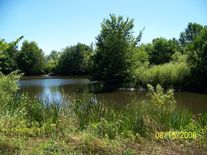
Are you interested in learning more about green stormwater infrastructure and how it might be incorporated into your community? If so, the city of Madison has assembled some excellent resources on a variety of topics including;
|
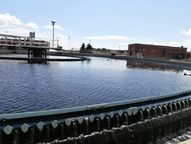
NOTE: While open to anyone, this event will specifically focus on facilities in the Dodge County area. Additional meetings for other communities may be held in the future, based on demand - stay tuned.
Want to learn more about the phosphorus reports required by your WPDES permit? A Phosphorus Compliance Workshop is going to be held on April 5, 2017. Department staff will present details on the “Third Year” and “Fourth Year” Report contents. We will also provide specifics on the “Multi-Discharger Variance” – aka the ‘Statewide Variance’. Thinking about an individual variance, we will be talking about them too.
Date: April 5, 2017
Time: 9:00 – 12:00 (and
1:00 –3:00 by appointment)
Where: Dodge County Courthouse,
Juneau
Your Homework: Read about the MDV and watch the webinar found
available HERE
Next,
we are offering specific permit discussions by appointment only in the
afternoon of April 5th.
Email Doris Thiele to register for a one-on-one appointment. Appointments will be available from 1:00 to
3:00.
(One-on-one appointments also available on other days by contacting your
DNR field representative.)
|
|