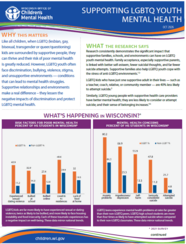
Like all children, when LGBTQ (lesbian, gay, bisexual, transgender or queer/questioning) kids are surrounded by supportive people, they can thrive and their risk of poor mental health is greatly reduced. However, LGBTQ youth often face discrimination, bullying, violence, stigma, and unsupportive environments — conditions that can lead to mental health struggles.
LGBTQ teens experience mental health problems at rates far greater than their non-LGBTQ peers. For example, 80.2% of LGBT high schoolers report anxiety whereas 44.1% of non-LGBT highschoolers do, and 66.9% of LGBT high schoolers report hopelessness/depression whereas 25.3% of non-LGBTQ high schoolers do. LGBTQ high school students are more than four times as likely to have attempted suicide when compared to their non-LGBTQ classmates. On the other hand, LGBTQ kids who have just one supportive adult in their lives – such as a teacher, coach, relative, or community member – are 40% less likely to attempt suicide.
Ensuring LGBTQ youth feel supported doesn’t require a lot of funding or any special training. Support for LGBTQ kids requires connection and acceptance. The new Fact Sheet includes steps we can take to support LGBTQ youth mental health. Because there are measurable improvements when LGBTQ youth feel supported, the Fact Sheet includes recommendations that emphasize connection, acceptance, and belonging.
See more data and what we can do to help Wisconsin’s LGBTQ youth thrive in the Supporting LGBTQ Youth Mental Health Fact Sheet.
See all OCMH Fact Sheets.
|
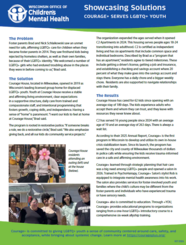
Providing a stable and affirming living environment is what Courage+ does for LGBTQ+ youth. Courage House is located in Milwaukee and has been providing a safe space for LGBTQ+ youth since 2019. They expanded the ages served to include 18-24 year olds transitioning into adulthood when they opened C2 Apartments in 2024. In addition to the housing, Courage+ provides public education and a hair salon. Learn more in OCMH’s newest Showcasing Solutions – Courage+ Serves LBGTQ+ Youth.
OCMH’s Showcasing Solutions shares stories of Wisconsin organizations working in innovative ways to improve youth mental health and well-being. See all our Showcasing Solutions here.
|
What do you think of when it comes to children’s mental health prevention? It is a vast topic and OCMH will explore it in the next Children’s Mental Health Network meeting on Friday, November 6, 2026. We will welcome speakers from NAMI Wisconsin, Mental Health America of Wisconsin and three prevention programs active in schools as well as a discussion on policy as prevention.
These quarterly learning meetings are virtual and take place 10 am-12 pm. If you are not on the distribution list to be notified of these meetings, sign up here (when you submit your request the next screen will provide the November 6th meeting Zoom link – just add that to your calendar). If you are on the meeting distribution, you have already received the meeting invitation.
|
Once per month from September through May OCMH’s second cohort of Youth Mental Wellness Champions meet to learn about mental health and well-being and provide important feedback to OCMH. These 15 high school Juniors and Seniors from across the state were selected in a competitive application process. The 9-month program will culminate on May 13, 2027 at the State Capitol in an event where each Champion will present a poster on a mental health topic important to them.
We are proud to announce the OCMH 2026-27 Youth Mental Wellness Champions and their high schools:
- Emerald Ntsuab-Liag Her – Hmong American Peace Academy
- Lauren Lippe – Brookfield Central
- Zoey Zielinski – Muskego
- Kylynn M. – Waukesha North
- Nikki A. – Middleton
- Sophia Evenson – Fort Atkinson
- Ali Abidi – Onalaska
- Natalee – Montello
- Jenny Van Handel – Neenah
- Jannie G. – Sheboygan South
- Mia Glocke – Gibraltar
- Kodiak Hill – Shawano
- Lucia Hollander – Wausau East
- Bella Hippard – Chippewa Falls
- Juniper Chapman – Northstar Academy
See a map highlighting the Champions and their location.
|
A new Teen Mental Health Resource hub designed to make trusted information and practical tools about young people’s mental health is now available. Developed by the Wisconsin Out of School Time Alliance (WOSTA), this one-stop online resource serves as a resource for parents, caregivers, and youth-serving professionals seeking more support for school-age youth.
The need for a “hub” of such resources was articulated by Family Resource Centers and youth-serving organizations across the state. They reported increased concern from parents seeking guidance and support for their school-age children. It all underscored the need for accessible resources that families and adults who work with young people can use before challenges become crises.
The Teen Mental Health Resources hub lists many online resources and tools by categories. The categories are listed at the top of the webpage for easy navigation.
This project was funded through the Wisconsin Office of Children's Mental Health with funds provided from the Wisconsin Department of Health Services and the Health Resources and Services Administration – Pediatric Mental Health Care Access Grant.
|

By: Sarah Fouts, MS LPC, School-Based Psychotherapist – Orion Family Services
In a world where loneliness is increasingly considered an epidemic and we confront the challenges of social media, AI, and post-pandemic life on a daily basis, enduring and healthy friendships can feel hard to come by. As inherently social beings, we know this connection drought has had negative effects on our individual and collective mental health. It has heightened our anxiety, resulting in more guarded and reactive ways of interacting with others, placed strain on our limited pre-existing relationships, and challenged our ability to practice perspective-taking and empathy. Whether you are feeling the desire for more friendship yourself or seeing the larger impact within your community, you can invest in and teach the qualities of a healthy friendship: the ability to engage in perspective-taking and see beyond one’s own needs and wants, the ability to ask for help and engage in conflict resolution, and the ability to confront and soothe anxiety.
Friendship Skills
When initiating a new connection, the first step is to get curious and other-oriented. Curiosity is the antithesis of anxiety. This could look like asking oneself, “Who in the room can I be a friend to first?” or “What is this other person experiencing, and what can I do to improve or support that experience?” This practice takes the pressure off ourselves and helps us to see opportunities that may not have been present within our own experience. Once you’ve acted on this step, anxiety is likely to come up again. Maybe your words don’t come across as you intended or you get an unexpected reaction and you experience negative self-talk, “Why did I do this? I’m so awkward. They must think I’m the strangest person ever”.
No matter the outcome of the interaction, the second step is to self-soothe or give encouragement. Feeling overwhelmed by awkwardness and anxiety keeps us from seeing the other person. Instead, take a deep breath and try refocusing on the other person’s experience. For example, “I might have caught them off-guard, how can I put them at ease?” or “Friday night doesn’t seem to work for them, what choices can I give them to choose from?” Occasional rejection and unexpected reactions are normal and do not have to be a sign of a failed attempt at connection or a personal shortcoming.
Once you’ve made that initial connection, friendship requires investment to stay alive. Regardless of how often you spend time together or in what capacity the friendship exists, the third step is to practice frequent, honest communication. When we share what we’re thinking it allows others to understand our character and patterns of behavior. This helps people feel closer and safer because we become more predictable. In the beginning of a relationship this may sound like, “I’m really enjoying getting to know you. You’re the first friend I’ve had who loves biking as much as I do.” Additionally, conflict is normal, so when (not if) a first disagreement or hurt takes place, we must continue to communicate. Avoidance of conflict is an understandable and instinctive safety response, but it fails to introduce new information that can challenge our assumptions and judgments and ultimately create healing or change. “I” Statements are one tool that allow us to address conflict respectfully. For example, “I felt hurt and left out when I didn’t receive an invitation to your birthday party.”
While friendships require intentional effort and loving care, they give so much in return for our social and emotional well-being. Everyone deserves to be a part of community and experience healthy friendship.
|
Articles on Children’s Mental Health for Your Newsletters and Communications
Would you like to receive children’s mental health articles like the one above to publish in your organization’s newsletter or communications? Sign up for OCMH’s Building Mental Wellness Copy & Drop (select “OCMH – Building Mental Wellness Copy & Drop”). You’ll receive a ready-to-use article the third Tuesday of each month. Just “copy and drop” it into your publications. Learn more about Building Mental Wellness Copy & Drop and access our library of articles.
|
By Chelsea Bellville, MSW, ISW
Every school year begins with the excitement of reuniting with friends, new school supplies, new classes – and for many educators – a wave of new addictive nicotine products like vapes and pouches. Ask any administrator, counselor, or school nurse and you will hear how much time is spent confiscating devices and disciplining students. Data from the Wisconsin Department of Health Services and the Wisconsin Youth Risk Behavior Survey (YRBS) show that approximately 15% of youth have reported using nicotine vapes in the last 30 days, making response efforts feel like a full-time job.
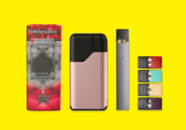
This trend is not accidental. The rapid spread of nicotine use is driven by aggressive marketing designed to make experimentation effortless and addiction easy. These products are inexpensive, widely available, and come in appealing flavors like fruit with sleek designs. Newer high-tech devices even sync to smartphones via Bluetooth to deliver notifications, stream music, and play games. Many have misleading packaging that makes some vapes appear less harmful than traditional cigarettes. High-capacity vapes can contain the equivalent of 50+ packs of cigarettes in a single device, accelerating addiction.
Adolescent brains are still developing, allowing youth to become rapidly addicted. The prefrontal cortex – the center for executive functioning, decision making, and impulse control – is particularly vulnerable. Research from the National Institutes of Health shows that even small amounts of nicotine use in adolescents can alter and sensitize dopamine pathways in the brain. This can deepen nicotine addiction and increase the risk of future substance use, including cannabis, alcohol, and illicit drugs, as well as mood-related disorders. Given this, it’s easy to see how nicotine has become a “gateway drug” for many youth today.
Once addicted, hiding it becomes easy. Manufacturers design products to mimic items like lip balm, key fobs, flash drives, or even smart watches. Nicotine pouches leave no visible trace. These discreet designs make it easy for youth to use unnoticed, essentially hiding in plain sight.
Addressing vaping and nicotine addiction requires schools, families, and community agencies to move beyond punishment toward support and action. Creating supportive school environments keeps students engaged in the place they can get help. When students are caught with nicotine, schools can shift responses from punitive to restorative by providing cessation options instead of suspensions. Schools can outline pathways for students seeking help. Addressing youth vaping requires moving beyond simple discipline toward comprehensive prevention and support.
As the saying goes, an ounce of prevention is worth a pound of cure. Implementing evidence-informed prevention curricula like Stanford Medicine You and Me, Together Vape Free and CATCH My Breath teaches refusal skills, stress management, and coping strategies and how to recognize deceptive industry tactics.
Youth need an environment that supports quitting. More than 50% of youth who vape report wanting to quit, yet only 10% know of any programs that can help them (YRBS 2023). Students need direct access to counselors and substance use specialists who offer confidential cessation and mental health support. Because fear of disciplinary consequences prevents many from coming forward, schools should promote anonymous reporting and self-referral options alongside free cessation support like Wisconsin Tobacco Quit Line and Live Vape Free.
Preventing nicotine addiction and supporting intervention is too large a task for schools to handle alone. Partnering with local public health agencies and community tobacco free-alliances can help schools identify prevention strategies, establish supportive alternatives to suspension, and educate families and staff on the prevalence and dangers of nicotine, identifying disguised devices, and starting conversations with youth.
For more information and recommendations on how to help teens, see OCMH’s Fact Sheet on Vaping and Youth Mental Health.
Chelsea Bellville is a Consultant on Vaping and Nicotine use Prevention and Intervention, an IIRP Restorative Practices Trainer, and SBIRT Training and Implementation Support.
Sources:
- Commercial Tobacco Prevention and Treatment Program: Youth Programs https://www.dhs.wisconsin.gov/tobacco/youth.htm
- NIH/NIDA Neurobiological Priming Study: Nicotine and the Adolescent Brain (PMC4560573)
- ‘Tall cop’ delivers wake-up call Https://www.headlightherald.com/article/1424,tall-cop-delivers-wake-up-call
- Summary Report: 2023 Wisconsin Youth Risk Behavior Survey
|
Legislative Study Committee on the use of Artificial Intelligence. This Study Committee has been directed to study current and emerging uses of artificial intelligence (AI) technology in health care and, as part of its review, consider the use of AI technology in the patient-provider relationship, including use in clinical care and communication facilitation. The Committee has also been directed to consider the use of AI in interactions between insurers or medical assistance programs and patients, including in health care coverage decision making. After studying these issues, the Committee will recommend legislation that addresses standards for the use of AI in health care services and insurance.
Since it began meeting in August, the Committee has heard from Legislative Council staff on the use of AI in health care and from Samantha Scotti, a legal expert from the National Conference of State Legislatures, on states’ AI laws. Several advocates for individuals with mental health conditions and the elderly have also testified. Mary Kay Battaglia, Executive Director of NAMI-Wisconsin, spoke to the ongoing NAMI (National) and Harvard Medical School study of how AI tools respond when people ask questions about mental health.
The Committee has discussed possible definitions of artificial intelligence, data privacy, governance standards, return on investment, and AI use in healthcare and physician training. Another area of study has been state oversight of privately-owned AI sandbox environments. A regulatory sandbox is a structured program that provides technology developers temporary relief from specified state laws or regulations while an application is tested or deployed under the oversight of a state entity.
The Study Committee is expected to finish its work before the end of the year and make legislation recommendations in January for the 2027-28 legislative session.
October brings many special awareness months and days.
Bullying Prevention Month
National Bullying Prevention Month takes place every October to raise awareness, educate communities, and promote kindness, inclusion, and safety for children and adults. Bullying can have devasting effects on children and families such as school avoidance, loss of self-esteem, increased anxiety, and depression. Learn more from:
See OCMH’s Data Bite on Bullying & Belonging.
|
Global Peer Celebration Support Day
Celebrate and honor the contributions, wellness, resilience, and advocacy of peer and family peer support workers on Global Peer Support Celebration Day on October 15, 2026.
Read OCMH’s Fact Sheet on Peer Support.
|
Lead Poisoning Prevention Week
October 25-31, 2026 is National Lead Poisoning Prevention Week. The effort aims to reduce childhood exposure to lead by increasing lead poisoning prevention awareness and education. The 2026 theme is “Keep Kids Safe from Lead and focuses on three key messages: 1) Get the facts, 2) Get your child tested, and 3) Get your home tested. Learn more.
Read OCMH’s Fact Sheet on Preventing Childhood Lead Poisoning.
|

The Wisconsin Department of Health Services (DHS) Division of Care and Treatment Services is seeking applications for two funding opportunities:
-
Family Centered Treatment-Recovery Implementation – to support the implementation of Family Centered Treatment-Recovery, a practice and systems-of-care model that weaves together the evidence-based Family Centered Treatment model and best practices in substance use treatment. Learn more.
-
Parent Peer Professional Led Workforce Development – to expand and sustain parent peer professionals as subject matter experts to enhance local systems of care and engage youth and families across the state. Learn more.
DHS announces a funding opportunity:
-
Southern Region Children's Resource Center for Children and Youth with Special Health Care Needs (CYSHCN) – to select an organization to serve as the Children’s Resource Center for the Southern Region of Wisconsin. The selected organization will provide free, confidential resource connection services for families and professionals supporting CYSHCN across 14 southern Wisconsin counties. Learn more.
|

|