 HAI Happenings: Quarter Two 2026 Newsletter
This message is being sent to local public health department officers, nurses, and staff; Tribal health directors; infection preventionists; and key DPH staff.
HAI Happenings highlights new and noteworthy topics for all things related to healthcare-associated infections (HAI), including infection prevention and control (IPC), antimicrobial stewardship (AS), antibiotic resistance (AR), surveillance, and more. You can also find links to helpful guidance and resources and learn more about current Wisconsin HAI Prevention Program activities.
Knowledge check
Test your HAI knowledge. See answer at the end of the newsletter.
If a patient has been exposed to measles but currently has no symptoms (no fever and rash), should they still be tested?
|
|
 |
What's new with the HAI Prevention Program?
In the news
Best practice and guidance updates
-
As of August 24, the Wisconsin State Laboratory of Hygiene (WSLH) has discontinued testing carbapenem-resistant Acinetobacter baumannii (CRAB) isolates for OXA-23-like, OXA-24/40-like, and OXA-58-like carbapenemase genes. Check out the GovD message for more information about response and reporting updates.
-
CDC updated its Infection Control in Health Care Personnel guidance to include viral respiratory infections. This new section provides recommendations about the management and monitoring of health care personnel who have been exposed to or are ill with a viral respiratory illness, including SARS-CoV2 and influenza (including recommendations on return to work).
-
The Core Elements for Outpatient Antibiotic Stewardship has recently been updated. The updated guidance includes a practical assessment tool; new stewardship strategies for telemedicine, dental clinics, and dialysis facilities; and recommendations to support quality improvement and responsible antibiotic use
-
The Wisconsin Immunization Program updated various measles resources.
-
August was Immunization Awareness Month! Read up on key reminders for safe infection practices on the DHS Precautions webpage.
-
CDC has released a new toolkit for U.S. healthcare settings featuring a variety of resources to support Ebola education and information sharing.
-
Check out the new Preventing Infections in Your Nursing Home Community video from CDC. The video highlights everyday actions nursing home residents and staff can take to prevent infections.
-
Don't miss the upcoming Infection Control Risk Assessment (ICRA) awareness trainings. These trainings are free to attend and share information on how to protect patients and staff during construction in occupied health care facilities.
Project Firstline spotlight
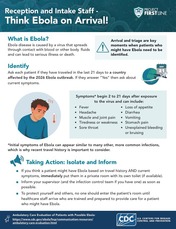
New Project Firstline Micro-Learn!
Check out our new micro-learn for reception and intake staff, Think Ebola on Arrival!, which highlights how everyday infection prevention practices help health care workers recognize potential risks and respond safely and confidently.
|
Notes from the field
Each quarter we’ll highlight a specialty topic area or setting that the HAI Prevention Program works with and take a deep dive into guidance, recommendations, or notes from the field from our IPs. This quarter, we’re focusing on oral health.
September is Dental Infection Control Awareness month! An important part of infection control in dental clinics is monitoring adherence to expected practices. Some examples of monitoring include environmental rounding and hand hygiene observations. To make monitoring easier, the HAI Prevention Program has created tools that can be used and modified to fit the needs of dental clinics.
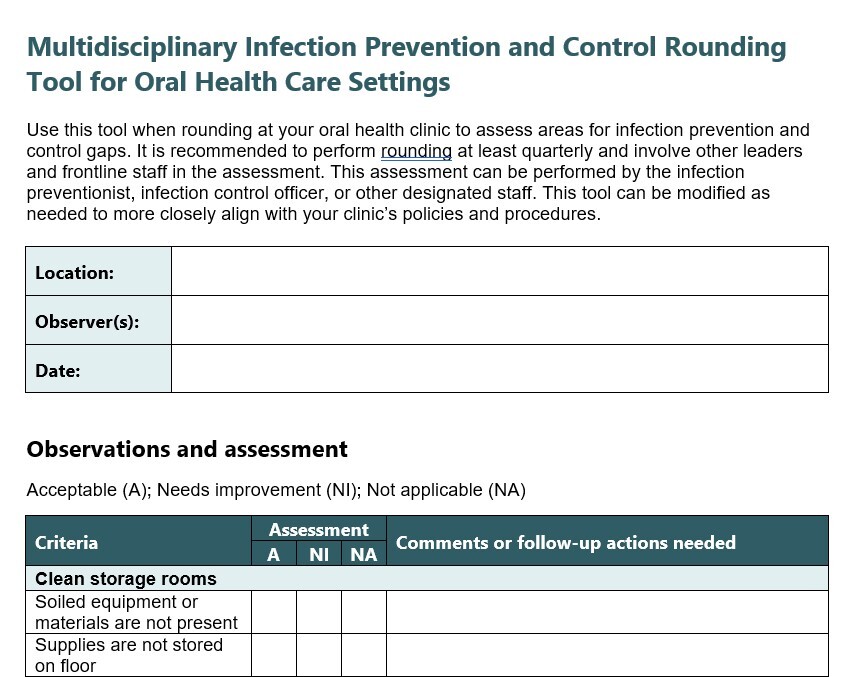
The Multidisciplinary Infection Prevention and Control Rounding Tool for Oral Health Care Settings (Word) is designed to help assess the clinic environment for infection control gaps and prioritize corrective measures and follow-up. The tool can be easily modified to more closely align with clinic-specific policies as necessary.
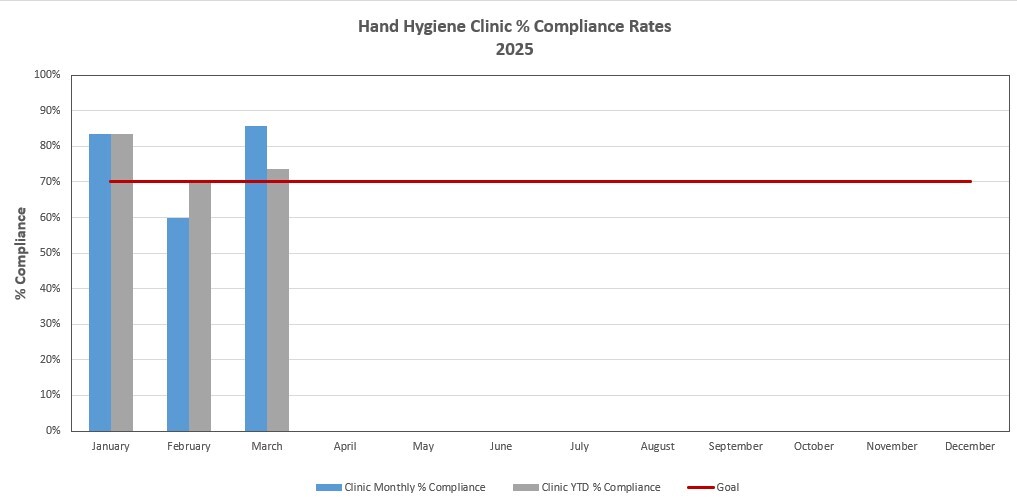
 The Hand Hygiene Observations Template for Oral Health Settings (Excel) tool is designed to make monitoring hand hygiene compliance easier. It includes a template for observing hand hygiene practices as well as tables for logging the data. The tables automatically convert hand hygiene data into easy-to-read graphs that visualize hand hygiene compliance data over time, by staff type, or by moments for hand hygiene opportunity. If a dental clinic has multiple locations, the tool also allows users to compare hand hygiene compliance from one location to the next.
HAI Prevention Program highlights
HAI Prevention Program highlights
Did you know the HAI Prevention Program hosts virtual IPC workshops for local and Tribal health departments (LTHDs)? The workshops are designed to provide LTHD staff with foundational knowledge on HAI and IPC topics. Workshops provide attendees with opportunities to practice and apply the skills they learn with other LTHD staff from across Wisconsin.
Check out the upcoming workshop!
Date: Tuesday, October 13, 2026
Time: 10:30–11:30 a.m.
Topic: Infection Control Breach Case Study
Presenter: Jennifer Kuhn, BSN, RN, CIC
This interactive workshop will walk participants through an infection control breach case study. Participants will review what an infection control breach is, steps to a breach investigation, and impacts and challenges of an infection control breach. Participants will be guided through an infection control breach case study where they will need to apply the concepts learned.
Learning objectives:
- Understand what an infection control breach is.
- Identify the steps to an infection control breach investigation.
- Describe the impacts and challenges of an infection control breach.
- Complete the actions necessary to conduct an infection control breach investigation.
Knowledge check answer
Testing during the prodromal phase, prior to rash onset is not recommended due to the possibility of a false negative result.
Learn more about when to suspect and test for measles by viewing the DHS When to Suspect and Test for Measles (PDF) fact sheet.
|