 This Update is being sent to members of the Wisconsin Travel Health Network.
Ebola Bundibugyo Virus Disease (BVD) update
The Bundibugyo ebolavirus outbreak in the Democratic Republic of the Congo (DRC) is spreading substantially faster than previous Ebola outbreaks and is now the second-largest Ebola outbreak on record. The outbreak was first recognized in DRC in May 2026. Due to challenges such as limited health infrastructure, ongoing political and military conflict, and lack of adequate infection control tools, the northwestern provinces of DRC are experiencing alarming rates of community spread, with more than 6,000 cases identified and a 48% case fatality rate during the first three months of the outbreak.
Earlier in the outbreak, 21 patients who sought medical care in Uganda were diagnosed with Ebola, but, as no new cases or community spread were detected for 42 days, Uganda joined South Sudan as an affected country without specific areas of concern.
The surge of cases in DRC and the lack of new cases outside of DRC prompted an August 4 update to restrictions and guidance for travelers from DRC, Uganda, and South Sudan to the United States. At this time, all travelers, including U.S. citizens, who have been anywhere in the DRC (even only in the airport) within 21 days of their flight will not be allowed to board commercial flights with U.S. destinations. Travelers returning to the U.S. from Uganda or South Sudan continue to arrive at one of four U.S. airports for enhanced screening and work with local public health agencies to monitor their health for 21 days post-travel.
To date, Wisconsin has had nearly 200 travelers return from Ebola-affected countries. Every region in Wisconsin has had travelers return from these areas; however, no travelers screened upon U.S. entry have had a high-risk Ebola virus exposure. Returning travelers work with their local or Tribal health department to monitor their health. As expected, some travelers have developed non-Ebola illnesses such as malaria, influenza, and bacterial enteritis. Health care needed during a traveler’s monitoring period is prearranged with the provider to address any risk or infection control concerns. We encourage health care providers to routinely obtain a thorough travel history from all patients and follow DHS guidance if they are concerned their patient has symptoms of a viral hemorrhagic fever.
CDC provides additional information on the current outbreak situation and information for returning travelers. The Wisconsin Department of Health Services (DHS) also has resources for viral hemorrhagic fevers and clinical guidance for evaluating patients for viral hemorrhagic fever (PDF).
CDC Travel Health Notices for international travelers
Level 4—Avoid All Travel
BVD in Ituri and Nord-Kivu Provinces of the Democratic Republic of the Congo (8/4/2026)
There is a level 4 travel health notice for BVD in the Ituri and Nord-Kivu provinces of the DRC. The Center for Disease Control and Prevention (CDC) recommends avoiding all travel to these provinces.
Level 3—Reconsider Nonessential Travel
BVD in Haut-Uele and Tshopo Provinces of the Democratic Republic of the Congo (8/4/2026)
There is a level 3 travel health notice for BVD in Haut-Uele and Tshopo provinces of the DRC. CDC recommends avoiding all nonessential travel to these provinces.
Level 2—Practice Enhanced Precautions
Zika in Indonesia (8/7/2026)
Cases of Zika are being reporting in travelers returning from Bali, Indonesia, resulting in a level 2 travel health notice. As Zika virus infection during pregnancy can cause birth defects, pregnant people should avoid travel to Bali. Travelers to Bali should take steps to prevent mosquito bites and prevent sexual transmission of Zika during and after travel.
EBV in the Democratic Republic of the Congo and Uganda (8/4/2026)
There is a level 2 travel health notice for BVD in Uganda and provinces in the DRC not affected by the current BVD outbreak.
Chikungunya in Nicaragua (9/3/2026)
Nicaragua is reporting increased cases of chikungunya, resulting in a level 2 travel health notice. Travelers to Nicaragua should protect themselves by taking steps to prevent mosquito bites. Vaccination is recommended for travelers who are visiting an area with a chikungunya outbreak.
Chikungunya in Costa Rice (7/30/2026)
There is an outbreak of chikungunya in northwest Costa Rica. Travelers should take steps to prevent mosquito bites and consider vaccination if they are traveling to an area with a chikungunya outbreak.
Chikungunya in Mauritius (5/14/2026)
There is an outbreak of chikungunya in northwest Costa Rica. Travelers should take steps to prevent mosquito bites and consider vaccination if they are traveling to an area with a chikungunya outbreak.
Level 1—Practice Usual Precautions
Global Dengue (7/30/2026)
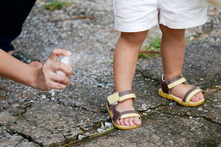
Fight the Bite reminders
Late summer and early spring are times of year when mosquito activity can increase both in the U.S. and globally. Remind travelers to take steps to fight the bite by:
-
Using repellent on skin and clothing. Insect repellents with 20–30% DEET, 10–20% picaridin, 10–20% IR3535, or 30–40% oil of lemon eucalyptus can help prevent mosquito bites. Applying permethrin (a pesticide that kills mosquitoes) to clothes and outdoor gear lasts through several washes and can kill mosquitoes when they land on your clothes.
-
Wearing appropriate outdoor clothing. Wear long-sleeved shirts, long pants, socks, and shoes outdoors during peak mosquito activity hours (dawn and dusk).
-
Avoiding direct contact with mosquitos. Place screens on windows and doors to keep mosquitoes out of your home.
-
Reducing mosquito breeding habits. Cover outdoor trash and recycling cans with tight-fitting lids, and remove or replace any stagnant pools of water like drain dishes under flower pots, birdbaths, and pet dishes.
-
Applying pesticides outdoors. Visit the Department of Natural Resource’s pest control pollutant page for information of larvicides, the Wisconsin Department of Agriculture, Trade, and Consumer Protection’s web page for regulations on pesticide use in Wisconsin, and the Environment Protection Agency’s pesticide safety site for more information about using pesticides safely.
|

August was National Immunization Awareness Month
National Immunization Awareness Month is an annual observance held in August to highlight the importance of vaccination for people of all ages. Together, we can help raise awareness about the importance of vaccination and encourage people to talk to a health care provider they trust about staying up to date on their vaccinations.
Immunizations for travel
All travelers, regardless of their destination, should be up to date on routine vaccines. This is because many diseases that are less common in the U.S. are still spreading in different parts of the world. Childhood vaccines have helped limit the severity and spread of these diseases here. Ensuring travelers are vaccinated before they travel will help keep them from getting sick and potentially spreading disease when they return home. Important routine vaccines include:
- Measles-mumps-rubella (MMR).
- Diphtheria-tetanus-pertussis.
- Varicella (chickenpox).
- Polio.
- Annual flu shot.
Travelers may be recommended to get additional vaccines or take other steps to avoid illnesses that are common in their destination. Additionally, some countries may have specific requirements and recommendations that they need to comply with when visiting. Travelers should visit CDC's Destinations web page to learn about entry and exit requirements and to view the latest travel health notices.
Commonly recommended travel vaccines
-
Hepatitis A and B: Recommended for travel to many regions where these viruses are common.
-
Typhoid: Advised for parts of the world with poor sanitation and limited access to safe water.
-
Yellow Fever: Required for entry into certain countries in Africa and South America; must be administered at a registered yellow fever vaccination center (such as the UW Health clinic).
|
Disease Spotlight: Primary Amebic Meningoencephalitis (PAM)
Background
PAM is a rare but serious disease caused by an ameba (Naegleria fowleri or N. fowleri) that naturally lives in soil and fresh water. It affects the central nervous system, which includes the brain and spinal cord.
Who is at risk?
N. fowleri thrives in warm freshwater environments, including lakes, rivers, ponds, hot springs, and inadequately chlorinated swimming pools. The organism proliferates at temperatures above 86°F and can tolerate temperatures up to 113°F but does not survive in saltwater.
If water containing N. fowleri goes up the nose and to the brain, it can cause an infection, so activities that are more likely to result in the uptake of contaminated water into the nose (such as jumping or diving into warm freshwater and splashing others) are the riskiest. Brain infections caused by N. fowleri usually occur after someone goes swimming or diving in a lake, river, or other body of fresh water during summer months. Infections often happen when it's been hot for long periods, resulting in higher water temperatures and lower water levels. You cannot get an N. fowleri infection from swallowing water containing the ameba. You also can't get an infection from someone else or pass it on to others.
In the United States, most N. fowleri infections have been linked to swimming in southern states. However, geographical areas where infections happen are changing. Since 2010, infections have been confirmed in Nebraska, Iowa, Minnesota, Indiana, Maryland, and northern California.
What are the symptoms?
Early symptoms of PAM can include headache, fever, nausea, and vomiting. These symptoms of PAM usually start about 5 days after someone is exposed to N. fowleri but can surface anywhere between 1 and 12 days. Early symptoms are similar to those caused by other, more common illnesses like bacterial meningitis.
After symptoms begin, PAM progresses quickly. As it does, additional symptoms can include:
- Stiff neck.
- Confusion.
- Inattention to people and surroundings.
- Seizures.
- Hallucinations.
- Coma.
People with these symptoms should seek medical care right away if they suddenly develop fever, headache, vomiting, or stiff neck. This is especially critical if you've recently been in warm fresh water where N. fowleri thrives. Findings on an exam may include meningeal signs and focal neurologic deficits. Rarely, abnormalities in taste or smell, nasal obstruction, and nasal discharge have been observed.
Death from PAM typically occurs within about 5 days after symptoms first begin but can happen within 1 to 18 days.
How is it diagnosed?
PAM is diagnosed by detecting N. fowleri amebas using different tests offered by only a few U.S. laboratories, including CDC. The tests include:
- Direct visualization by examining cerebrospinal fluid (CSF) under a microscope. N. fowleri can be identified in CSF smears or cultures using hematoxylin and eosin (H&E), periodic acid-Schiff (PAS), trichrome, Giemsa, or Wright-Giemsa stains. Note: A Gram stain should be avoided since N. fowleri can be destroyed during heat fixation.
- A polymerase chain reaction (PCR) test that detects N. fowleri in a patient's CSF or tissue.
- Immunohistochemical (IHC) testing and indirect immunofluorescent (IIF) staining that use specific antibodies against N. fowleri to detect the ameba.
CDC offers diagnostic assistance for N. fowleri infection to physicians and scientists through DPDx and the Free-Living and Intestinal Amebas (FLIA) Lab.
Morphology experts at DPDx can evaluate microscopic images. Scientists at the FLIA laboratory provide diagnostic assistance using molecular and immunofluorescence assays.
Are there any treatments?
A combination of medications is recommended for treatment of N. fowleri infections. These drugs have been used successfully to reduce symptom severity and death when PAM is suspected or diagnosed early in the course of infection. Many have been found to have antiamebic activity against N. fowleri in the laboratory.
How can it be prevented?
One sure way to prevent PAM is to stay out of warm lakes, ponds, and other fresh water.
If you swim, wakeboard, or participate in other water activities, you can take steps to reduce your risk:
- Avoid activities during warmer months when water temperatures rise and water levels go down. N. fowleri amebas thrive in these conditions.
- Hold your nose shut or use a nose clip if you jump or dive into the water.
- Cases with travel to a location with known clade I mpox virus cases.
- Always keep your head above water in hot springs and other naturally hot (geothermal) water.
Avoid digging in, or stirring up, sediment in shallow fresh water. N. fowleri amebas are more likely to live in sediment at the bottom of lakes, ponds, and rivers.
|