We heard it when young people in high school student-led mental wellness programs told us they wanted funding to do activities. They had great ideas for programming but no money to bring those ideas to fruition. Through grant funds our office received, we made available “Building Belonging and Connection at School” Mini-Grants. Since 2024, we have been able to fund 40 programs in middle and high schools across the state with grants ranging from $500 to $1,000. What the students have done with these funds has been innovative and impressive.
The purpose of the grants was for school organizations to build belonging and social connection among students. Themes emerged in the programs the schools proposed:
-
Activities – events bringing students together, a volleyball game for mental health awareness, daily activities for a mental wellness week, field trips, meetings for new students, quilt making, positive message campaigns, photography, and a Latin festival.
-
Wellness days – a set time where students could experience a variety of wellness activities.
-
Games – many schools simply wanted to purchase games (indoor and outdoor) that students could play and connect over during unstructured time.
-
Murals and improving spaces – a number of schools designed and made murals promoting belonging.
See a list of all 40 “Building Belonging and Connection at School” Mini Grants here. We hope these innovative ideas can inspire other schools with ways to promote belonging and connection. Additionally, we encourage funders to replicate this mini-grant program to help more student groups in our state do similar programs that build belonging. It is clear that even a small amount of money can make a big difference in student belonging. We saw 40 school programs prove that!
|
OCMH will release applications for its second cohort of Youth Mental Wellness Champions in August. The application will involve a short online form where student applicants describe their personal experience with mental wellness; provide a list of relevant extracurricular, volunteer, or work experiences; and provide a brief video explaining why they would like to participate in the cohort. To receive notice of the application, complete this form.
Applications will be due in August. The new cohort will be announced in early September and begin their 9-month program later in September. The cohort meets monthly from September through May. Meetings are virtual with the May meeting being an in-person completion event in Madison. Over the nine months, cohort members will explore topics such as the history of mental health, defining wellness, understanding school mental health, using data for change, storytelling, and advocacy strategies. Each Champion will select a mental health related topic of interest to them and prepare a poster presentation on it to share at the Wisconsin State Capitol at the May 2027 completion event. See a summary of the 2025-26 Champion’s presentations here.
The cohort is comprised of 15 high school juniors and seniors from across the state. A student will be selected from each of the state’s 12 CESAs (Cooperative Educational Service Agencies). The remaining three cohort spots will be filled by students from any CESA. Learn more about the Champions here.
|
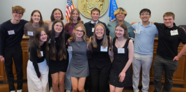
The inaugural 2025/26 OCMH Youth Mental Wellness Champions at their completion celebration at the State Capitol on May 14, 2026.
|
The mental health challenges our youth face are great, but there are many organizations in Wisconsin doing innovative work to improve children’s mental health. We spotlight many of these stories in our Showcasing Solutions. Since late 2023 we have featured 28 organizations that are helping kids have positive experiences, build resilience, and foster healthy relationships.
We’ve categorized our Showcasing Solutions to make it easier for you to find stories that best relate to your work. Below are the categories and one example story. We encourage you to spend a little time checking out our Showcasing Solutions, pull one or two that you/your organization could replicate, and discuss it with your colleagues.
See all our Showcasing Solutions here.
|
“We look to OCMH for the important data points in children’s mental health.” We hear that over and over! Data drives our work, and we track key indicators and review data for understanding and direction. We examine evidence-based practices and disseminate what we learn. We strive to understand trends that impact children of all ages and from every corner of Wisconsin. While difficult to measure, we emphasize prevention and its impact on the population level health, as well as data that focuses on children who have been marginalized.
Our key data resources include:
-
Fact Sheets – informational pieces that take a deep dive into a relevant children’s mental health topic and offer actionable recommendations. Our most recent Fact Sheet is Financial Hardship and Children’s Mental Health.
-
Key Facts in Youth Mental Health – a snapshot of the key challenges facing Wisconsin's youth in a visual format for easy understanding.
-
Data Bites – bite-sized information on individual key children's mental health data points. Our most recent Data Bite is Nature’s Impact on Mental Health.
-
Child Well-being Indicators – presents and tracks data on 42 well-being factors that cover clinical, social, economic, and individual health categories. These indicators comprise the dashboard included in our Annual Reports.
-
Annual Report – presented to the Legislature on an annual basis, our annual report reviews the current well-being of Wisconsin’s youth and highlights OCMH work.
-
Research News in Youth Mental Health – monthly e-newsletter highlighting current research and data in youth mental health. Check out our most recent Research News in Youth Mental Health here. Subscribe to Research News here.
Whether your needs for data are a key, single point to grab attention or to take a deeper dive and recommend action, we publish a variety of valuable resources. We encourage you to familiarize yourself with these resources.
|

Technology and Children’s Mental Health – Topic for August 7th Meeting
OCMH’s Children’s Mental Health Network August 7th meeting will focus on Technology and Children’s Mental Health. We’ll explore this important topic with expert panel discussions on:
- The Early Years – Raising Kids in a Tech-Filled World
- Adolescent Development, Well-being, and Technology – The Intersection
- Behavioral Health Providers – What They are Seeing
- Young People Sharing Their Insights
The meeting is virtual from 10 am-12 pm.
If you are on the Children’s Mental Health Network distribution you received the meeting link for this meeting last week. If you would like to be included on the distribution list and receive notice of these meetings, you can sign up here.
|

By Tamilyn White, LPC, Behavioral Health Therapist – NorthLakes Community Clinic
“I can’t go to school. My stomach hurts.” Sometimes children really do have stomach ailments. But what does it mean when a kiddo complains about feeling sick, but rest, medicine, and doctors don’t find anything physically off? Although we sometimes talk as if our minds and bodies are two separate parts, there is a strong connection between them. We can slow our heart rate by focusing on breathing slowly. Some people can change their body temperature and blood pressure by thinking calming thoughts. Our brains are so powerful that they release biochemical pain “medicines” many times stronger than morphine when we get injured. Similarly, when we are in danger, our brain shuts down nonessentials like decision-making, planning for the future, and digesting our last meal in favor of things that will help us survive: getting a lot of oxygen to our muscles so we can run or fight, dilating our pupils to take in more light and allow sharper vision, and focusing all energy on protection.
When we experience a lot of stressful things, our brain can get stuck in survival mode. This is where those sore tummy complaints begin. Our bodies are not built for constant stress. When school feels scary, bodies respond just as they do to other threats, and that feels like being sick—like having a headache and a sick stomach. We can help these kiddos unstick from survival mode by inviting them to share their worries and listening to their concerns. Being heard is a powerful connection that counters stress and settles the brain. One quick and easy exercise that can slow anxious breathing and settle activated worries is Soup Breathing. Taking a deep breath in through the nose, we imagine smelling the soup. Pursing the lips and exhaling softly, we cool the soup. Repeat Soup Breathing a few times until that anxious brain cools off too. Teaching children to recognize signs of stress and some things they can do to feel better is a valuable skill they can take with them anywhere.
NorthLakes Community Clinic is a Federally Qualified Community Health Center that operates 19 clinics in 18 communities throughout northern Wisconsin.
|
Articles on Children’s Mental Health for Your Newsletters and Communications
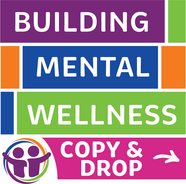
OCMH provides a monthly short article on youth mental wellness for organizations to “copy and drop” into their newsletters and/or other communications. Building Mental Wellness Copy & Drop provides a ready-to-use message the third Tuesday of each month. To receive it, sign up here (select “OCMH – Building Mental Wellness Copy & Drop”). Feel free to send our Copy & Drop sign-up link to your networks. Copy & Drop is a resource for any organization interested in publishing reliable children’s mental health information.
The above article, “Mental Health and Physical Health are Related,” was the June Copy & Drop article. Learn more and see Copy & Drop’s first article, “Connection Before Correction,” here. The July Building Mental Wellness Copy & Drop is “Every Child’s Voice Matters: When Asking for Help Isn’t Enough” and will publish July 21st.
|
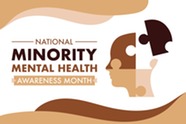
July is BIPOC Mental Health Month
Also recognized as Bebe Moore Campbell National Minority Mental Health Awareness Month, July provides a time to focus on the unique strengths and challenges that Black, Indigenous, and People of Color face in addressing mental health. BIPOC Mental Health Awareness Month was the result of years of advocacy from Bebe Moore Campbell who fought for equitable mental health care, especially for Black communities. On June 2, 2008, Congress formally recognized July as Bebe Moore Campbell National Minority Mental Health Awareness Month.
Learn more and access resources:
-
Mental Health America – see their BIPOC Mental Health Toolkit (available in Spanish) and printables/graphics
-
NAMI (National Alliance on Mental Illness)
Check out related OCMH data and Showcasing Solutions:
|
July is Disability Pride Month
Annually celebrated in July, Disability Pride Month honors the history, achievements, and experiences of the disabled community. The month also celebrates the anniversary of the Americans with Disabilities Act (ADA) which was signed into law on July 26, 1990. We encourage all to learn more about Disability Pride Month and the importance of inclusion and accessibility.
Check out related OCMH data:
|

WEA Member Benefits Student Art Contest on Belonging
The WEA Member Benefits/WEA Member Benefits Foundation’s annual student art contest has announced its finalists. The theme is “Belonging,” and Wisconsin public school students in grades K-12 were invited to explore in their art what connection, inclusion, and community meant to them. See the 2026 finalists’ art here. One “Best in Class” recipient will be announced later in the summer.
|
Youth Policy Accelerator Applications Available
Mental Health America’s Youth Policy Accelerator is a youth leadership program that ensures the priorities and voices of young people are at the forefront of national mental health policy discussions. Applications are due July 17th. Learn more.
Rural Technology Transformation Grant Funding Opportunity
The Wisconsin Department of Health Services (DHS) has invited eligible organizations to apply for Rural Technology Transformation funds, a new grant funding opportunity through the Rural Health Transformation Program. These formula-based allocations will award an estimated $209 million over five years, pending CMS approval, to specified healthcare organizations. Through this funding, DHS seeks to bolster the state's capacity to provide high-quality care to rural residents through technology investments that remove barriers to care, maximize provider productivity, and ensure improved patient or community health outcomes. More information about this funding opportunity and the work of the Rural Health Transformation Program can be found on the DHS website.

|