 This Update is being sent to members of the Wisconsin Travel Health Network.
Global Health Update: Hantavirus and Ebola
Hantavirus update
On May 2, 2026, it was reported that there was a hantavirus outbreak on a cruise ship in the Atlantic Ocean caused by the Andes virus. Andes virus is a type of hantavirus that can lead to hantavirus pulmonary syndrome (HPS), a severe and potentially deadly disease that affects the lungs. On June 21, all U.S. citizens potentially exposed to hantavirus aboard the cruise ship finished their 42-day monitoring period. No cases of hantavirus disease occurred in the United States as a result of this outbreak.
Ebola update
There are current outbreaks of Ebola Bundibugyo virus disease (BVD) in the Democratic Republic of the Congo (DRC) and Uganda. These two outbreaks are epidemiologically linked, with transmission originating from the DRC. As of June 30, 2026, there have been over 1,300 confirmed cases, with at least 400 deaths. Health authorities in the DRC and Uganda are working with the World Health Organization (WHO) to implement public health measures, including delivering medical supplies, strengthening surveillance, and engaging donors to address funding gaps.
CDC Travel Health Notices for international travelers
Level 4—Avoid All Travel
None at this time.
Level 3—Reconsider Nonessential Travel
Ebola Bundibugyo Virus Disease in parts of the Democratic Republic of the Congo (6/15/2026)
The Democratic Republic of the Congo (DRC) is experiencing an outbreak of a type of Ebola disease, Bundibugyo virus disease (BVD), resulting in a level 3 travel health notice. The outbreak is occurring in Ituri, Nord-Kivu, and Sud-Kivu provinces. Individuals should avoid travel to these areas if possible. Travelers can prevent BVD by avoiding contact with the bodily fluids of people with Ebola and avoiding contact with people who have symptoms. Additionally, travelers should avoid contact with bats, forest antelopes, nonhuman primates (such as, monkeys, chimpanzees, gorillas), and blood, fluids, or raw meat from these or unknown animals.
Level 2—Practice Enhanced Precautions
Ebola Bundibugyo Virus Disease in the Democratic Republic of the Congo and Uganda (6/15/2026)
There is a level 2 travel health notice for BVD in Uganda and certain provinces in the DRC.
Malaria in Yemen (6/11/2026)
Increased cases of malaria have been reported in Yemen, resulting in a level 2 travel health notice. Travelers can protect themselves by preventing mosquito bites. Individuals traveling to Yemen should consider speaking to their health care provider about which antimalarial drug would work best for them.
Chikungunya in French Guiana (6/4/2026)
There is a level 2 travel health notice for an outbreak of chikungunya in French Guiana. Travelers can protect themselves by preventing mosquito bites.
Malaria in Mayotte (6/2/2026)
Increased cases of malaria have been reported in Mayotte, resulting in a level 2 travel health notice. Travelers can protect themselves by preventing mosquito bites.
Chikungunya in Mauritius (5/14/2026)
There is a level 2 travel health notice for chikungunya in Mauritius. Travelers can protect themselves by preventing mosquito bites.
Level 1—Practice Usual Precautions
Diphtheria in Haiti (6/25/2026)
Global Dengue (6/23/2026)
Hepatitis A in Canada (6/4/226)
Diphtheria in Sub-Saharan Africa (6/2/2026)
Andes Virus (Hantavirus) in South America (5/20/2026)
Ciguatera Fish Poisoning in Vanuatu (5/7/2026)

New World screwworm cluster
Seven cases of New World screwworm have been confirmed in animals in Texas and New Mexico. New World screwworm (NWS) is a parasitic fly that was previously eradicated from the U.S. in 1966 after a successful program that produced and released sterilized male flies. For the past several years, NWS has been migrating toward the U.S.
NWS lays eggs in the open wounds of warm-blooded animals, and when the eggs hatch, the larvae burrow into the flesh. NWS is fatal if untreated. As a single female can lay 200–3200 eggs every three to seven days and eggs hatch within 24 hours, NWS spreads very quickly. However, human cases are rare and treatable when caught early. The larger concern is potential impacts on livestock, particularly cattle. Additionally, wildlife and pets in agricultural areas can be exposed. Ensuring pets are on flea and tick prevention can prevent NWS infection. People at highest risk are agricultural workers in southern states. Risk remains low for other individuals. Current cases have occurred in cattle, goats, and a dog. See the United States Department of Agriculture (USDA) dashboard for current surveillance information.
|
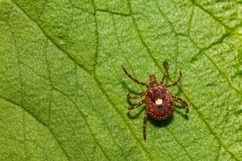
Beware of alpha-gal syndrome while traveling
Alpha-gal syndrome (AGS) is a serious, potentially life-threatening allergy and tickborne disease. Alpha-gal is a molecule (galactose-α-1,3-galactose) that is naturally produced in the bodies of most mammals but not in people. It is also found in the saliva (spit) of some ticks. The best way to protect yourself and your family from developing AGS is to prevent tick bites.
When a tick bites, it can transfer alpha-gal from its saliva into a person's blood. The body's immune system can identify alpha-gal as a threat and trigger an allergic reaction. Symptoms occur after people eat red meat or are exposed to other products made from mammals. Because of this, AGS is also known as red meat allergy or tick bite meat allergy.
Most health care providers recommend patients with AGS stop eating:
- Red meat such as beef, pork, lamb, venison, or rabbit.
- Dairy products, if a person is not able to tolerate dairy.
- Some medicines and non-food products.
|
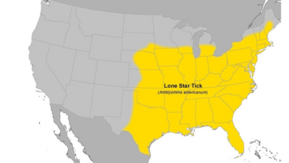
In the United States, AGS is primarily associated with the bite of a lone star tick, and less commonly by the bite of a blacklegged tick or a western blacklegged tick. In other countries, other tick species have been linked to AGS. In the United States, not every person bitten by a lone star, blacklegged, or western blacklegged tick will develop AGS. The reason why certain people develop AGS and others do not is unknown. Most cases of AGS have been reported in adults, but people of all ages can develop AGS.
Most reported cases of AGS in the United States occur in South, East, and Central states. These are the areas where most lone star ticks are found. Although the lone star tick can be found occasionally in Wisconsin, there is not a permanent population that lives in our state year-round.
|
Disease Spotlight: Mpox worldwide
Background
Mpox is a zoonotic disease caused by the monkeypox virus (MPXV). MPXV comes from the same family as the smallpox virus. Mpox is endemic in Central and West Africa, and the virus has been found in small rodents, monkeys, and other mammals in these areas. In 2022, mpox spread internationally, and in 2024, large outbreaks in Central and Eastern Africa led to an increased number of travel-associated mpox cases. Although mpox has been occurring at low levels since 2022, current surveillance data show an uptick of cases nationwide in recent weeks. As of June 18, 2026, approximately 620 cases have been confirmed across the United States, and as of May 26, there have been five confirmed mpox cases in Wisconsin this year.
There are two types of mpox: clade I and clade II. Clade I is the type of mpox associated with the outbreaks in Central and Eastern Africa. Clade I has historically been more severe and has a higher mortality rate (0.5%–3%). Clade II is the type of mpox associated with the ongoing global outbreak that began in 2022. Clade II has a much lower mortality rate; fewer than 0.1% of people infected with clade II die from the disease.
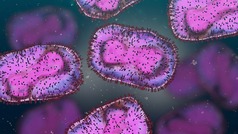
How does mpox spread?
Both clade I and clade II spread through close contact, including sex, with a person with mpox, direct contact with contaminated materials, and direct contact with infected animals. Pregnant people with mpox can pass the virus to the fetus during pregnancy, or to the newborn during and after birth. A person can spread mpox from the time symptoms start until the rash had healed and a fresh layer of skin has formed.
|
Who is at risk?
Anyone who has close contact with an infected person, animal, or materials is at risk of contracting mpox. However, certain groups are at higher risk of acquiring mpox, such as people with multiple sexual partners. The current global outbreak has disproportionately affected gay, bisexual men including men assigned female at birth and men who have sex with men (MSM). Mpox can pose serious risk to people who are pregnant, and infants less than one year of age.
What are the symptoms
People usually start to experience symptoms within 21 days after exposure to mpox. Most people experience flu-like symptoms and then develop a blister-like rash on the hands, feet, chest, face, mouth, or near the genitals one to four days later. Other symptoms include fever, chills, swollen lymph nodes, exhaustion, muscle aches, headache, and respiratory symptoms (for example, sore throat, nasal congestion, or cough).
What are the testing and reporting requirements?
Mpox is a Category I reportable condition in Wisconsin. The Centers for Disease Control and Prevention (CDC) recommends that providers perform clade-specific testing in all cases that meet the following criteria:
- All severe cases (hospitalizations).
- Cases not associated with the men who have sex with men (MSM) population.
- Cases with travel to a location with known clade I mpox virus cases.
- Cases in localities that have detected clade I mpox virus for three months after detection of a clade I case.
- Locally acquired cases in localities that have not had mpox in the last six months.
- Cases with a positive result by mpox virus or orthopoxvirus generic test and negative or indeterminate result by a clade II-specific test.
What is the treatment?
There is no Food and Drug Administration (FDA)-approved treatment for mpox. Supportive care and pain control is recommended for most patients with mpox who don’t have severe disease or risk factors for severe disease.
How can it be prevented?
Most people with mpox recover in two to four weeks without treatment. However, vaccinations and antiviral medications that have been used to prevent and treat smallpox can be used to prevent mpox and reduce the severity of symptoms. Vaccination helps protect against mpox when given before or shortly after an exposure. JYNNEOS is a 2-dose vaccine that helps prevent mpox. The second dose should be given four weeks after the first dose. Individuals can use a JYNNEOS vaccine locator to find a vaccine.
Providers should discuss risk reduction measures for travelers that anticipate engaging in sexual activities during travel to areas where outbreaks are currently occurring, such as vaccination for priority populations. Additional prevention recommendations include avoiding or reducing activities, such as:
- Close contact, including intimate or sexual contact, with people who are sick with signs and symptoms of mpox.
- Sex with a new partner, sex at a commercial sex venue, sex traded for goods or money, sex in association with a large public event (such as a rave or festival).
- Contact with contaminated materials used by someone with mpox.
|