HAI Happenings: Quarter One 2026 Newsletter
This message is being sent to local public health department officers, nurses, and staff; Tribal health directors; infection preventionists; and key DPH staff.
HAI Happenings highlights new and noteworthy topics for all things related to healthcare-associated infections (HAI), including infection prevention and control (IPC), antimicrobial stewardship (AS), antibiotic resistance (AR), surveillance, and more. You can also find links to helpful guidance and resources and learn more about current Wisconsin HAI Prevention Program activities.
Knowledge check
Test your HAI knowledge. See answer at the end of the newsletter.
True or false: When performing disinfection, if the surface being disinfected starts to dry before the entire dwell time is met, it is appropriate to apply additional disinfectant to ensure the surface remains wet for the entire dwell time listed on the product label.
|
|
 |
What's new with the HAI Prevention Program?
-
The HAI Prevention Program’s released its 2024 annual data report. The report includes state-level National Healthcare Safety Network (NHSN) data for Wisconsin acute care and critical access hospitals.
-
Infection Preventionist (IP) Bootcamp is returning this spring! The HAI Program will host another round of IP Bootcamp, May 20–21 in Sauk City. Find more information and how to register on our IP Education webpage.
-
The HAI Program hosted a workshop for local and Tribal health departments (LTHDs) on measles case investigations. This interactive workshop walked participants through a tabletop discussion on measles. Participants reviewed what measles is and then were guided through a series of scenarios and questions. Topic discussed included measles infection risk, transmission, and contact management. Missed the workshop? No worries! You can view the recording on our Resources for Local and Tribal Health Departments webpage.
-
Check out our newly updated Infection Prevention in Ambulatory Settings webpage! The webpage now contains even more information and resources for infection prevention in ambulatory settings including topics such as, linen management, safe injection practices, and more.
|
In the news
-
Thus far in 2026, Wisconsin has identified two confirmed measles cases, one of which was hospitalized. View the Wisconsin Department of Health Services (DHS) Outbreaks, Recalls, and Investigations webpage for more information on these cases and exposures. Also visit the DHS Measles webpage for information, resources, and data.
-
DHS has released 2025 statewide vaccination rate data. The data show Wisconsin's childhood vaccination rates continued to decrease last year. To see more of the newly released data visit the children, adolescents, and adult vaccination data webpages.
-
In February, Wisconsin identified 12 cases linked to a Salmonella outbreak which included two hospitalizations. Find more information on the DHS Outbreaks, Recalls, and Investigations webpage.
Best practice and guidance updates
-
On March 6, DHS released a Health Alert sharing awareness and regional updates on an emerging dermatophyte (ringworm) with evidence of transmission through close skin-to-skin contact, including sexual contact.
-
DHS continue to endorse childhood vaccine recommendations of American Academy of Pediatrics. More information can be found in the Wisconsin issued guidance.
-
CDC released a new fact sheet to educate health care workers about the risk of New World Screwworm in health care settings. The infographic shares infection control actions to help strop the spread.
-
CDC shared a Health Advisory to clinicians and laboratories recommending a shortened timeline for subtyping all influenza A specimens among hospitalized patients. The recommendations come due to sporadic human infections with avian influenza A (H5N1) viruses amid high levels of seasonal influenza activity.
-
Check out the Candida auris in Health Care Settings infographic from CDC. Use this infographic to educate health care workers about the risk of C. auris in health care and infection control actions they can take to help stop the spread.
-
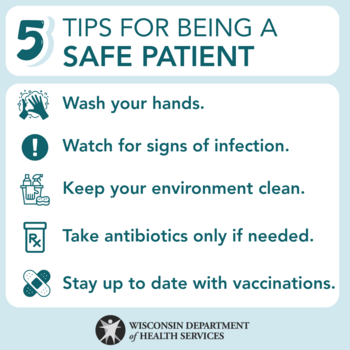
In March we celebrate Patient Safety Awareness Week! Patient Safety Awareness Week is an opportunity to highlight best practices to prevent HAIs. If you are a patient, caregiver, or health care personnel, learn more about how you can prevent HAIs by visiting out Information for Patients and Families webpage.
Project Firstline spotlight
Project Firstline released a Health Professions Infection Control Education Toolkit! This toolkit makes it easier for teaching faculty to educate on infection control topics and prepare the next generation of health care and public health professionals. The toolkit includes ready-to-use, adaptable resources that can be integrated into a variety of educational programs and settings.
Notes from the field
Each quarter we’ll highlight a specialty topic area or setting that the HAI Prevention Program works with and take a deep dive into guidance, recommendations, or notes from the field from our IPs. This quarter, we’re focusing on dialysis.
March is National Kidney Month!
Did you know that one in seven (1 in 7) adults in the U.S. have chronic kidney disease? Most people do not realize that they have kidney disease as it often does not show signs and symptoms until it further progresses. If left untreated chronic kidney disease can advance to end stage renal disease requiring dialysis or kidney transplant to stay alive.
What can you do?
-
Maintain a healthy lifestyle. Diabetes and high blood pressure are main risk factors for chronic kidney disease. If you already have high blood pressure or diabetes, ensure you properly manage these conditions.
- Stay within a healthy weight and exercise frequently.
- Avoid smoking and limit alcohol consumption.
- Eat a healthy diet which includes low sodium, fruit and vegetables, lean protein and whole grains and stay hydrated.
-
Limit use of pain relievers. NSAIDS, such as ibuprofen, or naproxens may damage the kidneys if used excessively or long term.
-
Talk to your doctor. Check with your doctor to determine your risk factors.
HAI Prevention Program highlights
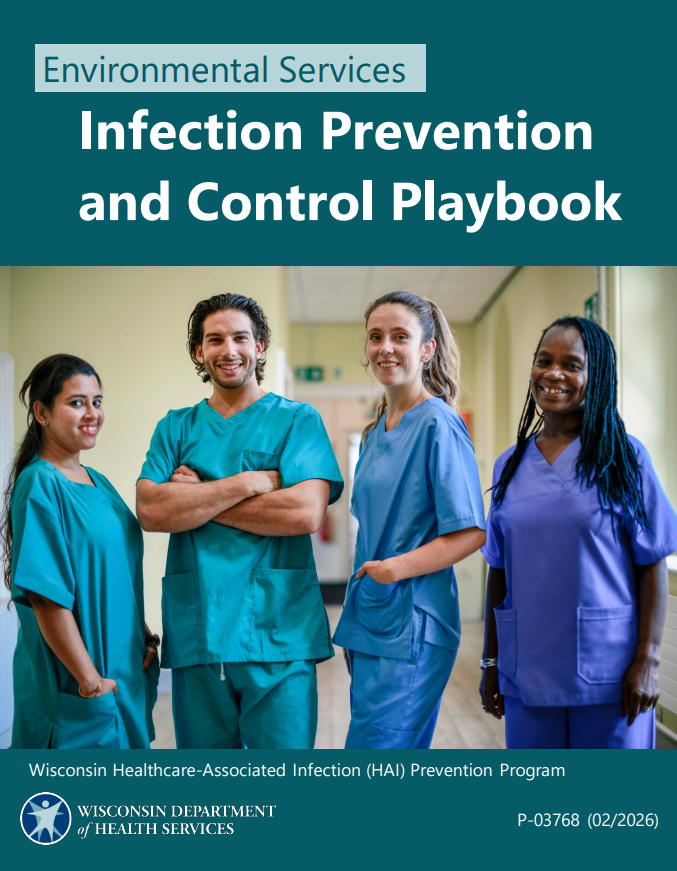
Check out our newly released resource, the Infection Prevention and Control Playbook for Environmental Services!
Health care facilities must maintain a clean environment to reduce germ exposure so that patients, residents, visitors, and health care personnel are safe. It is important to ensure that environmental services (EVS) is integrated into multidisciplinary teams to prevent HAIs.
This playbook is intended for infection preventionists, EVS department managers and staff, and other key staff responsible for ensuring the health care environment is properly cleaned and disinfected. It follows the CDC core components of a successful EVS program and is designed to assist facilities in implementing these core components.
Knowledge check answer
True! The dwell time of a disinfectant is provided on the product label and prescribes the amount of time a surface must remain wet in order for disinfection to be achieved. Find more information in the Infection Prevention and Control Playbook for Environmental Services.
|