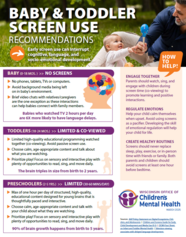
Early screen use can interrupt cognitive, language, and socio-emotional development. In our newest Data Bite we dig into the following recommendations for screen use:
- Babies 0-18 months old – no screens
- Toddlers 18-24 months old – limited screens and co-viewed
- Preschoolers ages 2-5 years old – limited screens, 30-60 minutes per day
Did you know:
- Babies who watch TV two hours per day are six times more likely to have language delays.
- The brain triples in size from birth to two years old.
- 90% of brain growth happens from birth to five years old.
Learn more by reading our Baby & Toddler Screen Use Data Bite here.
OCMH Data Bites provide a quick look at a children’s mental health data point. These are meant to be bite-sized, easily understood, and shared. See all our Data Bites here.
|
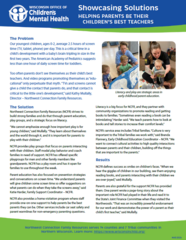
Too often parents don’t see themselves as their child’s best teacher. Northwest Connection Family Resources (NCFR), a Family Resource Center in northern Wisconsin, focuses on busting that myth and building strong families. They emphasize the importance of contact and connection between parents and their young children. “TVs and screens cannot give a child the contact that parents do, and that contact is critical to the little one’s development,” said Kathy Mullally, Director – Northwest Connection Family Resources.
Play is critical to a young child’s development and NCFR offers play groups that focus on parent and child interactions. They also stress cultural activities for the Tribal families they work with. Learn about how they do their work in OCMH’s newest Showcasing Solutions here.
Showcasing Solutions shares innovative work in children’s mental health across Wisconsin. See all our Showcasing Solutions here.
|
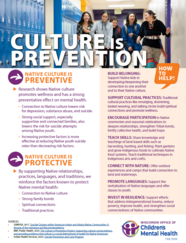
Native culture has a strong protective effect on youth mental health. Native children with a positive connection to their Native culture benefit by having a lower risk of suicide, depression, and substance abuse. OCMH recently released a Data Bite focusing on the power of Native culture in promoting good mental health. Read the Culture is Prevention Data Bite here.
Research also points to several actions we can take to support Native youth. Communities, schools, policymakers, health leaders, and providers can promote traditional cultural practices like talking circles, drumming, ceremonies, as well as indigenous arts and crafts. Investments in language revitalization and outdoor experiences for Native youth are also beneficial to their well-being. "For Native American youth, understanding that this power comes from their own culture and already exists within Native communities is equally important,” said Linda Hall, Director – Wisconsin Office of Children’s Mental Health.
|

Save the Date: Children’s Mental Health Network Meeting on Neurodiversity – May 1, 2026, 10 am-12 pm, virtual
The Children’s Mental Health Network’s May 1st meeting will focus on neurodiversity. On the agenda is exploring neurodiversity and autism, the importance of integration verses inclusion, and hearing from parents. As always, the meeting will include experts in the field and opportunities for attendees to join the discussion.
The Children’s Mental Health Network meets quarterly and brings together people interested in children’s mental health from across the state to learn about important children’s mental health topics. Remaining 2026 meetings and topics are:
- May 1 – Neurodiversity
- August 7 – Technology and Children’s Mental Health
- November 6 – Children’s Mental Health in the New Year/Going Forward
Meetings are 10 am-12 pm and virtual. Sign up to receive notice of the meetings here.
|

Save the Date: Children’s Mental Health Week is May 3-9, 2026
Each year OCMH celebrates Children’s Mental Health week the first week of May. This year’s theme is “Wired for Belonging,” and we’ll provide a variety of resources focusing on the importance of youth belonging. Look for more information in our April OCMH newsletter.
|
It has been a busy month for the Wisconsin Legislature. The Assembly has officially adjourned; the Senate will meet one more day in mid-March. Over 100 bills have passed the Assembly and are now awaiting action in the Senate. The following is a summary of a few of the bills that could affect children’s mental health.
Postpartum Medicaid Expansion SB23 / AB97: On February 19th, this bill passed the Assembly in a 95-1 vote and awaits Governor Ever’s signature which will be needed for its final step. Once signed into law, this bill will expand coverage of women who qualify for Medical Assistance from 60 days to 365 days. Key benefits of this expansion include: improved maternal health, reduced maternal mortality, and financial stability for families.
Gender Transition Medical Intervention (AB 104 / SB 157): This bill prohibits healthcare providers from providing treatments or interventions if they are done with the intent of “changing the minor’s body to correspond to a sex that is discordant with the minor’s biological sex.” Certain exclusions exist, such as when a genetic disorder of sex development is diagnosed. If a provider is found guilty of providing or referring to these services, they are at risk for having their license revoked. This bill has passed both the Assembly and Senate and currently awaits Governor Evers’ decision.
Parental Access to Health Records of Minors (SB 799 / AB 806): Under current state law, parents are entitled to minor’s health records, but some exceptions exist to protect an adolescent’s sensitive health information. This bill expands parental and guardian access to a minor's health records by removing existing exceptions for HIV testing results and the written objections of developmentally disabled minors aged 14 or older. However, it maintains or adds restrictions on access for parents who have been denied physical placement, those found to have endangered the minor, or in cases involving specific substance abuse treatments and safety concerns. This bill as amended passed both houses and has been sent to the Governor’s desk.
Last month, we provided updates on the Task Force on Protecting Kids: Youth in the U.S. report increased depressive symptoms and cyberbullying rates with an increase in time spent on online platforms. This task force introduced multiple bills that focused on the impact of social media and digital technology on youth development and mental health. The bills below have passed the Assembly and await further decisions in the Senate.
-
AB 963 /SB 936.This bill is designed to protect children from addictive social media platforms. It applies to large social media platforms and establishes clear criteria for identifying minor accounts, requiring parental consent, prohibiting advertising, and prohibiting addictive features such as autoplay, algorithmic profile-based feeds, and engagement metrics. The Senate Committee on Utilities, Technology, and Tourism has held a hearing on this bill.
-
AB 964 /SB 953.This bill defines that the crime of sexual extortion is an Internet crime against a child for the purposes of Internet crimes against children administrative subpoenas, if the crime victim was under the age of 18 at the time of the offense. This bill unanimously passed the Senate Committee on Judiciary and Public Safety and awaits scheduling.
-
AB 966 / SB954. This bill requires the Department of Justice to conduct a children’s online digital safety awareness campaign, bringing attention to the potential dangers of internet use by children and distributing resources to prevent children’s exposure to harmful content on the internet.
-
AB 961 / SB938.This bill aims to protect minors online from explicit content by establishing clear and uniform requirements for warning labels on explicit content distributed for commercial purposes both in print and digital formats. The Senate Committee on Utilities, Technology, and Tourism held a hearing on this bill.
AB 948 / SB 957. These companion bills would require school boards to adopt a policy that would prohibit the use of wireless communication devices during the school day. These bills require that the policy contain the same exceptions mandated under 2025 Wisconsin Act 42 which required school boards to prohibit cell phone use during instructional time but to make exceptions for emergencies and managing a student’s health care. This measure has passed the Assembly and the Senate Education Committee.
Creation of civil cause of action for sexual extortion (AB 923 / SB 902): This bill establishes a civil cause of action allowing victims of sexual extortion, or their representatives, to sue for damages and legal costs regardless of the status or outcome of any criminal proceedings. Notably, it also permits wrongful death suits if the extortion is found to be a substantial factor in a victim’s suicide. This bill has passed the Assembly and the Senate Committee on Judiciary and Public Safety. It now is available for scheduling in the Senate.
The following bills have recently been making movement in the Senate Committee on Mental Health, Substance Abuse Prevention, Children, and Families.
-
Raising the legal age for tobacco products and providing a legal age for vaping (SB 524/ AB 524): 3.5% of middle school students and 7.8% of high school students report using e-cigarettes. This bill raises the age for purchasing cigarettes from 18 to 21 and imposes the same age for purchase of electronic vaping devices. This bill unanimously passed out of Committee.
-
AB 711 / SB 701 unanimously passed out of Committee at the end of January. This bill would increase funding to the Family Foundations home visitation program by $1.2 million for fiscal year 2026-27.
- On March 3rd, a public hearing was held for SB 926 / AB 946. This bill requires the Department of Public Instruction to implement a pilot program during the 2026-27 and 2027-28 school years to give at least 50,000 high school pupils in this state access to an electronic multicomponent behavioral health prevention tool. The tool must be available in both English and Spanish and provide access to online behavioral health education resources, peer-to-peer support services, and online private sessions with mental health professionals.
A bill was introduced that would increase the earned income tax credit for families with fewer than three children (SB 1015 / AB 1030). Studies have shown that higher earned income tax credits for families can be linked to improved maternal health and educational and long-term health outcomes in children.
March Awareness Months
A number of important topics have awareness months and days in March:
|
Self-harm Awareness
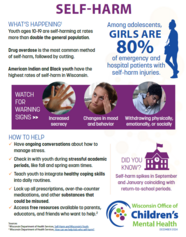
March is self-harm awareness month. You may wonder why this month is marked in the spring. Schools and families are planning their Spring Break activities, and hopefully kids get a chance to rest and recharge. But transitions back to school can be very difficult for some children. State data show that emergency department visits for self-harm tend to increase when young people return to school after a break (summer, winter, and spring). Though the highest rates of self-harm are among girls ages 15-17, this after-break trend is true for all youth ages 10-19.
Self-harm refers to intentional actions taken to hurt oneself, and it may be done as a coping strategy in response to stress, anxiety, or other emotional and/or mental health concerns. Learn more about youth self-harm here.
Signs of possible self-harming include increased secrecy, changes in mood and behavior, and withdrawing physically, emotionally, or socially. See OCMH’s Data Bite on self-harm for more information and how to help.
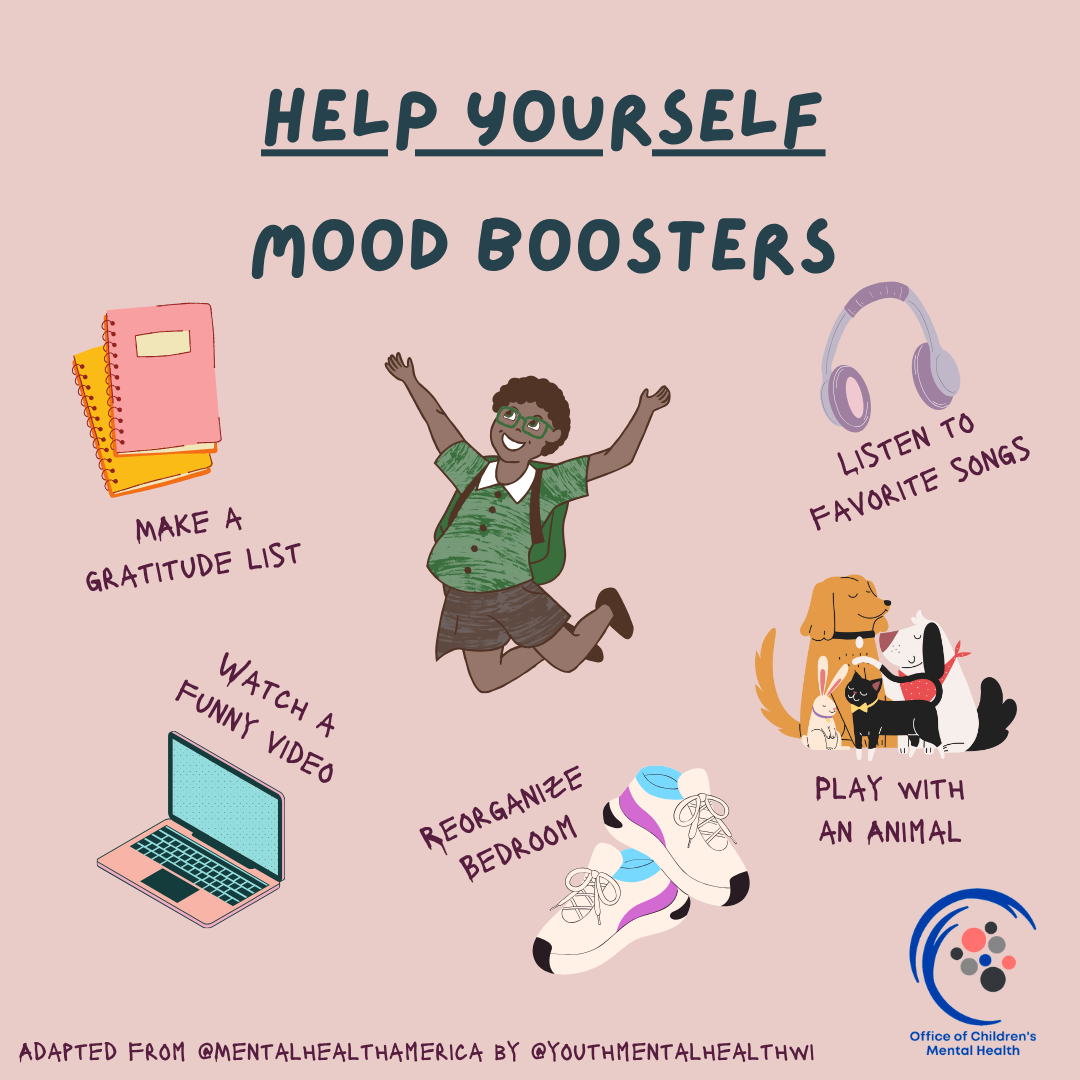
Helping the youth in your life to manage their stress and cope with big feelings is an important part of mental well-being. To see coping skills used by Wisconsin youth, access our Coping Skills Tip Sheet.
Developmental Disabilities
Organized by the National Association of Councils on Developmental Disabilities, the 2026 Developmental Disabilities Awareness Month theme is “We’re Here. Then, Now, Always.” The theme recognizes the truth that people with developmental disabilities have always been part of our communities and always will be. Lean more here.
|

National Nutrition Awareness Month
During the month of March, everyone is invited to learn about making informed food choices and developing healthy eating and physical activity habits. This year’s theme is “Discover the Power of Nutrition.” Learn more here.
Feeding children is important for their mental health. See OCMH’s Data Bite on Hunger & Youth Mental Health.
|
Social Prescribing Day is March 26th
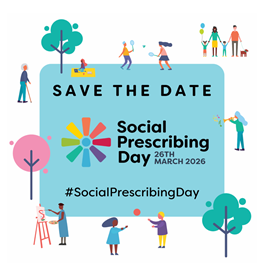
Social prescribing is a new model of healthcare where health professionals formally prescribe non-clinical activities (including art, music, movement, nature, and service) to improve health and wellness at minimal cost to the patient. Social Prescribing Day aims to raise awareness of what social prescribing is, how it works, and its benefits. Learn more here. Access a social prescribing day toolkit here.
The Wisconsin Coalition for Social Connection provides a free "Social Rx" template and encourages others to "prescribe" connection (share at meal sites, events, programs, etc.). Access the template here.
|

Save the Date: April is Family Strengthening Month in Wisconsin
Drawing on their own strengths, families build safe and nurturing environments for children. Those observing April as Family Strengthening Month reflect a shared commitment to promote the overall well-being of children and families.
Plan now how you and your organization can support strong families. The Child Abuse & Neglect Prevention Board, Celebrate Children Foundation, and Five for Families provides toolkits to help. Learn more here.
|
Youth Research Study on Suicide Loss
Young people ages 11-17 who have lost someone to suicide and would like to write about their experience are invited to participate in a research study by the Medical College of Wisconsin. Participants will receive a $50 gift card for their time. Sign up here or text Dr. Sara Kohlbeck at 414-436-6568.
|
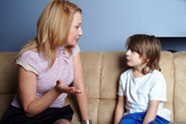
The Tough Talk: Explaining War to Children in Military-Connected Homes
Talking to your kids about violence, terrorism, and war is always important, though it can be a challenging conversation for both parents and children. Many military-connected families are surprised to learn that their children are often aware of current events and may feel anxious simply because someone in the household wears a uniform. Whether your family is preparing to deploy, is deployed, or is not scheduled for deployment at all, it's crucial to address these topics openly. Learn more and get tips for having this conversation here.
|
Funding Opportunity – Wisconsin Personal Responsibility Education Program (PREP)
The Wisconsin Department of Health Services Division of Public Health is requesting applications for implementation of educational programs for high school-aged adolescents. PREP is designed to provide comprehensive sexuality education to adolescents which includes both abstinence and information about contraception to prevent unintended pregnancy and sexually transmitted infections (STIs), including HIV/AIDS. Applications are due March 18, 2026, 6 pm. Learn more here.
Apply for Wisconsin Children’s System of Care Policy Academy
Tribal nations and counties are invited to apply for Wisconsin's Children's System of Care Policy Academy. This is a six-month effort designed to strengthen local systems of care focused on improving the health, safety, and well-being of children. Learn more and apply here.
Applications are due March 20, 2026, 11:59 pm.
Call for Applications – Wisconsin Zero Suicide Training
Mental Health America of Wisconsin, with support through a grant from the Division of Care and Treatment Services, is accepting applications for the 2026 Wisconsin Zero Suicide Training. This is a training for organizations that wish to implement the Zero Suicide quality improvement framework. It is not suicide care training for individuals. Applications are due April 20, 2026. Learn more here.
|