
|
OCMH Newsletter - January 2026
|
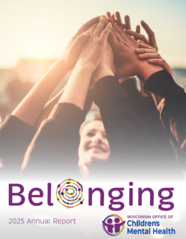
OCMH released its 2025 Annual Report in a Briefing event on January 9, 2026. The event was held in-person at the State Capitol and virtual.
The 2025 Annual Report focuses on Belonging, and in the Briefing OCMH Director Linda Hall offered three youth belonging strategies: 1) Peer-led mental health groups, 2) extracurricular activities, and 3) supportive adults. Four young people representing OCMH’s Youth Mental Wellness Champions were featured speakers: Dean Swanlund from McFarland High School, Alivia Miller from Chippewa Falls High School, Gavin Merriam from Wausau East High School, and Kenai V. from CESA 6. OCMH Senior Research Analyst Amy Marsman shared children’s mental health areas of improvements, positive signs, and areas of concern. Rep. Patrick Synder (R – Weston) provided a legislative perspective.
See OCMH’s 2025 Annual Report here. Access the Briefing Event recording on OCMH website.
|

OCMH will kick off its Children’s Mental Health Network 2026 agenda on February 6th with “Profile of Today’s Youth – Beyond the Headlines.”
The OCMH Children’s Mental Health Network meets four times each year to offer learning opportunities on important children’s mental health topics. The February 6th meeting will take place virtually, from 10 am-12 pm. In the meeting a youth panel will offer their insights on what it is like being young today. We will also hear from a children’s mental health professional.
To be notified of the Children’s Mental Health Network meetings and receive meeting information, sign up here.
2026 Children’s Mental Health Network meeting dates are: February 6, May 1, August 7, and November 6. All meetings are virtual and 10 am-12 pm. Topics for the remaining 2026 meetings will be announced in the February meeting.
|
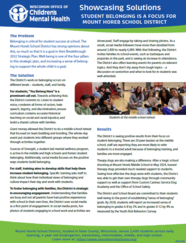
OCMH’s newest Showcasing Solutions highlights what the Mount Horeb School District is doing to increase student belonging. To increase belonging, they focus on three different levels – students, staff, and family. For students, "you belong here" is a prominent call out. For staff, training aims to develop skills that will help them increase student belonging. To foster belonging with families, the District is strategic in encouraging engagement.
See the Showcasing Solutions here.
Showcasing Solutions shares innovative work organizations across the state are doing to improve children’s mental health. See all our Showcasing Solutions here.
|

Cost of healthcare is the “most urgent health problem” facing the U.S. while pediatric mental health care costs nearly doubled in 10 years.
Gallup recently released survey findings that show cost is Americans’ most pressing healthcare concern. Cost outweighs access and obesity as the nation’s top health problem. These concerns appear to be borne out for families with a child receiving behavioral health care. A recent study found that the U.S. pediatric behavioral health expenditures totaled nearly $42 billion, with nearly $3 billion in out-of-pocket expenditures in 2022. The proportion of total pediatric medical expenditures for behavioral health increased from 22% in 2011 to 40% in 2022, almost doubling in a decade.
As noted here, out-of-pocket costs for children's behavioral health increased at more than twice the rate of other medical expenses. Parents with a child who is receiving mental health care were about 40% more likely to experience extreme financial burden. The research confirms that behavioral health care accounts for an increasing share of children’s medical expenditures and highlights the significant financial burden it places on families. Further, the increase in expenditures underscores the importance of enhancing pediatric behavioral health care access through both insurance and clinician capacity, such as pediatricians and primary care physicians. The study's authors recommend stronger state-level insurance parity laws where insurers are required to provide equal coverage for mental health care and other health care.
|

National Mentor a Youth Month is January
Mentorship can change a young person’s life. Each January is time to raise awareness of the power of mentoring young people and encouraging people to become mentors. The statistics are strong – Youth with a mentor are:
- 92% more likely to volunteer regularly in their communities.
- 75% more likely to have held a leadership position in a club or sports team.
- 22% more likely to have experienced a strong sense of belonging while growing up.
Learn more here.
|
Funding Opportunity – Mail Order Overdose Prevention Program
The Wisconsin Department of Health Services Division of Care and Treatment Services is seeking applications for funding to support a Mail Order Overdose Prevention Program that provides overdose prevention supplies including naloxone and drug checking kits through a confidential online ordering platform and discrete mail delivery system. Applications are due February 17, 2026. Learn more here.

|
|
Please do not reply directly to this email message. To contact OCMH, email OCMH@wisconsin.gov.
|
|