 This update is being sent to members of the Wisconsin Travel Health Network.
Global Health Update
Viral hemorrhagic fevers update
The Ebola outbreak in the Democratic Republic of Congo (DRC) was declared over on December 1. The final case count for Ebola in the DRC during the outbreak was 64 cases, including 45 deaths. The DRC has entered a 90-day period of enhanced surveillance to ensure identification of any new potential cases of Ebola.
The Ethiopia Ministry of Health reported the country’s first Marburg outbreak on November 14. As of November 26, Ethiopia has reported laboratory-confirmed Marburg among 12 people, seven of whom have died. The Centers for Disease Control and Prevention (CDC) will update the outbreak page as more information becomes available.
CDC Travel Health Notices for international travelers
Level 4—Avoid All Travel
None at this time.
Level 3—Reconsider Nonessential Travel
None at this time.
Level 2—Practice Enhanced Precautions
Chikungunya in Bangladesh and Sri Lanka (12/5/2025)
There are current outbreaks of chikungunya in Bangladesh and Sri Lanka. Travelers can prevent chikungunya through mosquito bite prevention and vaccination, if recommended. Find more information about chikungunya in the Disease Spotlight below.
Global Polio (11/25/2025)
Poliovirus has been detected in several countries in Africa, the Eastern Mediterranean, and Europe within the last 12 months, resulting in a Level 2 Travel Health Notice. Individuals traveling to areas with circulating poliovirus should ensure they are up to date on their polio vaccines. Adults traveling to destinations with circulating poliovirus may receive an inactivated polio vaccine booster if they have completed their routine polio vaccine series and have not already received an adult booster dose.
Level 1—Practice Usual Precautions
Rabies in Haiti (11/25/2025)
Rabies in India (11/25/2025)
Marburg in Ethiopia (11/17/2025)

Heading south for the winter? Visit your health care provider first.
Many Wisconsinites spend the months of January–March in southern states. Before leaving for sunnier skies, travelers should visit their regular local health care provider to ensure they have all their necessary vaccines and are up to date on recommended screenings.
In addition to being caught up with routine vaccinations, older adults and people at higher risk of severe illness from respiratory viruses should plan to get their annual flu shot and one-time RSV vaccine if they haven’t already. Other vaccinations older adults may want to discuss with their health care providers include those for pneumonia and shingles.
Travelers should also consider scheduling any routine tests and screenings they may be due for, such as cancer screenings, mammograms, and vision and hearing tests.
|

Travel reminders for international students
Many college students travel over winter break, including international students who may be going home for the holiday season. These students should be encouraged to check in with their health care provider before leaving to see if they need any destination-specific vaccines or medications. Students should also review important information about requirements for traveling with medications in different countries before departing. If a student is traveling to a country with transmission of vectorborne illnesses, they should pack insect repellent and take steps to reduce exposure to mosquitoes.
Additionally, some students may participate in short-term study abroad programs over the winter break. Direct students to their campus or local travel health clinic at least six weeks before their departure. All students should monitor their health for symptoms of a communicable disease for seven days after their return to the United States.
|
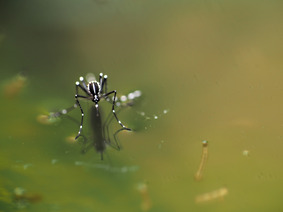
Disease Spotlight: Chikungunya
Chikungunya is an illness spread by the bite of infected Aedes aegypti and Aedes albopictus mosquitoes. Cases of chikungunya in Wisconsin residents occur in people who have traveled to countries in Africa, Asia, Europe, the Indian and Pacific Oceans, the Caribbean, and the Americas. Chikungunya virus is very rarely spread in the U.S.; however, there are a few small areas where the species of mosquitoes that spreads the virus are common.
|
Who is at risk?
Anyone who travels to areas where chikungunya virus is spread can get the illness, but people who spend more time outdoors are at a higher risk of being bitten by an infected mosquito. It is important to take preventive steps when traveling to areas with chikungunya virus, such as wearing protective clothing, using insect repellents, and using mosquito netting.
Is a vaccine available?
Yes, the virus-like particle chikungunya vaccine VIMKUNYA is available in the United States. Vaccination is recommended for travelers 12 years or older visiting an area with a chikungunya outbreak. Vaccination may also benefit laboratory workers who might be exposed to the virus and individuals traveling to an area with elevated risk for six months or longer.
The live-attenuated chikungunya vaccine IXCHIQ was suspended by the Food and Drug Administration (FDA) in August 2025 and is not being administered at this time.
What are the symptoms?
Symptoms can show up one to 12 days after being bitten by an infected mosquito.
Most people who are infected with chikungunya will develop symptoms. The most common symptoms are high fever (typically 102°F or higher) and joint pain, which can be severe. Symptoms usually go away in seven to 10 days. Some people may have recurring joint pain months after illness onset, but this is rare. Severe illness can occur in babies who got the illness during birth from a mother infected with chikungunya, older adults (65 and older), and people with chronic medical conditions. Death is rare and mostly occurs in older adults.
Common signs and symptoms include:
- Fever.
- Headache.
- Myalgia (muscle aches).
- Arthritis (joint swelling).
- Conjunctivitis (red eyes).
- Nausea or vomiting.
- Rash.
How is it spread?
Chikungunya virus is spread to humans through the bite of an infected mosquito.
- Mosquitoes get infected with chikungunya by feeding on humans that have been infected with the virus.
- After feeding on an infected human, the virus may end up inside of the mosquito.
- Once it has the virus, a mosquito may spread the virus to uninfected humans when it takes another blood meal.
- The mosquitoes that spread chikungunya are most active during the daytime. Peak biting hours are early in the morning and in the evening before dusk.
It is possible for a mother to spread chikungunya to her child around the time of birth, though this is rare. Chikungunya virus is not spread through breastfeeding.
How is it diagnosed?
Chikungunya virus infection should be considered in patients with acute onset of fever and polyarthralgia, especially travelers who recently returned from areas with known virus transmission.
Laboratory diagnosis is generally accomplished by testing serum or plasma to detect virus, viral nucleic acid, or virus-specific immunoglobulin (Ig) M and neutralizing antibodies.
Chikungunya virus disease is a nationally notifiable condition. Health care providers are encouraged to report suspected chikungunya cases to their state or local or Tribal health department to facilitate diagnosis and mitigate the risk of local transmission.
During the first eight days of illness, chikungunya viral RNA can often be identified in serum using reverse transcription-polymerase chain reaction (RT-PCR). Viral culture may detect virus in the first three days of illness; however, chikungunya virus should be handled under biosafety level (BSL) 3 conditions.
Chikungunya virus antibodies normally develop toward the end of the first week of illness. Therefore, to definitively rule out the diagnosis, convalescent-phase samples should be obtained from patients whose acute-phase samples test negative.
Diagnostic testing is available through commercial laboratories, the Wisconsin State Laboratory of Hygiene (WSLH), and CDC. Positive chikungunya virus-specific IgM antibody results should be confirmed by neutralizing antibody testing at WSLH or CDC, as false positive IgM results can occur.
Diagnostic testing at WSLH includes a trioplex real-time RT-PCR in serum to detect Zika, dengue, and chikungunya viral RNA. Molecular testing is recommended in patients whose specimen is collected within seven days of illness onset. Prior approval is not required to submit specimens to WSLH for chikungunya, dengue, and Zika virus PCR testing, unless fee-exempt testing is being requested. CDC offers IgM antibody-capture enzyme-linked immunosorbent assay (MAC-ELISA) used to identify IgM antibodies in serum specific to chikungunya virus and may be indicated in qualifying patients whose specimen is collected eight days to 12 weeks after illness onset. Concurrent testing for Zika, dengue, and chikungunya viruses may be recommended, depending on the clinical presentation and travel history of the patient. Chikungunya virus IgM testing is only offered fee-exempt at WSLH and requires clinicians to obtain prior authorization before specimen submission.
Providers may request fee-exempt testing for patients who:
- Have symptoms consistent with chikungunya, and
- Traveled to an area with a risk of chikungunya within 14 days of illness onset, and
- Would not otherwise have access to testing for financial reasons (for example, lack insurance coverage).
To request fee-exempt testing at WSLH, contact a DPH vectorborne disease epidemiologist at 608-267-9003 or email DHSDPHBCD@dhs.wisconsin.gov prior to specimen submission.
Are there treatments?
There is currently no specific treatment for chikungunya virus. Clinical management is supportive care, including rest, fluids, and over-the-counter pain relievers to relieve acute pain and fever—acetaminophen is the preferred first-line treatment. Patients with suspected chikungunya virus disease who have traveled to a dengue-endemic area should be managed as dengue until dengue virus infection has been ruled out.
How can it be prevented?
The best way to prevent chikungunya is to prevent mosquito bites and get vaccinated, if recommended, before traveling to areas where the virus is endemic.
How to prevent mosquito bites:
- Use insect repellents with 20–30% DEET, 10–20% picaridin, 10–20% IR3535, or 30–40% oil of lemon eucalyptus on skin and clothes to prevent mosquito bites.
- Apply permethrin (a pesticide that kills mosquitoes) to clothes and gear to prevent mosquito bites. Permethrin kills mosquitoes when they land on your clothes. It lasts through several washes after it is applied. Do not apply directly to skin.
- Wear long-sleeved shirts, long pants, socks, and shoes outdoors during peak mosquito activity hours. Apply repellent to any bare skin not covered by clothing.
- Wear loose-fitting and thicker clothing so it is more difficult for mosquitoes to bite through clothes to your skin.
- Wear head nets if you go into areas with high mosquito activity.
- Stay in places that have air conditioning or a combination of window screens, door screens, and insecticide-treated bed nets.

In case you missed it: Bureau of Communicable Disease (BCD) viral hemorrhagic fever webinar
The November 7 BCD provider webinar topic was: Viral Hemorrhagic Fever in the Midwest—Are we prepared?.
Webinar recordings are available on the DHS Provider Webinar Series recording page.
|
|