HAB Happenings: Season Updates
This message is being sent to local health officers, Tribal health directors, and subscribers to the harmful algal blooms list.
This month’s issue includes HAB Program updates, 2025 HAB season overview, and guidance to local health officials about the remainder of the HAB season.
|
Stay alert as the season changes
As the recreation season winds down, HAB activity may persist in some water bodies across the state. Although cooler temperatures generally reduce bloom potential, warm fall days and nutrient-rich run off can sustain cyanobacterial growth throughout the fall. Anglers, waterfowl hunters, pet owners, and those living near water should remain cautious until water temperatures drop consistently below 60 degrees Fahrenheit.
Several environmental conditions can prolong HAB season into fall months, including:
- Extended warmth: Shallow and stagnant waters retain heat, delaying seasonal turnover.
- Nutrient loading: Autumn rains and leaf increase phosphorous and nitrogen inputs.
- Reduced mixing: Calm weather allows scums to accumulate.
Fall is a great time to help prevent future blooms by disposing of yard waste and pet waste, avoid over-fertilizing lawns, and maintain natural vegetation buffers along shorelines.
Beware of decomposing blooms, too!
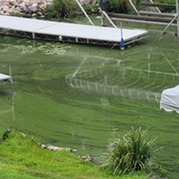
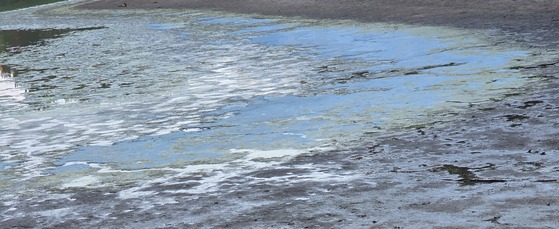
Even after a bloom starts decomposing, it can still release toxins, and these toxins may remain in the water for days or weeks. Decomposing blooms can cause foul, musty or sewage-like smells. Water may look brown, murky, have decaying organic matter floating on the surface or can be vibrant colored. Contact with or inhalation from mist of a decomposing bloom can irritate skin, eyes, throat, or lungs.
2025 HAB season wrap up
The HAB Program received a total of 31 illness reports thus far for 2025; including 23 human illnesses, three dog deaths, four dog illnesses, and one flock of domesticated ducks and geese. The three dog deaths were likely due to cyanobacteria exposure and occurred in La Crosse County, Sawyer County and Lincoln County. Cyanobacteria related human illnesses occurred throughout the state.
We received 20 reports of blooms throughout the state with no associated illnesses.
Revised HAB toolkit, A Planning Guide for Public Health and Emergency Response Professionals, now available
Visit our updated toolkit for new resources, which include recreational guidance and a social media library.
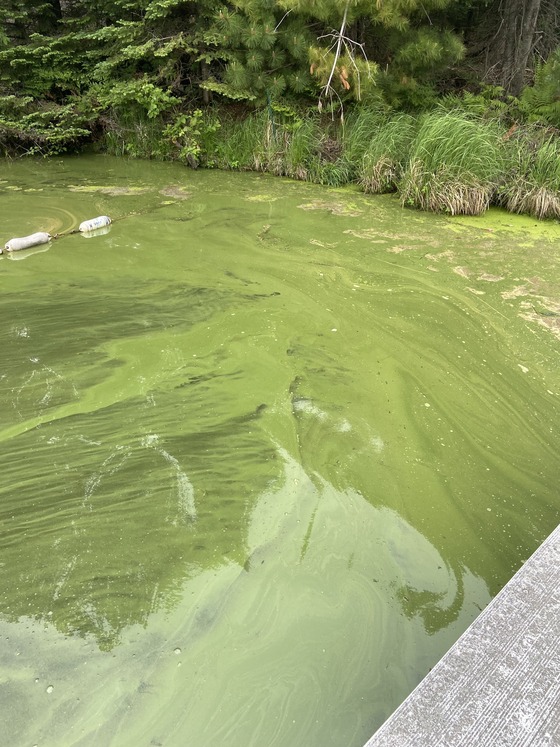
How to report a blue-green algae (cyanobacteria) illness
Members of the general public and veterinarians should call (608) 266-1120 or complete the Harmful Algae Bloom (HAB) Illness or Sighting Survey online form to report any blue-green algae blooms and related human or animal illnesses.
Let's Get Social: feel free to share the below pictures and captions on your social media
Suggested post and photo
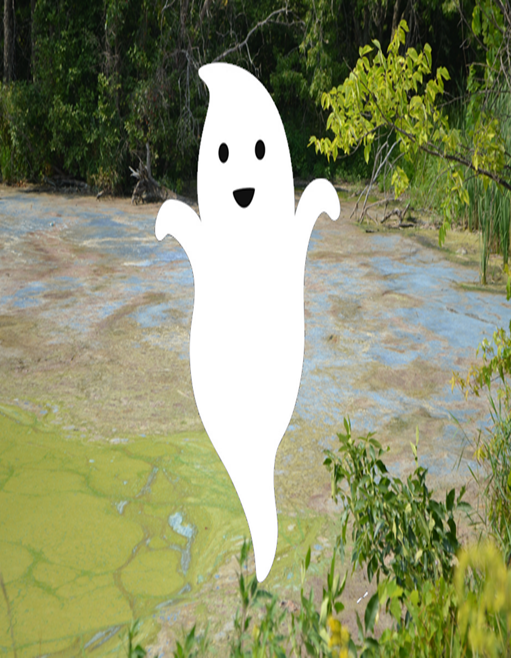
It’s spooky season! Did you know blue-green algae can still “haunt” lakes during fall? Autumn lake turnover events, when winds completely mix a cooling lake, bring nutrients from the bottom up into the water, creating prime conditions for blue-green algae to grow and form blooms. Make sure to keep yourself, your kids, and your pets safe by staying out of scummy or discolored water. To learn more about blue-green algae or to report a bloom or bloom-related illness, visit DHS’s Harmful Algal Bloom website: https://www.dhs.wisconsin.gov/algae/index.htm
 Suggested post and photo
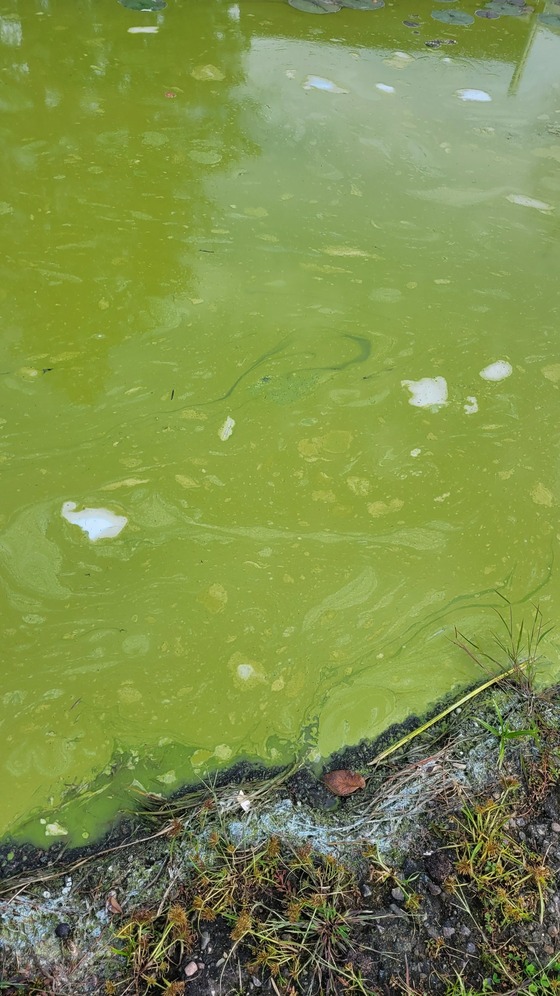
Did you know that blue-green algae can make an appearance during fall? Warmer days and lake turnover events create prime conditions for blue-green algae to grow and form blooms. Make sure to always stay out of scummy or discolored water. To learn more about blue-green algae or to report a bloom or bloom-related illness, visit DHS’s Harmful Algal Bloom website: https://www.dhs.wisconsin.gov/publications/p0/p00089.pdf
Stay in touch
|
|
|
Missed a past issue? Previous issues are available on our Resources for Health Professionals webpage.
Email us your burning questions! If others can benefit from hearing the answer to your question, we’ll feature it in a future issue.
Remember that we are always available for consultation on any HAB health-related issue by email or phone (608-266-1120).
|
|