Global Health Update
Health Alert Network (HAN) Health Advisory for Ebola Virus Disease in the Democratic Republic of the Congo
The Centers for Disease Control and Prevention (CDC) issued a Health Alert Network (HAN) Health Advisory about a new outbreak of Ebola virus disease (EVD) in the Democratic Republic of the Congo (DRC). Additionally, on September 8, 2020, CDC issued a Travel Health Notice for individuals traveling to the DRC, which recommends that all travelers in affected areas avoid contact with ill people during travel and monitor themselves for symptoms of EVD while in the outbreak area and for 21 days after leaving. Find out more information about potential case identification, testing, and biosafety considerations.
The risk of spread to the United States is considered low at this time, and no suspected, probable, or confirmed EVD cases related to this outbreak have been reported outside of the DRC.
CDC Travel Health Notices for international travelers
Level 4—Avoid All Travel
None at this time.
Level 3—Reconsider Nonessential Travel
None at this time.
Level 2—Practice Enhanced Precautions
Chikungunya in the Region of the Indian Ocean (9/5/2025) and Cuba (9/26/2025)
There are currently outbreaks of chikungunya in Bangladesh, Kenya, Madagascar, Somalia, and Cuba. Vaccination is recommended for travelers who are visiting an area with a chikungunya outbreak. Travelers can prevent chikungunya by preventing mosquito bites. Pregnant travelers should reconsider travel to affected areas.
Yellow fever in Colombia (9/2/2025)
An increased number of yellow fever cases in Colombia has resulted in a level 2 travel health notice for this area. A booster dose may be given to travelers in certain populations or who received their last dose of yellow fever vaccine at least 10 years ago and will be in a higher-risk setting.
Level 1—Practice Usual Precautions
Rift Valley Fever in Mauritania and Senegal (10/10/2025)
Oropouche in the Americans (9/18/2025)
Global Dengue (9/16/2025)
Ebola in the Democratic Republic of the Congo (9/8/2025)

Food safety tips
As the days start getting shorter and the weather gets colder, more people begin planning winter getaways. Although September was Food Safety Education Month, it’s always important to take steps to prevent foodborne illness, it can be even more important while traveling to developing countries.
Boil it, cook it, peel it, or forget it is a good general rule to follow.
-
Only eat foods that are fully cooked.
-
Only eat foods that are served hot or cold. Germs that can make you sick grow fastest between 40°F and 140°F (above refrigerator temperature).
-
Avoid raw vegetables and fruits that can't be peeled. Lettuce and other greens can stay contaminated even if washed.
-
Prepackaged foods are usually safe if they have not been opened.
-
Avoid unpasteurized foods. Only drink pasteurized milk and dairy products that have been kept cold.
-
Drink bottled water and canned drinks or boil water for at least one minute before using it. Make sure the factory seal on bottled water is still in place and has not been tampered with.
-
Avoid ice.
-
Avoid food from street vendors, which may include some of the risky ingredients listed above.
|
Animal encounters while traveling: bat edition
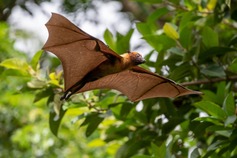
It can be fun and relaxing to enjoy a vacation off the beaten path in the wilderness or along a lake. Avoiding unnecessary contact with wild animals is essential for your and the animals’ health and safety. However, it can be surprising when wildlife find their way into our living spaces. Public health has responded to increased reports of bats in short-term rental homes and cabins that may pose a rabies exposure risk to guests. In some situations, the dwelling had a known bat infestation; while in others, bats mistakenly came in through open doors or windows. Before attempting to capture or release a bat back to the outdoors, the guests should consider the following:
- Did any person or pet have direct skin contact with the bat?
- Was the bat in a room with a sleeping person, or a person unable to reliably confirm whether contact occurred (for example, a young child, a person with communication challenges, or a person under chemical influence)?
|
If the answer is yes to any of these scenarios, safely catching or confining the bat and calling the local public health department for guidance are recommended. The guest should not attempt to kill the bat. If an exposure can’t be ruled out, public health can arrange for the humane euthanasia, submission, and testing of the bat for rabies. The decision as to whether rabies post-exposure prophylaxis (rPEP) is necessary can usually wait until after testing. The guest should also report the incident to the owner of the property, so they can mitigate future exposures.
Disease Spotlight: Respiratory Syncytial Virus (RSV)
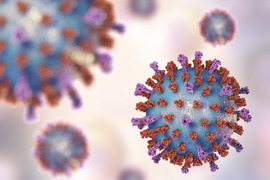
Respiratory Syncytial Virus (RSV) is a major cause of respiratory illness in all age groups. Among infants and young children, it is the most common cause of bronchitis, croup, ear infections, and pneumonia. Older adults, infants, and young children are more likely to get serious complications if they get sick with RSV.
In the United States, from October 1, 2024–May 3, 2025, there have been an estimated 3.6–6.5 million RSV outpatient visits, 190,000–350,000 RSV hospitalizations, and 10,000–23,000 RSV deaths. Cases have risen in the U.S. and were at record breaking levels in Australia last year. Eligible travelers, including pregnant people and older adults, should ensure they are protected against RSV before traveling. If a pregnant person does not get vaccinated against RSV during pregnancy, their infant should receive a dose of a monoclonal antibody to prevent RSV.
|
What are the symptoms?
It usually takes 4–6 days for symptoms to appear after exposure to the virus that causes RSV. Symptoms may include:
- Runny nose.
- Cough.
- Sore throat.
- Fever.
- Decrease in appetite.
- Wheezing.
In very young infants with RSV, their only symptoms may be irritability, decreased activity, and breathing difficulties.
People who are at increased risk can also experience lower respiratory infections like bronchiolitis and pneumonia. Populations at increased risk include:
- Premature infants.
- Children with suppressed or weakened immune systems.
- Children who have neuromuscular disorders or congenital anomaly.
- Children with severe cystic fibrosis.
- American Indian/Alaskan Native children.
- Adults with asthma.
- Adults with chronic obstructive pulmonary disease (COPD).
- Adults with heart failure.
- Adults 75 and older.
More information about the signs and symptoms of RSV can be found on the Wisconsin Department of Health Services (DHS) RSV webpage.
How is it spread?
The virus that causes RSV is primarily spread to others by respiratory droplets and aerosols that travel through the air when an infected person breathes, speaks, sings, coughs, or sneezes. It can also be spread by contact, either with the infected person (like kissing or shaking hands), or by touching contaminated surfaces and then touching your mouth, nose, or eyes. RSV can survive on surfaces for many hours. People infected with RSV are usually contagious for 3–8 days. However, some infants and people with weakened immune systems can continue to spread the virus even after they stop showing symptoms, for as long as four weeks.
How is it treated?
There is no specific treatment for RSV. Most people will recover on their own. Symptoms can be treated by:
- Taking pain or fever-reducing medications (Note: never give aspirin to children).
- Using a room humidifier or taking a hot shower to help ease a sore throat and cough.
- Drinking plenty of liquids to stay hydrated.
- Staying home and resting.
Travelers should contact their health care provider if they are having severe symptoms or difficulty breathing.
Travel recommendations
The best way to prevent RSV is by getting vaccinated when recommended. For the best protection against RSV, eligible travelers should plan to be fully vaccinated at least two weeks before they depart. If their trip is less than two weeks away and they are not protected against RSV, they should still get a dose of the RSV vaccine.
In scenarios when vaccination is not recommend, travelers should wear a mask, wash hands, and use proper hygiene. Travelers should contact their health care provider or locate a pharmacy or clinic near them to schedule an appointment for the RSV vaccine. RSV protection options by population include:
RSV Monoclonal Antibody for babies (Nirsevimab & Clesrovimab):
- All infants whose mother did not receive RSV vaccine during pregnancy in their first RSV season October through March
- Infants who are at increased risk during their second RSV season (8–19 months old) October through March. Infants at increased risk include those who are or have:
- Groups at increased risk include American Indian/Alaskan Natives, severely immunocompromised infants, cystic fibrosis, chronic lung disease from prematurity.
Abrysvo for pregnant people (protection for babies):
- All pregnant people between 32 weeks and 36 weeks and six days of pregnancy September–January
Abrysvo for adults (50+):
- Adults 50–74 who are at increased risk.
- All adults 75 and older.
|