
Global Health Update
First case of Zika in Wisconsin since 2017
A travel-associated case of Zika was recently reported in Wisconsin. Zika virus is spread primarily through mosquitoes. Travelers should determine the risk of Zika in their destination and take recommended actions for that risk category. Currently, there are no countries with an active travel health notice for Zika, but several countries in Africa, North America, South America, and Southeast Asia have historic Zika circulation.
Travelers should monitor their health when they return from international travel. Even if a traveler does not feel sick, they should still take steps to prevent mosquito bites for the three weeks after their return to the U.S. from a country with Zika transmission.
CDC Travel Health Notices for international travelers
Level 4 – Avoid All Travel
None at this time.
Level 3 – Reconsider Nonessential Travel
None at this time.
Level 2 – Practice Enhanced Precautions
Chikungunya in Boliva, the Region of the Indian Ocean, and China (August 15, 2025)
There are level 2 travel health notices for chikungunya outbreaks in the department of Santa Cruz in Bolivia, several countries in Africa and Southeast Asia near the Indian Ocean, and Guangdong Province in China. Individuals traveling to affected countries, including Bolivia, China, Kenya, Madagascar, Mauritius, Mayotte, Réunion, Somalia, and Sri Lanka should take steps to prevent mosquito bites and speak with their health care provider about vaccination. Pregnant people should reconsider travel to affected areas.
Global Polio (August 4, 2025)
Several countries around the world have circulating poliovirus. Providers should make sure patients are up-to-date on their polio vaccines before any international travel. Travelers who have completed the full polio vaccine series may receive a single booster dose of polio vaccine.
Mpox in Liberia and Sierra Leone (July 22, 2025)
Current outbreaks of clade II mpox in Liberia and Sierra Leone has resulted in a level 2 travel health notice for these areas. While the ongoing global clade II mpox outbreak has primarily affected gay, bisexual, and other men who have sex with men (MSM), these outbreaks have affected males and females approximately equally, and person-to-person transmission has occurred throughout these outbreaks. Mpox vaccination is recommended for travelers to Liberia and Sierra Leone who anticipate participating in certain sexual activities. All travelers to the affected areas should avoid situations that might increase their risk for mpox, especially those who have risk factors for infection.
Diphtheria in Guinea (July 22, 2025)
There is a level 2 travel health notice for diphtheria in the Kankan region of Guinea due to confirmed and suscept cases of diphtheria. Individuals traveling to an affected area should be up-to-date with their diphtheria vaccines, and should discuss the need for a booster dose with their health care provider. Travelers should avoid contact with people with diphtheria symptoms (fever, sore throat, difficulty swallowing, change in voice, shortness of breath, weakness, or fatigue). Travelers should also monitor their health after return from travel and should seek care immediately if they feel sick.
Level 1 – Practice Usual Precautions
Global Dengue (July 17, 2025)
Oropouche in the Americas (July 14, 2025)

UV Awareness
July was National UW Awareness Month. When travelers head to sunnier locations, lower latitudes, or higher elevations, they are often exposed to more UV radiation than usual. UV exposure can cause both acute effects like sunburn as well as more serious effects from chronic exposure, like sun damage, cataracts, and skin cancer.
Ultraviolet B (UVB), which is more carcinogenic than ultraviolet A (UVA), is most intense during the middle of the day (from 10:00 a.m.–4:00 p.m.). Additionally, water and sand can reflect UV radiation, increasing potential UVB exposure. Travelers should avoid direct sun exposure when UV rays are strongest, or should consider using portable shade shelters, like umbrellas or beach tents with fabrics having a UV protection factor higher than 30. Using a wide-brim hat, sunglasses, and sunscreen can also help protect travelers’ skin and eyes from UV radiation.
Remind travelers of proper sunscreen practices. Sunscreen should be applied daily, at least 15 minutes before going outside, and should be reapplied every 2–4 hours (or more often when sweating or being in water). Individuals should pay special attention to commonly missed areas like the ears and tops of the feet.
|
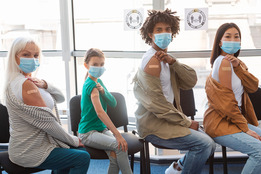
National Immunization Awareness Month: Travel Immunizations
National Immunization Awareness Month is an annual observance held in August to highlight the importance of vaccination for people of all ages. Together, we can help raise awareness about the importance of vaccination and encourage people to talk to a health care provider they trust about staying up to date on their vaccinations.
Immunizations for travel:
All travelers, regardless of their destination, should be up-to-date on routine vaccines, since many diseases that are less common in the United States are still spread in different parts of the world. Childhood vaccines in the U.S. have helped limit the severity and spread of these diseases here. Ensuring travelers are vaccinated before they travel will help keep them from getting sick and potentially spreading disease when they return home. Important routine vaccines include:
- Measles-mumps-rubella (MMR) vaccine.
- Diphtheria-tetanus-pertussis vaccine.
- Varicella (chickenpox) vaccine.
- Polio vaccine.
- This year's flu shot.
Travelers may be recommended to get additional vaccines or take other steps to avoid illnesses that are common in their destination. Additionally, some countries may have specific requirements and recommendations that they need to comply with when visiting. Travelers should visit CDC's Destinations webpage, or check directly with their destination, to learn about entry and exit requirements and to view the latest travel health notices.
|
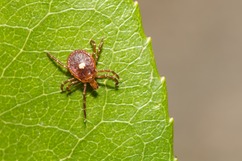
Disease Spotlight: Alpha Gal Syndrome
Alpha-gal syndrome (AGS) is a serious, potentially life-threatening allergy and tickborne disease. Alpha-gal is a molecule (galactose-α-1,3-galactose) that is naturally produced in the bodies of most mammals but not in people. It is also found in the saliva (spit) of some ticks.
When a tick bites, it can transfer alpha-gal from its saliva into a person's blood. The body's immune system can identify alpha-gal as a threat and trigger an allergic reaction. Symptoms occur after people eat red meat or are exposed to other products made from mammals. Because of this, AGS is also known as red meat allergy or tick bite meat allergy.
|
What are the symptoms?
AGS reactions can be different from person to person. They can range from mild to severe, and some may be life-threatening. People may not have the same allergic reaction after every exposure to products containing alpha-gal.
Symptoms usually appear 2–6 hours after eating meat or dairy products. They also may appear after exposure to products containing alpha-gal (for example, gelatin-coated medications). AGS reactions can include:
- Hives or itchy rash.
- Nausea or vomiting.
- Severe stomach pain.
- Heartburn or indigestion.
- Diarrhea.
- Cough, shortness of breath, or difficulty breathing.
- Drop in blood pressure.
- Swelling of the lips, throat, tongue, or eye lids.
- Dizziness or faintness.
- A combination of symptoms referred to as anaphylaxis.
Seek immediate emergency care if you are having a severe allergic reaction or anaphylaxis. Anaphylaxis is a potentially life-threatening allergic reaction involving multiple organ systems.
What causes AGS and how can it be prevented?
AGS is caused by tick bites. In the United States, AGS is primarily associated with the bite of a lone star tick, and less commonly by the bite of a blacklegged tick or a western blacklegged tick. In other countries, other tick species have been linked to AGS. In the United States, not every person bitten by a lone star, blacklegged, or western blacklegged tick will develop AGS.
While people of all ages can develop AGS, most cases have been reported in adults. Most reported cases of AGS in the United States occur in South, East, and Central states. These are the areas where most lone star ticks are found.
The best way to protect yourself and your family from developing AGS is to prevent tick bites, especially when traveling to areas where lone star ticks are common.
How is it diagnosed?
A health care provider may diagnose AGS through a physical examination, a detailed patient history, or a test for antibodies your body produces in response to alpha-gal.
Health care providers may also recommend allergy skin testing to identify reactions to allergens like pork and beef.
How can AGS be managed?
There are no vaccines to prevent AGS. Individuals can manage symptoms by avoiding foods and products that contain alpha-gal, preventing future tick bites, and getting urgent care when needed. If an individual has been diagnosed with AGS, they can work with their allergist or other health care provider to manage their symptoms by:
- Identifying and avoiding products containing alpha-gal.
-
Reading food product labels carefully.
-
Preventing future tick bites. New tick bites may reactivate allergic reactions to alpha-gal.
- Talking to their health care provider before taking a new medication or receiving a vaccine. Although very rare, some people with severe AGS may react to ingredients in certain vaccines and medications.
- Their health care provider may prescribe an epinephrine auto-injector (“EpiPen”) and teach the patient how to recognize anaphylaxis and how to use the EpiPen.
Most health care providers recommend patients with AGS stop eating meat from mammals, such as beef, pork, lamb, venison, or rabbit. Food products that contain milk and milk products may also contain alpha-gal. Some people with AGS may also be sensitive to alpha-gal in gelatin and other products made or cooked with mammal fat. However, not all patients with AGS have reactions to every ingredient containing alpha-gal, so individuals should work with their health care provider to understand which products containing alpha-gal they should avoid.
Some people with AGS who avoid additional tick bites may be able to tolerate eating meat again. This is an individualized medical decision and requires guidance from a health care provider.
|