This message is being sent to local health officers, Tribal health directors, and harmful algal bloom subscribers.
HAB Happenings: Harmful Algal Bloom Updates and Insights
This month’s issue will give HAB Program updates, discuss recent HAB activity in Wisconsin, and provide guidance to local health officials about preparing for and responding to blooms and related illnesses.
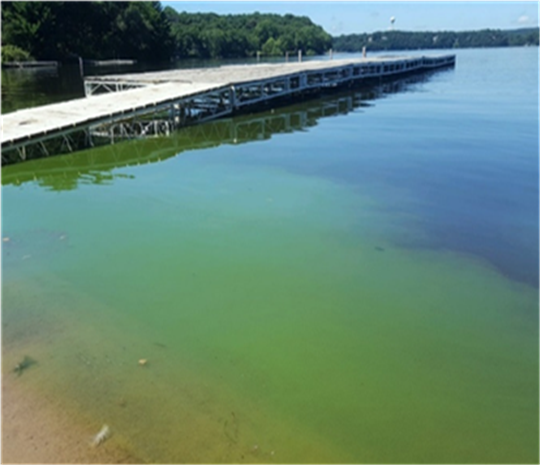
Harmful algal blooms occur when cyanobacteria (commonly known as blue-green algae) grow and reproduce from factors like sunlight and nutrient input. While not all cyanobacteria are harmful, some species of cyanobacteria produce toxins which pose serious health threats to humans, pets, livestock, and wildlife.
|
HAB Program Updates
This month, we welcomed our new HAB program coordinator, Ashley Vickers! Ashley brings experience in public health and emergency response and will lead efforts to monitor and investigate public health threats related to HABs throughout the state. Ashley can be reached via email at Ashley.vickers@dhs.wisconsin.gov or by phone at 608-261-6866.
2025 HAB Activity in Wisconsin
In Wisconsin, algal bloom surveillance is conducted through joint efforts of the Wisconsin Department of Health Services and the Wisconsin Department of Natural Resources. Blooms have been detected, and bloom-related illnesses have been investigated in multiple counties across the state this season. Public health officials should remain vigilant and prepared for increased public inquires and possible water advisories.
The HAB Program has received eight health complaints since June. Of these reports, one dog death and two human illnesses were determined to be related to HABs. Exposures to blooms occurred in Lincoln, Adams, and Fond du Lac counties.
|
|
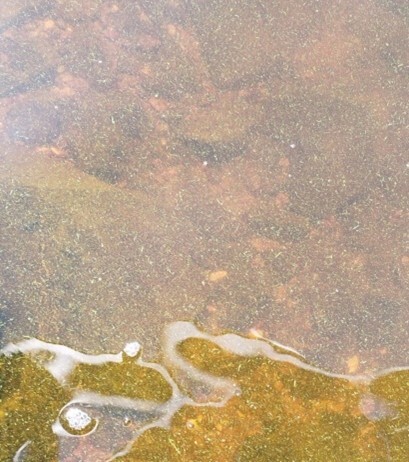 |
Above photo is showing cyanobacteria, Aphanizomenon, observed in a lake in Adams County, July 2025.
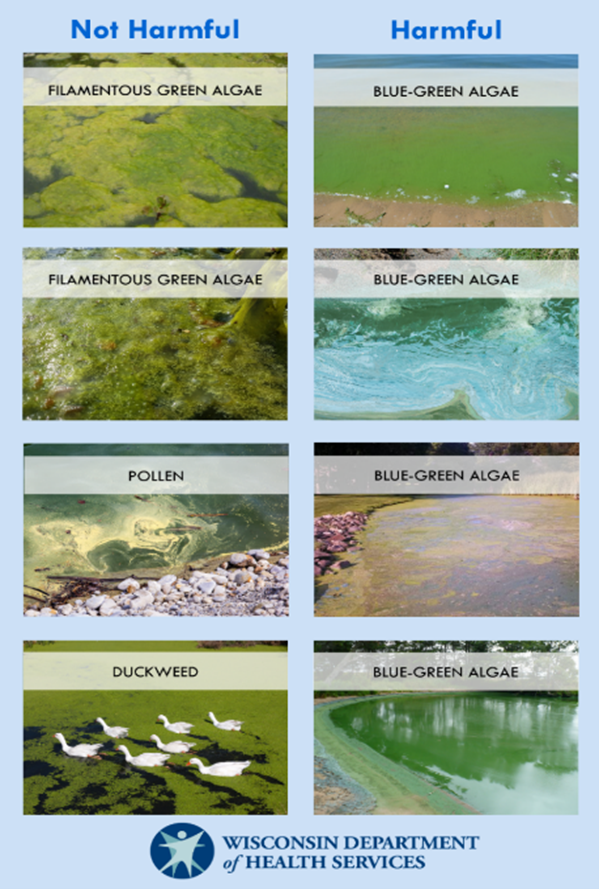
Cyanobacterial blooms can come in all shapes, colors, and sizes. Below are some examples of types of cyanobacteria we’ve seen in Wisconsin’s waters this summer:
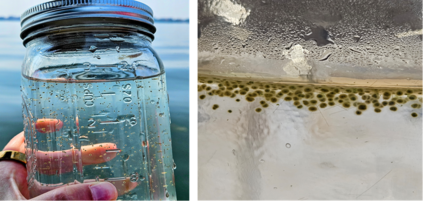
Gloeotrichia, known to bloom on Wisconsin lakes appears as tiny, round structures and can attach to plants or be free floating in the water.
|
Above are photos of Gloeotrichia observed in Lake Mendota on July 7. Samples and photos taken by Caitlin McAleavey, Clean Lakes Alliance
|
Aphanizomenon appears like grass clippings on freshwater lakes, can cause dense blooms, and can produce toxins. This cyanobacterial species was observed on the Wisconsin River in Sauk County in June.
|
|
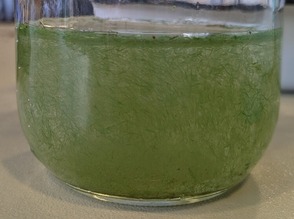 |
Photo taken by Gina LaLiberte, WI DNR.
Help communities to stay safe from blooms by encouraging the following practices:
-
Do not drink untreated surface water. Besides blue-green algae, other bacteria, parasites, and viruses may be in lakes and rivers and can make people and pets sick if swallowed.
-
Heed posted warning signs at public beaches and swim areas.
-
If you catch a fish from a water body experiencing an algal bloom, clean the fish thoroughly with fresh, clean water and discard the viscera (guts) and follow Wisconsin’s fish consumption advice by visiting: https://dnr.wisconsin.gov/topic/Fishing/consumption
Visit the HAB Program website to learn information about HABs, view helpful resources and order beach signage.
How to report a blue-green algae (cyanobacteria) illness
Members of the general public and veterinarians should call 608-261-6866 or complete the Harmful Algae Bloom (HAB) Illness or Sighting Survey, F-02152 online form to report any blue-green algae blooms and related human or animal illnesses.

Let's Get Social
Feel free to share the below pictures and captions on your social media
|
Suggested post and photo:
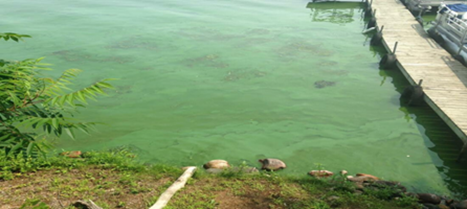
It’s summertime in Wisconsin! You might be eager to throw on your swimsuit and dive straight into the lake, but it’s important to look before you leap to protect yourself against blue-green algae. Avoid swimming in water that looks like spilled green paint or pea soup, is discolored or streaky, or has mats floating on top.
Learn more: https://www.dhs.wisconsin.gov/water/bg-algae/index.html
Suggested post and photo:
Did you know that blue-green algae blooms have look-alikes? Learn the difference and when in doubt, stay out! Learn more about blue-green algae: www.dhs.wisconsin.gov/water/bg-algae/defined.htm

Missed a past issue? Previous issues are available on our Resources for Health Professionals webpage.
Email us your burning questions! If others can benefit from hearing the answer to your question, we’ll feature it in a future issue.
Remember that we are always available for consultation on any HAB health-related issue by email or phone (608-266-1120).
|
|