Applications Open
We are pleased to announce a new statewide opportunity for youth voice – OCMH’s Wisconsin Youth Mental Wellness Champions. This youth cohort will include 15 high school juniors and seniors from across the state and meet monthly from September 2025 through May 2026. The meetings will be virtual with the May meeting including a completion ceremony in Madison. Cohort members will expand their mental wellness knowledge and skills, network, and share their perspectives with OCMH.
Learn more about the Wisconsin Youth Mental Wellness Champions meeting dates, meeting topics, and the application process here.
Applications for the first Wisconsin Youth Mental Wellness Champions cohort are open. Access the application here. Applications are due by midnight, September 8, 2025.
|
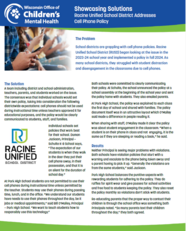
School districts across our state are grappling with cell phone policies. Racine Unified School District began looking at the issue in the 2023-24 school year and implemented a policy in fall 2024. In our newest Showcasing Solutions we look at two schools in their district and explore their cell phone policies. Read about it here.
Showcasing Solutions highlights innovative things going on in children’s mental health in Wisconsin. See all our Showcasing Solutions here.
|
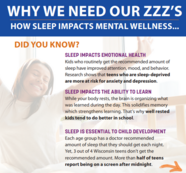
How sleep impacts youth mental wellness is the topic of our newest Data Bite. Sleep is essential to a child’s development, impacting their physical and emotional health as well as their ability to learn. But three of four of Wisconsin’s teens do not get sufficient sleep. Learn more about the trends, the recommended hours of sleep by age, and recommendations for better sleep health here.
OCMH Data Bites provide a quick look at a children’s mental health data point. See all our Data Bites here.
|
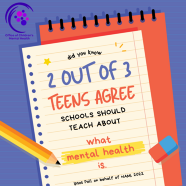
As we approach the start of a new school year, we’d like to remind school educators of the Mental Health Literacy Instructional Units available on the Department of Public Instruction’s (DPI) website. Units are available for all grades: K4-K5, Elementary Grades 1-2, Elementary Grades 3-5, Middle School Grades 6-8, and High School Grades 9-12.
Mental health literacy includes the knowledge, attitudes, and skills needed to develop and maintain positive mental health, identify mental health challenges in self and others, reduce stigma, and seek appropriate help. The skills-based lesson plans focus on developing the skills that students need to maintain mental health and well-being, as well as how to recognize and support others who may be struggling.
In addition to the Instructional Units for classrooms, an accompanying parent/caregiver guide for each classroom lesson is available.
Learn more about all the Mental Health Literacy Instruction Units on OCMH’s website here. Access the guides from DPI’s website here.
|
SB-332 / AB332 Prohibits undetectable firearms, possessing a frame or receiver of a firearm without a serial number, and providing a penalty. Referred to Committee.
SB-342 / AB338 Requires health insurance plan coverage of treatment for mental health or substance use disorders. Referred to Committee.
AB-359 / SB 324 Prohibits conversion therapy. Conversion therapies are interventions purported to alter same-sex attractions or an individual’s gender expression with the specific aim to promote heterosexuality as the preferable outcome. Referred to Committee.
AB 369 / AB 376 Establishes a tax credit for employer-provided child care. Referred to Committee.
Karl Dennis, Father of Wraparound” Remembered
Karl Dennis, widely known as the “Father of Wraparound,” passed away on June 20, 2025 at the age of 88. A visionary and fierce advocate for children and families, his passing marks the loss of a true pioneer in children’s behavioral health, someone whose vision changed the way systems support children and families.
Dennis’ pioneering work began in the early 1970s as the founding executive director of Kaleidoscope in Chicago. There, he introduced a model of true unconditional care—one that promised “No reject, no eject,” welcoming every child, no matter their history or behavior.
Though the term “Wraparound” wasn’t part of Kaleidoscope’s early language, the values Karl embedded—family voice and choice, strength-based approaches, and cultural competence—became central to the model. He was a relentless champion for families, civil rights, and inclusion. He believed parents held vital wisdom and should be partners in care. His work laid the foundation for what would become the Wraparound process.
“Thanks to Karl Dennis’ visionary leadership, Wisconsin was an early adopter of Wraparound and the development of systems of care that support children with mental health challenges and their families," said Scott Strong, Executive Director - RISE. "Wraparound not only centers care around the child and family, it transformed how the children’s systems work more collaboratively to support children and youth at home in the community, reducing both placements and lengths of stay in institutional care. Wraparound’s impact is evident both in achieving better outcomes for children and families and has saved taxpayers and health systems millions of dollars in the process.”
Today, Wraparound joins youth and their families together with service providers and other natural supports from the community to organize a Wraparound team. This team works together to create and implement a plan of care that serves as a roadmap to guide the provision of services to the youth and family. The Wraparound team is led by a care coordinator who is trained and experienced in the Wraparound process.
Learn more about Wraparound in Wisconsin here.
Youth Telepsychiatry Funding Opportunity
The Wisconsin Department of Health Services Division of Care and Treatment Services is seeking applications for hospitals and clinics providing behavioral health care to expand telepsychiatry services for pediatric, child, and adolescent patients. Applications due September 19, 2025. Learn more.

Back to School with Mental Health in Mind
Mental Health America provides free tools for kids, teens, and the adults who support them as back-to-school time approaches. Access the resources here.
|
988 Celebrates Three Years
The 988 Suicide and Crisis Lifeline celebrates three years of offering lifesaving help to people reaching out through calls, texts, and chats. The 988 Wisconsin Lifeline is committed to providing judgment-free support to everyone in the state with immediate access to trained counselors. Visit the 988 in Wisconsin data dashboard to see information on the accomplishments of the 988 Wisconsin Lifeline over the past three years. Ways to contact: call 988, send a text message to 988, or chat at 988lifeline.org.
|
|