OCMH Senior Research Analyst Amy Marsman spotlights recent articles, resources, and research findings impacting youth mental health.
|
Demand for 988 Continues to Grow at Third Anniversary
KFF reports on the third anniversary of the 988 Suicide and Crisis Lifeline and the growing use of 988 amidst significant legislative changes at the federal level to forecast that the changes could lead to both increased mental health needs and reduced support.
Wisconsin Suicide Data Dashboard Update – 2023 Data
The Wisconsin Department of Health Services’ suicide data dashboard has been updated with 2023 data. The dashboard shows the most recent data from death records and the Wisconsin Violent Death Reporting System, which includes information from coroners/medical examiners and/or law enforcement reports. Dashboard users can view rates and counts by age, sex, race, ethnicity, and veteran status. This dashboard can be used to detect populations at greater risk of suicide, understand the medical concerns more often associated with suicide, note methods more often used, and recognize problems that can contribute to death by suicide.
Wisconsin Self-Harm Data Dashboard Update – 2024 Data
The Wisconsin Department of Health Services’ self-harm data dashboard has been updated with 2024 data. Someone who self-harms may or may not have the intention to die by suicide, and injuries resulting from self-harm can range from minor to severe. The dashboard may be used to detect populations at greater risk, medical conditions more often associated with self-harm, and methods more often used. The dashboard may also be useful to identify changes over time. Emergency Department and hospital patient data are presented separately, and users can view data by age, sex, race, and ethnicity.
Suicide Prevention, Health Care Shortages, and Broadband Deserts
Broadband is important to suicide prevention. According to the Centers for Disease Control and Prevention (CDC), people with broadband internet at home can find job opportunities, access healthcare services with telehealth appointments, and stay connected to family and friends. Strong and healthy social connections between individuals and their friends, neighbors, co-workers, and family members can protect against suicide by reducing isolation and promoting coping strategies. The CDC reports that suicide rates are 44% lower in counties where the most homes had internet access compared to counties where the fewest homes had internet.
KFF Health News reported on "dead zone" counties across the country. Dead Zones have three things in common: they lack access to high-speed and reliable internet, primary care providers, and behavioral health specialists. Readers can view the counties in Wisconsin with Dead Zones in their interactive map.
Decline in Depressive Episodes and Suicidality Among Adolescents
The recently released results of the 2024 National Survey on Drug Use and Health (NSDUH) shows fewer adolescents (ages 12-17) had serious thoughts of suicide, fewer made a suicide plan, fewer attempted suicide, and fewer had a major depressive episode in the past year.
The 2024 NSDUH is the first time a measure of anxiety has been available so there is no trend data for anxiety but the survey found 18.8% of adolescents had moderate or severe symptoms of generalized anxiety disorder.
How We Are Failing U.S. Children: Trends in Children’s Mortality, Chronic Conditions, Obesity, Functional Status, and Symptoms
To determine how US children’s health has changed from 2007 to 2023, researchers used multiple data collection methods and a comprehensive set of health indicators to examine children’s mortality, mental health, chronic conditions, obesity, and more. The study confirmed that children’s health has declined but also revealed the extent and breadth of the decline in a comprehensive fashion by examining various aspects of children’s physical and mental health at the same time. Specifically, they found the following have significantly worsened for U.S. children: child mortality; chronic physical, developmental, and mental health conditions; obesity; sleep health; early puberty; limitations in activity; and physical and emotional symptoms.
An editorial accompanying the research is also available. The physician authors conclude that – to improve children’s health – policymakers could increase social media protections, invest in antipoverty measures such as child tax credits and income transfers, broaden health insurance coverage, invest in primary care, and pass firearm safety laws.
Key Youth Mental Health Trends & Statistics
The Annie E. Casey Foundation recently shared key statistics on youth mental health citing the issue as a growing public health priority, particularly as teens and young adults navigate changing social, academic, and digital landscapes. In recent years, rising awareness around adolescent emotional well-being and more open conversations about mental health have encouraged increased support. Yet, the statistics reveal a troubling picture: Large numbers of adolescents are reporting symptoms of anxiety, depression, and stress-related conditions. Policy changes, shifting social norms, telehealth access, and school-based services have helped reduce stigma and may ultimately improve access to care. Still, barriers persist, especially among young people from low-income communities, LGBTQ groups, and youth of color.
Vanishing Data, Diminished Justice: The Consequences of Federal Web Archiving
Federal websites are disappearing – and with them, critical public data on health, equity, and the environment reports Community Commons, which is an online platform that supports change-makers working to advance equitable community health and well-being. They examined the impact of recent federal webpage archival and highlight the lost public health resources. Since early 2025, thousands of federal web pages and datasets have been taken offline, disrupting public access to information communities rely on to advocate, plan, and act. Their new feature explores the consequences of vanishing federal data, highlighting the role of digital archivists and public interest technologists working to preserve it.
Racial and Ethnic Differences in Mental Health Service Use Among Adolescents
In this cross-sectional study of 23,500 adolescents, members of racial and ethnic minority groups were significantly less likely to access mental health visits or receive medications or services in outpatient, telemental health, or school settings compared with white adolescents. However, few to no racial or ethnic differences were observed in use of support groups, peer support, or services in emergency department or inpatient settings. With the delivery of mental health services having changed significantly in recent years, especially the increased use of telemental health, highlighting the substantial racial and ethnic differences in these areas is an important step to improving access across all adolescent populations.
Physical Activity in Tweens: Protective Effects Against Childhood Psychiatric Conditions
A new study found daily physical activity for pre-teens was associated with a lower risk of a psychiatric diagnosis at age 18 for every hour of activity recorded, especially for boys. Families of children born between 1997 and 1999 in Sweden tracked their children’s daily physical activity at ages 5, 8 and 11. For boys, physical activity decreased the risk of anxiety by almost 40% and decreased depression by about 20%. The researchers found that participation in organized sports at age 11 correlated with a reduced risk of any mental health diagnoses — 12% lower for girls and 23% for boys leading the researchers to conclude that ages 10 to 12 might be a critical period for youth to develop psychological resilience.
See related OCMH Fact Sheet on Extracurriculars and Youth Mental Health.
Playgrounds Support Children’s Social-Emotional Health
A recent literature review conducted by Child Trends found there are multiple social-emotional benefits of playgrounds for children. From encouraging cooperative play and language skills through symbolic activities to offering a natural refuge that supports emotional well-being, playgrounds are invaluable environments for nurturing young minds. These settings provide rich opportunities for physical activity, social interaction, and emotional growth. By thoughtfully incorporating elements that encourage both structured and free play, playgrounds can serve as vital spaces for children’s social and emotional growth.
Listening to Families of Children with Disabilities and Special Health Care Needs
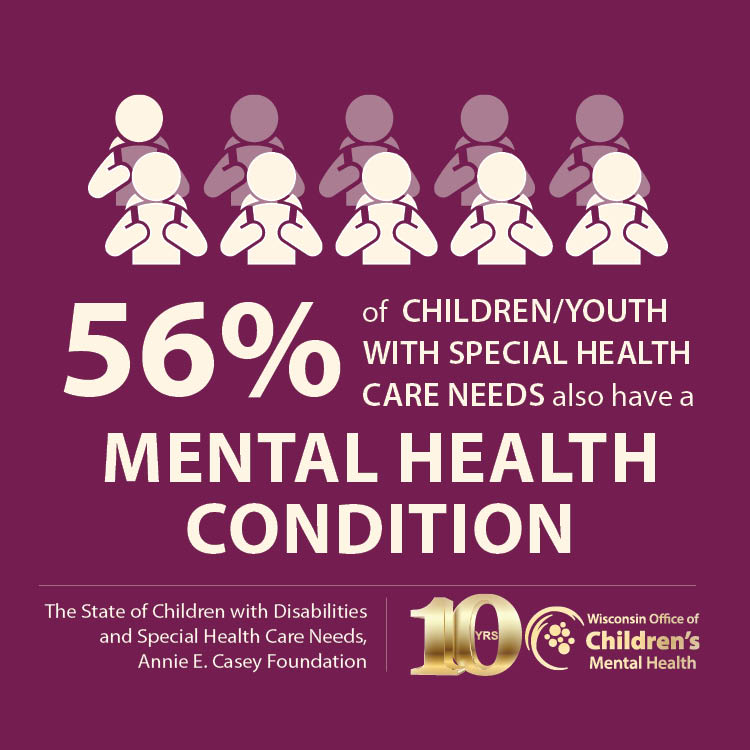
Family Voices of Wisconsin held listening sessions with families who have children and youth with special health care needs and disabilities. (More than half also have a mental health condition.) Their recently released Family Voices 2025 Listening Session report reveals several themes, including difficulty with access to and awareness of resources; experiences of families enrolled in the Children's Long-Term Support (CLTS) Program; realities of caring for the whole family while supporting a child with a disability or special health care need; lack of providers; navigating Medicaid services and other systems of support; and the challenges of school services and special education. Readers can use these qualitative data to advance program and system improvements that will help children with disabilities and special health care needs.
Kids in foster care lack suicide screening and mental health care despite being a high-need population
KFF reports that children in foster care are significantly more likely to have mental health issues. They attempt or complete suicide at rates 3-4 times that of youths in the general population, according to several studies. LGBTQ+ people in foster care are at an even higher risk of having suicidal thoughts. One study of transition-age youths in foster care found 42% of study participants had thoughts of taking their life and 24% had attempted suicide. The researcher also examined suicide screening tools and found many that already exist could work and be easily administered by trained child welfare workers or alternative frontline service providers or embedded in existing mental health services.
Despite the concentration of young people at risk of serious mental illness and suicide, proactive efforts to screen foster children and get them the treatment they need have been widely absent from the system. Now, efforts that are underway to provide widespread screening, diagnosis, and treatment are threatened by sweeping funding cuts by the Trump administration.
Gaps in Care Among Adolescents and Young Adults
Adolescence and young adulthood are critical times in the life course when health needs increase substantially. This includes onset of mental health conditions and increased rates of injury, suicide, substance use, obesity, and other behavioral health risks. Yet adolescents and young adults (AYAs) face several challenges to their wellbeing as they move into adulthood and assume a larger role in navigating their health, health care, and health insurance. This study examines gaps in care that may result in missed opportunities for health promotion and maintenance, early intervention, and acute and chronic care management, using 2022-2023 National Health Interview Survey data. The researchers call for increased attention to lapses in coverage and care for young people; and call on policymakers to prioritize those without a medical home, transitioning from pediatric to adult care, losing childhood Medicaid or CHIP eligibility status, and residing in states not expanding Medicaid.
Protecting the Developing Mind in a Digital Age: A Global Policy Imperative
Using data from the Global Mind Project, this study analyzed self-reported questionnaire results from more than 100,000 young adults between the ages of 18 and 24 to examine the population-level impacts of childhood smartphone ownership on mental health and well-being in young adulthood.
The analysis found that receiving a smartphone before age 13 is associated with poorer mental health outcomes in young adulthood, particularly among females, including suicidal thoughts, detachment from reality, poorer emotional regulation, and diminished self-worth. Boys reported feeling less calm, less stable, and less empathetic, while girls reported lower emotional resilience and lower confidence. The findings appear consistently across all global regions with the magnitude greatest in English-speaking nations.
For young women who had smartphones by 5 or 6 years old, nearly half (48%) reported having severe suicidal thoughts, compared to 28% of females who had smartphones by 13 or older. In young men, 31% of those who had smartphones by 5 or 6 years old reported having severe suicidal thoughts, compared to 20% of males who had smartphones by 13 or older. Reporting on these findings includes a call to follow American Academy of Pediatrics guidance for families.
Digital Media Use and Screen Time Exposure Among Youths
Screen time and digital media use have become deeply embedded in the daily activities of children and adolescents, yielding both benefits and risks. While digital platforms can enhance learning, connectivity, and entertainment, mounting evidence indicates that excessive and unregulated screen exposure may adversely impact physical health through increased risk of obesity, sleep disruption, and visual and musculoskeletal disorders; mental health implications associated with depression, anxiety, self-harm, and declining self-esteem; cognitive development; and social-emotional effects among children and adolescents.
Due to the lack of consensus on safe exposure thresholds and the nuanced effects based on screen type and media usage context, a balanced approach is essential. By integrating findings from international studies and public health recommendations, this comprehensive review provides a thorough foundation for clinicians, educators, and policymakers to develop targeted strategies that promote healthier digital behaviors in children and adolescents. The position statements and recommendations from the World Health Organization and the American Academy of Pediatrics are also included.
Positive Events Associated with Lower Rates of Depression and Anxiety
There is a firmly established link between negative events – such as witnessing violence – and poorer mental health outcomes, including higher rates of depression, anxiety, and suicidal behaviors. However, there is less data available on the potential impact of positive events on mental health, and little to no research on the relationship between positive events and mental health for LGBTQ+ youth specifically, a community who reports higher rates of poor mental health than their non-LGBTQ+ peers. Using data from The Trevor Project’s 2024 U.S. National Survey on the Mental Health of LGBTQ+ Young People, this brief examines the relationship between self-reported positive events in the last month and rates of recent depression and anxiety among 18,600 LGBTQ+ youth ages 13 to 24.
Unheard Boys, Unmet Needs: Boys Mental Health Report
Boys and young men in the U.S. are facing mounting challenges to their ability to thrive, marked by societal pressures, rising emotional strain, social disconnection, and unmet mental health needs. This report offers a new portrait of how boys ages 15–24 experience and express mental health and wellbeing as they navigate the complex transition from adolescence to adulthood. Grounded in both nationally representative data and the lived experiences shared by boys themselves, this report aims to map the broader “architecture of thriving”.
The report shows that boys’ and young men’s reluctance to seek help isn’t rooted in apathy, but in a mismatch between their needs and how support is designed and delivered. The findings offer a blueprint for building mental health supports that are evidence-based, youth-informed, culturally grounded, and built for trust.
See related OCMH fact sheet on boys’ mental health.
Perinatal Mortality in the United States
Data from the National Vital Statistics System show, between 2022 and 2023, the U.S. perinatal mortality rate increased slightly: from 8.27 to 8.36 perinatal deaths per 1,000 live births and fetal deaths. The early fetal mortality rate, one of the components of perinatal mortality, increased by 4% from 2.79 in 2022 to 2.89 in 2023. The perinatal mortality rate increased 7% for females younger than 20. As the report describes, perinatal mortality can be an indicator of the quality of health care before, during, and after delivery and of the health status of the nation.
College Mental Health Climates Matter
A new study examining how campus mental health climate impacts student well-being shows that when campuses foster supportive mental health environments, students do better. Specifically, the study found that improvements in campus mental health climate helped reduce psychological distress and increase help-seeking over time.
Effectiveness of Youth and Young Adult Peer Support in Mental Health Services: A Systematic Review
Serious workforce shortages in youth mental health widen the gap between demand and use and exacerbate health disparities. A strategy to address this is training and integrating youth and young adult peers to deliver services. This paper reviews international scientific studies on youth/young adult services targeting mental health conditions or health promotion. The researchers applied systematic criteria and included studies encompassing six domains: eating disorders, health promotion, depression/anxiety, suicidal risk, serious mental illness and "other." The most consistent evidence for effectiveness was for eating disorders; findings in the other domains were mixed. However, the lack of training manuals, fidelity measurement, reporting of demographic data, and consistency in outcome measurement limited both replicability and generalizability. The authors believe the acceleration of scientific attention to youth/young adult peer services over the past decade and emerging support for its effectiveness is encouraging and could help mitigate workforce shortages while improving the quality of services for young people.
Study reveals top reasons schools call emergency medical services
The three most common reasons schools called emergency medical services (EMS) were for: 1) neurological crises such as seizures, 2) psychiatric conditions or substance abuse, and 3) trauma related injuries, according to data from the national EMS registry analyzed by researchers in new study, Emergency Medical Services Responses to School-Based Medical Emergencies. The authors wanted to explore the topic to help ensure the readiness of school staff and EMS personnel to respond to individual school-based medical emergencies, which aligns with priorities identified by the American Academy of Pediatrics and National Association of School Nurses.
The lead author said, "Our findings underscore the need for schools to proactively address mental health needs of students, especially teenagers. This may include establishing relationships with local mental health care facilities and improved training for staff on how best to respond to a psychiatric crisis.”
Study Shows Link Between Screen Time, Sleep Duration, Brain Changes, and Depression in Kids
Recent evidence indicates that more screen time could impact sleep duration and brain structural connectivity (i.e., white matter organization), which are critical for emotional health. Notably, sleep duration is a modifiable behavior that health care providers can easily target, so this study examined the association between screen time during late childhood and depressive symptoms in early adolescence and investigated whether these associations are mediated by sleep duration and white matter organization.
The findings show that more screen time in late childhood was associated with more depressive symptoms, potentially due to shorter sleep and worse white matter organization during early adolescence. The researchers conclude that the findings emphasize the importance of promoting healthy habits and balancing screen time with adequate sleep.
Bedtime screen use behaviors and sleep outcomes in early adolescence
This analysis used cross-sectional data from 10,305 early adolescents (ages 12-13) in the Adolescent Brain Cognitive Development (ABCD) Study to examine associations between sociodemographic factors, bedtime screen use, and sleep outcomes. The research revealed a number of sociodemographic differences which could be used to target and tailor digital literacy education.
See related OCMH Data Bite on sleep health.
A Scoping Review of School Connectedness Interventions for Adolescents
Given the importance of school connectedness for healthy adolescent development, this scoping review aimed to identify and describe intervention strategies used to increase school connectedness among adolescents. The scoping review included 24 school-based intervention studies across 12 countries published between 2011 and 2023 targeting school connectedness among adolescents (ages 10-20). The interventions included peer support, SBIRT, bullying prevention, positive psychology, substance use prevention and more.
Interventions were primarily classroom-based with common strategies including lessons, skill-building, and role plays. Most targeted the individual or interpersonal level rather than the organizational level. The authors found 11 of the 23 interventions had a positive effect on school connectedness; two studies found that school connectedness decreased following the intervention; the remaining were mixed effects or small positive effects that didn’t reach significance. They concluded there is a diversity of promising intervention strategies across multiple social-ecological levels that can be used to increase school connectedness among adolescents.
Joy is a Skill to Build
A new study, dubbed the Big Joy Project, enrolled more than 17,000 people across 169 countries to receive one daily joy-boosting activity for a week via email. Each activity was based on scientific research and was accessible and brief, requiring only 5-10 minutes. Participants said they saw meaningful improvements in emotional well-being, increases in positive emotions, and a better sense of control over their own happiness afterward. Participants also said they felt more willing to help others. The study not only demonstrated that brief, low-intensity interventions showed meaningful improvements in well-being and stress (comparable to those seen in longer, more intensive digital well-being interventions) but also that demographic groups at higher risk of poor mental health benefited more from the intervention, highlighting its potential for scalable public health impact. In coverage of the study, one of the co-authors said the project was meant to show people that joy is a skill they can build. See related visual guide to “joy snacking.”
Impact of the Adultification of Young Black Females on Their Health and Well-being
Adultification is the process by which children, particularly Black girls, are perceived and treated as more mature or adult-like than their peers, often resulting in the denial of their childhood experiences and the imposition of adult expectations. This study, conducted as a qualitative inquiry, engaged Black girls and young Black women aged 13 to 24 years and their caregivers. Themes identified among youth participants included a desire to maintain childhood; experiences of hypersexualization; and the need for culturally sensitive mental health support. Their caregivers expressed concerns regarding early sexual debut, the rapid maturation of Black girls, the criminalization of Black girls in school, and the need for improved parenting support and mental health resources. Also see related commentary in Pediatrics.
Sharp Decline in Youth Incarceration Over the Last 30 Years
A new brief from the Annie E. Casey Foundation shows youth incarceration dropped 77% and the number of juvenile arrests plummeted from 1995 to 2023. The infographic also shows that despite this stunning drop, harmful practices have persisted, including an overreliance on incarceration once young people enter the juvenile justice system. This is especially true for Black and Native American youth. The brief is based on newly released federal data presenting key trends in youth incarceration over the last 30 years.
OCMH Research and Data Resources
Key Facts in Youth Mental Health: https://children.wi.gov/Pages/ResearchData/KeyFacts.aspx
Fact Sheets: https://children.wi.gov/Pages/ResearchData/FactSheets.aspx
Data Sources: https://children.wi.gov/Pages/Resources/DataSources.aspx
Research News in Youth Mental Health: https://children.wi.gov/Pages/OCMHNewsletters.aspx
Youth Mental Health Initiatives: https://children.wi.gov/Pages/Resources/ChildrensInitiatives.aspx
|