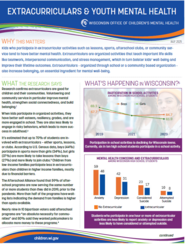
Kids who participate in extracurricular activities, such as sports, afterschool clubs, lessons, or community service, tend to have better mental health. Students who participate in one hour or more of extracurricular activities are less likely to report anxiety or depression and less likely to have considered or attempted suicide. Additionally, students who participate in extracurriculars are more likely to feel they belong at their school.
There is wide bipartisan support for afterschool programs but no dedicated funding stream. Demand is high among families, but more than half of the programs have waiting lists.
Read the complete Fact Sheet here and consider recommendations for action for parents/caregivers, schools, medical providers, policymakers, and communities.
|

OCMH's Newest Showcasing Solutions
ArtStart, a community organization in Rhinelander, WI knows that participation in the arts is good for youth mental wellness. See OCMH's newest Showcasing Solutions sharing what types of programming ArtStart is doing to connect youth in their community and the partnerships they have formed.
|

Showcasing Solutions tells stories of organizations throughout Wisconsin that are doing great work in children’s mental health. See all our Showcasing Solutions here.
|
State Budget 2025-27. 2025 Wisconsin Act 15 (AB 45). Gov. Evers, who began the year by declaring 2025 the Year of the Kid, made clear from the beginning of this biennial budget process that his top priority in the 2025-27 Biennial Budget would be to pass a pro-kid budget making meaningful investments in Wisconsin’s kids at every stage and every age, from early childhood to K-12 to higher education institutions. On July 3rd, Gov. Evers signed the bipartisan budget agreement that delivers on that important promise. A few children’s mental health provisions in the budget act include:
- $30 million to continue providing comprehensive school-based mental health services statewide, modeled on the governor’s successful “Get Kids Ahead” initiative.
- Nearly $1.4 billion in spendable revenue for K-12 schools, with the largest increase to the special education reimbursement rate in state history;
- The largest increase to the UW System in nearly two decades;
- Over $360 million to support Wisconsin’s child care industry and help lower child care costs for working families, a third of which is in direct payments to providers;
- A tax cut for working and middle-class families, bringing tax cuts enacted by Gov. Evers since he took office to over $12.6 billion;
For more detail, see the Legislative Fiscal Bureau’s Budget Summary.
Psychiatric Residential Treatment Facilities. 2025 Wisconsin Act 9 (AB 111 / SB 106). Establish a certification process for certifying psychiatric residential treatment facilities (PRTFs) to provide inpatient psychiatric services for individuals under age 21, under the direction of a physician. The bill also specifies that PRTF services are a reimbursable Medical Assistance (MA) benefit. The Senate bill, as amended, was passed by both houses and signed by Gov. Evers on July 2.
Minors’ Safety Plans. 2025 Wisconsin Act 10. (SB 108 / AB 113). This Act, signed by Gov. Evers on July 2, requires the Department of Health Services to develop and maintain a portal that is available throughout the state to facilitate sharing of safety plans for a minor in crisis among safety plan partners. The bill defines a safety plan as an individual’s written document, created in advance of a crisis, that provides guidance on how to help the individual when the individual experiences a behavioral or developmental health challenge or crisis. It was proposed by the 2025 Study Committee on Emergency Detention and Civil Commitment of Minors. As part of the 2025-27 Biennial Budget, $477,000 in 2025-26 and $342,200 in 2026-27 in the Committee's program supplements appropriation were identified to fund grants to the Wisconsin Statewide Health Information Network was provided to create and maintain the online portal where law enforcement, schools, medical professionals, and other entities may be granted access to minors' safety plans.
School Cell Phone Policy. AB 2 / SB 29. School boards would be required to implement, by July 1, 2026, a cell phone policy restricting their use during instructional time. Both bills are available to be scheduled for a floor vote.
Gun Safe & Firearm Safety Devices Tax Exemption. AB 10 / SB 12. This bill which began as a tax exemption for the sale of gun safes was expanded to include firearm safety devices that prevent unauthorized access to the firearm or prevent it from being operated without first deactivating the device. Assembly Ways & Means and Senate Agriculture and Revenue both recommended passage on unanimous votes. However, the Assembly subsequently referred the bill to the Rules Committee.
Telehealth for UW System Students. AB 299 / SB 306 Require the University of Wisconsin System to contract with a vendor for the provision of virtual mental health services for students enrolled in UW System institutions with not more than 30,000 full-time enrolled undergraduate students. Services must be designed to complement existing institution-based mental health offerings and expand students’ access to mental health support services beyond traditional business hours. Demand for mental health services far exceeds what Universities are able to provide on-site. Both Senate and Assembly committees recommended passage, however, the Assembly bill was referred to the Assembly Rules Committee.
School Mental Health Professionals Hiring Grants. SB 352. Grants for schools that hire school mental health professionals who are members of a racial minority group. Referred to Senate Committee on Education.
Extreme Risk Protection Restraining Orders AB-319. Extreme risk protection temporary restraining orders and injunctions, making an appropriation, and providing a penalty. Referred to Assembly Committee on Judiciary.
School Mental Health Federal Funding Cuts Lawsuit. On July 1, Attorney General Josh Kaul announced that Wisconsin joined a multistate lawsuit against the U.S. Department of Education for illegally cutting congressionally-approved funding for mental health programs in K-12 schools. Press Release.
Administrative Rules -- Wisconsin Supreme Court Decision. The Wisconsin Supreme Court’s decision in Evers v. Marklein II ruled on statutes giving a legislative committee ‘the power to pause, object to, or suspend administrative rules for varying lengths of time, both before and after promulgation.’ The case, brought by Gov. Evers in 2023 against the Wisconsin State Legislature, argued Republican-controlled committees such as the Joint Committee for Review of Administrative Rules are unconstitutionally and unlawfully obstructing basic government functions and operations by indefinitely or temporarily blocking or suspending administrative rules. This ruling will allow implementation of an administrative rule, among others, that would ban the practice of conversion therapy for LGBTQ+ people. Gov. Evers’ Press Release.

OCMH holds four children’s mental health learning meetings each year. The group is called the Children’s Mental Health Network, and we invite those interested in children’s mental health in Wisconsin to sign up to join the distribution list to be notified of the meetings. These quarterly meetings help attendees stay current on what is happening in children’s mental health in Wisconsin and connect to a broad network of individuals working to improve children's well-being.
Remaining 2025 Children's Mental Health Network meeting dates are August 1 and November 7. The meeting time is 10 am-12 pm, and the meetings are virtual. The August meeting topic is the family’s role in children’s mental health.
Sign up to join the Children’s Mental Health Network distribution list here.
|
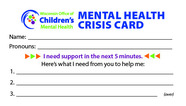
When youth are experiencing a mental health crisis or an agitated state, calming them is critical. How best to do that is as unique as the youth themselves.
In those moments what if we knew what individual youth say are strategies to calm them and then followed those? That is what OCMH’s Mental Health Crisis Card does. Youth list three calming strategies that work for them on the front of the card. Then, when a young person is feeling agitated or experiencing a mental health crisis they can show people around them their card, and those people can follow the calming strategies.
Listening to what youth know will help them when they are struggling is important. When youth are empowered to make their calming strategies known, negative impacts can be reduced or eliminated, and youth will feel safe and understood.
Access the Mental Health Crisis Card
The Mental Health Crisis Card is a wallet sized card and is downloadable on the OCMH website. It is available in 10 languages – just scroll down on this page, click on your preferred language, print, and fill out the card. Then cut it to size and put it in your wallet, phone wallet, pocket, or take a photo of it and keep that on your phone.
|
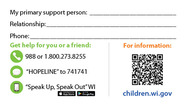
For people who haven’t thought of calming strategies, there are examples listed on this web page. The back of the Card has a place to list a supportive person, and their phone number, who could be called if necessary.
Use the Card
We encourage all youth to use the Mental Health Crisis Card, regardless of how they define their mental wellness. Just thinking about what calms people helps. For youth receiving mental health services, we encourage you to share your completed Card with the people on your care teams.
|
July is National Minority Mental Health Awareness Month
This month is a time to bring awareness to the unique challenges that racial and ethnic minorities in the United States face when it comes to mental health. This special month is also identified by some as BIPOC Mental Health Month. Learn more:
July is Disability Pride Month
Disability Pride Month is observed in July each year and commemorates the signing of the Americans with Disabilities Act (ADA) on July 26, 1990. This recognition provides time for all to celebrate the achievements, experiences, and challenges faced by individuals with disabilities and raise awareness about disability rights and the importance of inclusion and accessibility. We encourage all to carve out time this month to learn more about Disability Pride Month.
|

Healing Traditions: Mental Health is in Our Culture
Many tools to support mental health are rooted in people’s culture, traditions, and family practices. Mental Health America’s shares information on this topic. See that here.
|
Grant Opportunities – Youth Mental Health
The Wisconsin Department of Health Services announces grant opportunities focused on youth mental health that provide funding and support for local and Tribal health agencies and other organizations:
-
Enhancing Youth Mental Health Resource Hubs through Quality Improvement and Collaboration Funding Application – to enhance existing or develop new resources that help youth and their families locate and connect to mental health resources in order to improve access for youth in Wisconsin. Applications due August 13, 11:59 pm. Learn more here.
-
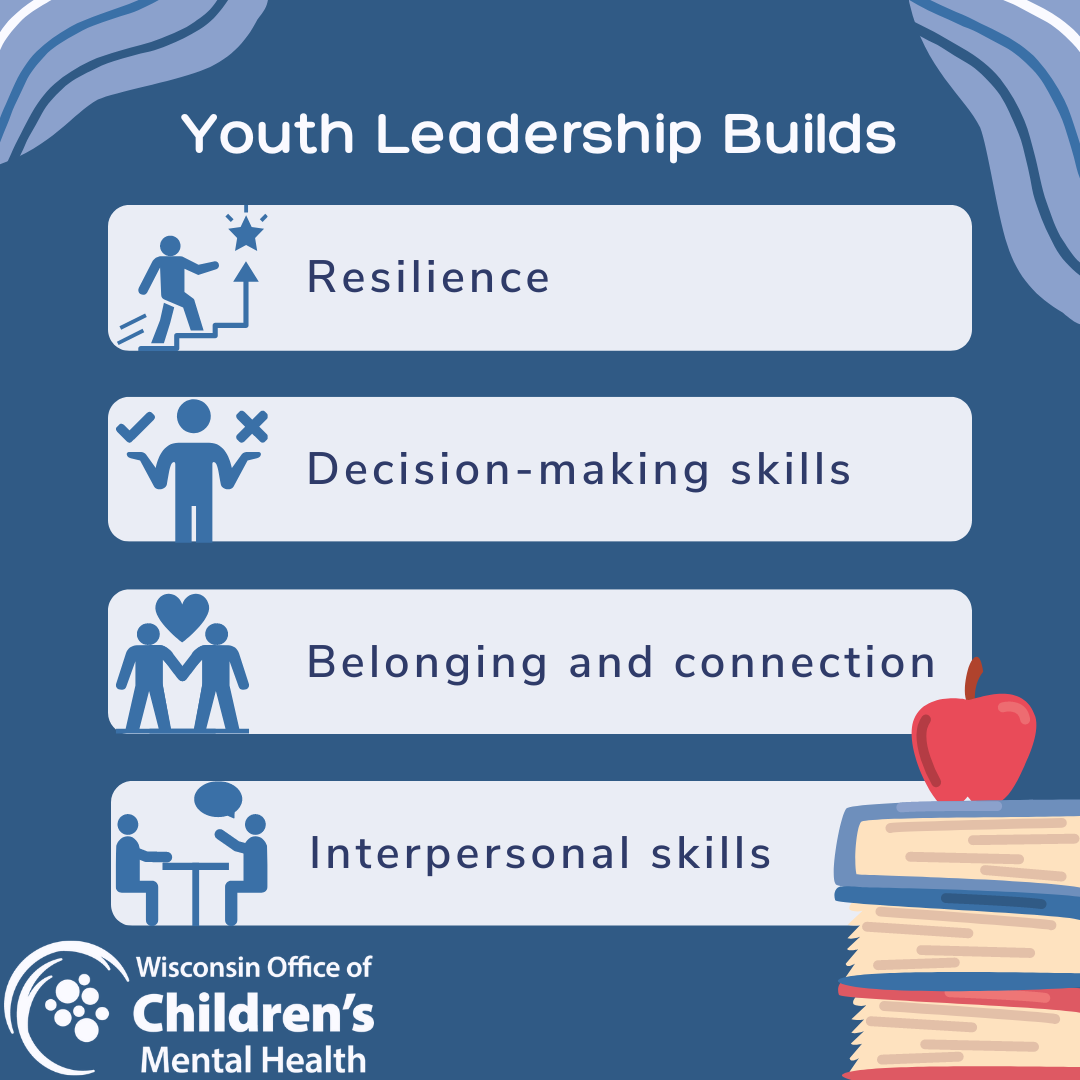
Statewide Youth Engagement: Youth Voice, Trainings, and Support for Best Practices to Improve Youth Mental Health Funding – to empower and engage youth as leaders in public health, with a focus on mental health. Applications due August 13, 11:59 pm. Learn more here.
-
Improving Social Connections Funding Application – to increase opportunities for social connections to improve health and wellness for Wisconsin women, infants, children, and families. Applications due August 13, 11:59 pm. Learn more here.
|