 HAI Happenings: Quarter Two 2025 Newsletter
This message is being sent to local public health department officers, nurses, and staff; Tribal health directors; infection preventionists; and key DPH staff.
HAI Happenings highlights new and noteworthy topics for all things related to healthcare-associated infections (HAI), including infection prevention and control (IPC), antimicrobial stewardship (AS), antibiotic resistance (AR), surveillance, and more. You can also find links to helpful guidance and resources and learn more about current Wisconsin HAI Prevention Program activities.
Knowledge check
Test your HAI knowledge. See the end of the newsletter for the answer.
Once a multi-dose medical vial has been opened, after how many days does it expire and should no longer be used?
|
|
 |
What's new with the HAI Prevention Program?
-
The HAI Program hosted the second of a new quarterly workshop series for local and Tribal health departments (LTHDs). The LTHD Infection Prevention Workshops provide LTHD staff with foundational knowledge on HAI and IPC topics. This quarter’s workshop included a nontuberculous mycobacteria infection case study. Learn more about LTHD Infection Prevention workshops and upcoming opportunities on our Resources for Local and Tribal Health Departments webpage.
-
Our Infection Prevention Education webpage got a new look! You can now find tools, templates, factsheets, and guidance documents more easily. On this page, you can also register for HAI Prevention Program webinars and view past presentations.
-
Registration for HAI Prevention Program webinars is changing. You’ll now be prompted to register for each Infection Preventionist (IP) Lunch and Learn and HAI Education series session, however the dates and times for these sessions remain the same.
-
IP Lunch and Learn: Occurs the second Tuesday of the month from 12 to 12:30 p.m. The next session will occur August 12.
-
HAI Education Series: Occurs the fourth Thursday of the month from 10:30 to 11:30 a.m. The next session will occur on August 28.
-
Want more information on HAIs? The HAI Prevention Program recently published an HAI Types webpage where you can find information about the types of HAIs and resources for health care and public health professionals.
-
A few of our multidrug-resistant organism (MDRO) factsheets have been updated and translated to Spanish. Be sure to check them out!
-
A number of the HAI Prevention Program’s Infection Preventionists and staff members attended the Association for Professionals in Infection Control and Epidemiology (APIC) state seminar. Shout out to those who presented and helped make the seminar a success!
In the news
-
A voluntary recall of Zicam® Cold Remedy Nasal Swabs, Zicam® Nasal AllClear Swabs, and Orajel™ Baby Teething Swabs has been issued due to potential microbial contamination to cotton swab components. Microbial contamination can potentially present a significant health and safety risk, including serious and life-threatening blood infections. At this time, no serious adverse events associated with the affected products have been reported.
-
The CDC (Centers for Disease Control and Prevention) is investigating an outbreak of Paraburkholderia fungorum (P. fungorum), an environmental bacterium, associated with the use of ultrasound gel in multiple states. Additional information on this outbreak and recommendations for health care providers are available on the CDC website.
-
The CDC and Food and Drug Administration (FDA) have advised that the live-attenuated chikungunya vaccine should not be used among people 60 years and older until reports of serious adverse events are further investigated. View the GovD listerv message for additional action items for health care providers.
-
A recent CDC Morbidity and Mortality Weekly Report (MMWR) shows rates of candidemia were similar to previous years, but certain groups are still at higher risk. Data included in the MMWR show a disproportionate incidence of candidemia among older adults, males, and Black patients, consistent with previous reports. The report emphasizes a continued need for surveillance to help monitor emerging populations at risk for candidemia and changes in antifungal resistance patterns.
-
CDC’s Publications on Demand service will permanently end in September 2025. Place orders for free printed CDC publications, including materials on sepsis, hand hygiene, antibiotic use, or C. diff by August 15, 2025. Orders can be made by visiting the CDC Publications on Demand website, or by calling 1-800-CDC-INFO.
Best practice and guidance updates
-
The Wisconsin Department of Health Services (DHS) continues to recommend current COVID-19 vaccine to protect against severe illness. DHS independently reviews FDA and CDC recommendations to provide clinical guidance to Wisconsin providers and the public. Wisconsin Medicaid will also continue to cover the current COVID-19 vaccine for eligible Medicaid members, including children and individuals who are pregnant. Find additional information on DHS COVID-19 vaccine recommendations.
- DHS released a Measles Readiness Toolkit with measles preparedness checklists and resources for health clinics.
- DHS has also released Measles Guidelines with information on testing, reporting, and investigations.
- Earlier this month, the CDC’s Healthcare Infection Control Practice Advisory Committee (HICPAC) was disbanded. HICPAC has been responsible for providing evidence-based guidance to inform safe health care practices that prevent HAIs. Other organizations, such as APIC and the Society for Healthcare Epidemiology of America (SHEA), have stepped in to advocate for reinstating HICPAC. To learn more about their efforts review APIC’s news release.
- Wisconsin DHS published its last weekly respiratory report. Respiratory illness dashboards on the DHS website will continue to be provide updated weekly data throughout the summer. Data from the weekly respiratory report that are currently not on a dashboard will be added to the DHS respiratory dashboards and be available during the next respiratory season.
Project Firstline spotlight
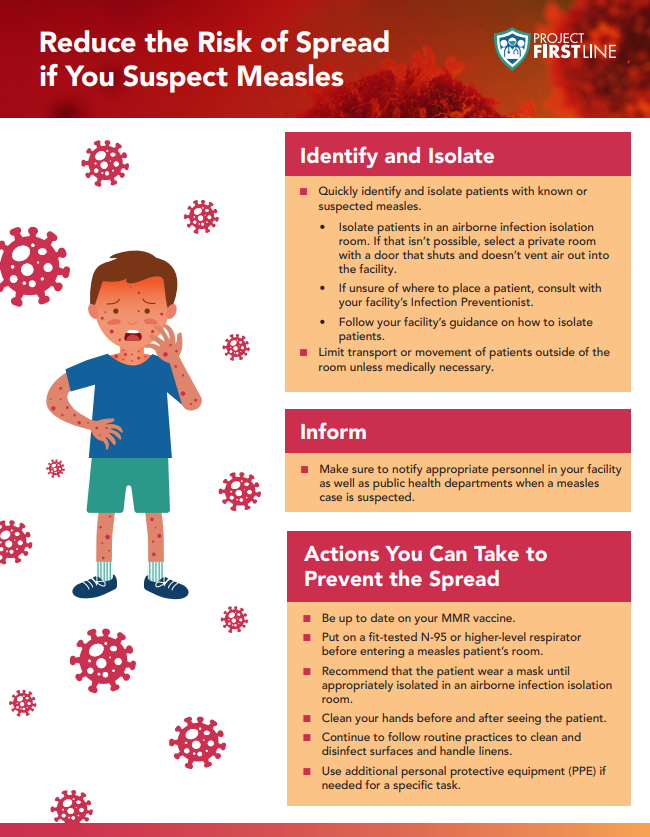
Check out Project Firstline’s new measles micro-learn! Micro-learns can be used to lead quick, on-the-job trainings for frontline health care workers. The measles micro-learn can help teach health care workers how to recognize measles and prevent the spread. See other Project Firstline micro-learn topics.
Notes from the field
Each quarter, we highlight a specialty topic area or setting that the HAI Prevention Program works with and take a deep dive into guidance, recommendations, or notes from the field from our IPs. This quarter, we’re focusing on oral health.
As part of the HAI Prevention Program’s Oral Health Infection Prevention Project, trained oral health IPs provide virtual and in-person consultation to oral health clinics around Wisconsin. One common IPC gap identified is dental unit waterline (DUWL) management. DUWLs are an ideal environment for biofilm growth and that is why proper mitigation strategies should be in place to prevent the spread of pathogens to patients. The strategies include treating, flushing, shocking, and testing the water. For more information on each of these steps, and how to perform the processes, view the Dental Unit Waterline Toolkit. Also visit the Infection Prevention in Oral Health Settings webpage for more infection prevention resources.
HAI Prevention Program highlights
the end of April, the HAI Prevention Program hosted Infection Preventionist Bootcamp in Eau Claire. This two-day, in-person training brought 40 IPs from across the state together to learn about IPC practices and network with others. The training included presentations, discussions, and hand-on activities.
Here’s what some attendees had to say:
“It was very informative and educational.”
“The training was eye opening.”
“Going over the basics and getting into the more in depth conversations was a great learning experience.”
“I was so impressed with IP Bootcamp and thankful I was able to attend.”
“This was extremely beneficial.”
Another IP Bootcamp is scheduled to take place this fall. Be on the lookout for more information in the coming months!
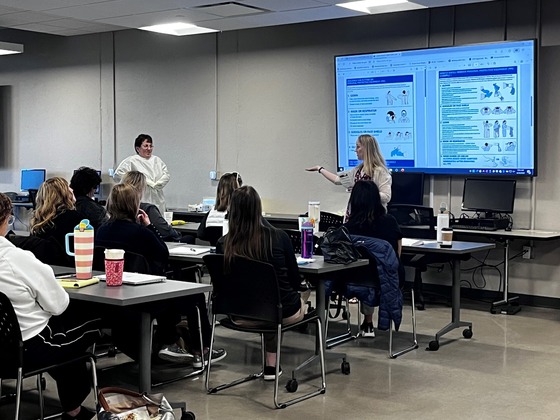 Attendees participated in a personal protective equipment (PPE) donning and doffing activity.
Knowledge check answer
Once opened, the expiration date is 28 days unless otherwise specified by the manufacturer.
|