May is Mental Health Awareness Month. Mental wellness is essential for everyone’s well-being at every stage of life.
The need is great as shown by these national numbers:
-
50% of all lifetime mental illness begins by age 14, and 75% by age 24
-
1 in 5 U.S. adults experience mental illness each year
-
1 in 6 U.S. youth ages 6-17 experience a mental health disorder each year
-
56% of U.S. children ages 3-17 had difficulty getting mental health care
-
20% of U.S. high school students seriously considered suicide (Wisconsin specific percentages are:19% for all youth, and girls at 24% and boys at 14%)
Resources to help plan activities to acknowledge Mental Health Awareness Month:
- SAMHSA’s Mental Health Awareness Month Toolkit includes key messages and themes, social media content and promotional materials, and suggested themes by week.
-
NAMI’s (National Alliance on Mental Illness) theme is “In Every Story, There’s Strength,” and they encourage all to take action, raise your voices, and help change the conversation around mental health.
- Mental Health America (MHA) provides a Mental Health Month Action Guide 2025 encouraging people to take action for yourself and to take action for all. MHA founded the annual observance of mental health awareness in May in 1949.
|
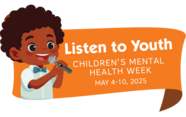
During this Children’s Mental Health Week, May 4-10, and throughout the entire month, OCMH is promoting the importance of listening to youth. Organizations and individuals are encouraged to seek out ways to incorporate youth voice – everywhere from intentionally inviting their opinions on things that affect them to one-on-one opportunities for conversations and connection. Everyone can help – a less than 40 second compassionate interaction between an adult and a young person can substantially reduce anxiety.
See OCMH’s special web page on Children’s Mental Health Week.
|

Madison Children’s Museum Lights Up Green for Youth Mental Health
Recognizing the importance of children’s mental health and celebrating Mental Health Month, the Madison Children’s Museum, located in downtown Madison, lite up green. Mental Health America encourages buildings across the nation to light up green in recognition of Mental Health Month.
|
New Flyers Share Youth Voice
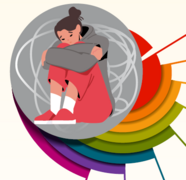
Students Spoke, We Listened. We asked Wisconsin teens to tell us their thoughts on important topics and produced four new flyers sharing their insights. We encourage you to review these and discuss them in your organizations and networks:
-
Top Stressors – Academic pressure and achievement culture topped the list, but there are many other issues stressing our teens. See the new flyer here.
-
Mental Wellness – Youth tell us what they need for a strong foundation in mental wellness. See the new flyer here.
-
Increasing Youth Belonging – Youth share what makes them feel connected to their school. See the new flyer here.
-
Starting Early – Youth agree that addressing mental wellness should start earlier than high school. They share ideas on how. See the new flyer here.
|
Youth Voice is Important
When youth have a say in the things that involve them, their mental health and well-being improve. See our new Data Bite on Youth Voice.
Data Bites provide a quick look at a children’s mental health data point. See all our Data Bites.
|

New Showcasing Solutions – Black and Latino Male Achievement
Milwaukee Public Schools recognized that Black and Latino boys and young men were consistently below their peers in student achievement data. To address this and the many other unique challenges these students face, the district established Black and Latino Male Achievement (BLMA). See how BLMA is uplifting Black and Latino young men in our newest Showcasing Solutions.
Showcasing Solutions shares stories of innovative and effective children's mental health initiatives across Wisconsin. See all our Showcasing Solutions here.
|

Social Media and Children’s Mental Health
OCMH’s May Children’s Mental Health Network meeting focused on social media and children’s mental health. The importance of this topic cannot be understated, and OCMH addressed it by: 1) examining the data and research on the topic, 2) hearing from a panel of high school students as to their thoughts on social media, 3) an expert speaker addressing reclaiming life in the real world and balancing social media, and 4) hearing from a school on their experience with an away-for-the-day cell phone policy. The meeting recording, presentation, and resources are available:
OCMH’s Children’s Mental Health Network holds four meeting each year, bringing together a large and broad group of children’s mental health advocates and professionals to learn about important topics and initiatives in children’s mental health and well-being. Meetings are virtual and on a quarterly basis – the first Friday of February, May, August, and November from 10 am-12 pm. Sign up to join the network distribution list and to be notified of the meetings.
|
Mental Health in State Biennial Budget. The Joint Finance Committee has concluded its public hearings on the biennial budget. As has been the custom in recent years, the Legislature has rejected the majority of the Governor’s proposed budget and is moving on to building its own 2025-27 budget. A May 10th Wisconsin Watch article offers clues as to which of the Governor’s budget priorities may make it to the Legislature’s version of the budget. Among the OCMH Budget Priority items that were cut is the Healthy Meals, Healthy Kids proposal that would provide free lunch and breakfast so kids can be ready to learn. The state fiscal year ends on June 30th. If a new budget is not yet enacted by then, the state proceeds using funding levels designated for 2025-26.
Medicaid Eligibility. AB 163. This bill prohibits the Wisconsin Department of Health Services (DHS) from automatically renewing the eligibility of a recipient under the Medical Assistance program and must determine an individual’s eligibility every six months. DHS is also prohibited from using prepopulated forms or otherwise supplying information, except for name and address, to a recipient under the Medical Assistance program that has been supplied to DHS. Additionally, any recipient under the Medical Assistance program that fails to report to DHS or its designee any change that may affect eligibility within 10 days following such a change is ineligible for benefits for six months from the date DHS discovers the failure to report the change. The fiscal estimate submitted to the Legislature identifies that the known one-time costs of this bill are estimated at $2,500,100 all funds and the known annual, ongoing costs are estimated at $60,572,000 all funds and an increase of 119 full-time positions. A public hearing was held on April 10.
Sales Tax Exemption on Gun Safes. AB 10 / SB 12. Creates a sales and use tax exemption for the sale of gun safes. AB 10 passed the Assembly Ways & Means Committee on May 7 with a bipartisan vote of 10-0, subsequently was referred to the Committee on Rules.
Child Trafficking Penalty. AB 86 / SB 91. Under this bill, a person is not eligible for release to extended supervision if the person is convicted of a Class A felony violation of trafficking a child. Both the Assembly and Senate Committees have recommended passage.
Providing Empathetic and Effective Recovery (PEER) Support Act. On April 8th, U.S. Senators Tim Kaine (D-VA) and Jim Banks (R-IN), members of the Senate Health, Education, Labor and Pensions (HELP) Committee, introduced the Providing Empathetic and Effective Recovery (PEER) Support Act, bipartisan legislation to support mental health care and substance use disorder recovery. Specifically, the PEER Support Act would codify the Office of Recovery in the Substance Abuse and Mental Health Services Administration (SAMHSA) to train, educate, and support the professional development of peer support specialists; research and publish best practice recommendations for the training, certification, and supervision of peer support specialists for entities that employ these professionals; recommend career pathways for peer support specialists; and provide leadership in the identification of new and emerging issues related to recovery support services. It would also instruct the Department of Health and Human Services (HHS) and Department of Justice (DOJ) to conduct a study to research states’ screening processes for prospective peer support specialists that may pose undue barriers to their certification, and provide evidence-based recommendations for overcoming those barriers.
The PEER Support Act is cosponsored by U.S. Senators Tammy Baldwin (D-WI), Lisa Murkowski (R-AK), and Ron Wyden (D-OR). For more, see Kaine & Banks Introduce Bipartisan Bill to Support Mental... and the bill text.
|
Asian American, Native Hawaiian, and Pacific Islander Heritage Month is May
Also known as Asian American and Pacific Islander (AAPI) Heritage Month, May provides time for an annual celebration recognizing the historical and cultural contributions that Asian Americans, Native Hawaiians, and Pacific Islanders have made to the United States. This year’s theme is “A Legacy of Leadership and Resilience.”
|
|
 |
Supporting Families Facing Deportation
Information created by the University of Minnesota offers adults information on what they can do to support children who are afraid of a parent or other loved one being deported. The information is available in English, Spanish, and Korean. Learn more.
Global Loneliness Awareness Week
Mark your calendars for June 9-15 – Global Loneliness Awareness Week. Loneliness and isolation was called out as an epidemic in 2023 by then Surgeon General Dr. Vivek H. Murthy. Review his 2023 advisory and start planning how you can recognize Global Loneliness Awareness Week in June.
|