
Global Health Update
Learn about CDC's Traveler-based Genomic Surveillance (TGS) program
CDC coordinates strategic biosurveillance at international airports to detect communicable diseases of public health concern and limit the spread of disease to local communities. The TGS program focuses on viruses like influenza A and B, RSV, and SARS-CoV-2.
CDC uses two methods, nasal swab samples and wastewater samples, to monitor disease levels among travelers returning to the U.S. International travelers at participating airports volunteer to self-collect two nasal swab samples and complete a survey about their activities. Samples are tested for pathogens and, if positive, are shared with CDC laboratories for further genomic characterization. Wastewater samples from airplanes are collected from an airport triturator, a consolidation points where lavatory trucks deposit wastewater, and are shipped to a laboratory for digital polymerase chain reaction (PCR) testing. Positive samples undergo sequencing to find out more about variants, strains, or mutations.
Find updated charts with weekly trends of SARS-CoV-2 test positivity among arriving international travelers on the TGS website.
CDC Travel Health Notices for international travelers
Level 4 – Avoid All Travel
None at this time.
Level 3 – Reconsider Nonessential Travel
None at this time.
Level 2 – Practice Enhanced Precautions
Global polio
Poliovirus is currently circulating in several international destinations, including many countries in Africa, Europe, and the Eastern Mediterranean, resulting in a level 2 travel health notice for these areas. Before any international travel, individuals should ensure they are up-to-date on their polio vaccines. Additionally, individuals traveling to the affected areas may receive a single, lifetime booster dose of polio vaccine, provided they have completed the full routine series.
Chikungunya in the region of the Indian Ocean
There is a level 2 notice for chikungunya in several countries in or near the Indian Ocean, including Mauritius, Mayotte, Réunion, Somalia, and Sri Lanka. As chikungunya is spread by mosquitoes, individuals traveling to affected areas should take steps to prevent mosquito bites, including wearing long-sleeved shirts and pants and using insect repellent. Additionally, travelers visiting an area affected by an outbreak may consider getting the chikungunya vaccine. There are two chikungunya vaccines licensed in the U.S.: IXCHIQ, a live-attenuated vaccine, and VIMKUNYA, a virus-like particle vaccine. Providers should discuss risks and benefits of vaccination, particularly with certain populations like pregnant people and people over 60 years old.
Level 1 – Practice Usual Precautions
Global measles (updated May 28)
Global dengue (updated May 22)
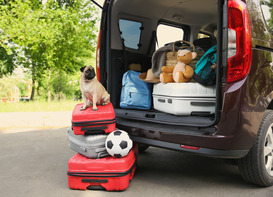
Traveling with pets
Traveling with canine and feline companions can be challenging and requires planning and preparation to keep them safe and healthy while away from home. Pets can become stressed and behave differently when their routines are disrupted or when taken out of their familiar environments. If including pets on travel is necessary, it is essential to ensure their health is stable and that they are up-to-date on preventative care such as vaccinations and flea and tick prevention.
Other important considerations to keep your pet comfortable and safe:
- Pets should wear visible identification such as a harness or collar and ID tag when away from home. Microchip ID is not visible to strangers and requires that a lost pet be taken to a facility that has an ID scanner.
- Always keep dogs and cats up to date on their rabies vaccine and carry a copy or photo of their vaccination certificate.
- Acclimate pets to their transport accommodations (such as a kennel, cage, or safety harness) prior to embarking on travel.
- Prevent pets from escaping or wandering away by using appropriate restraint methods such as a leash or crate whenever outside of their transport accommodations.
- Try to maintain the pet’s routine diet. Bring enough food and treats for the entire trip. Be prepared to provide food and water while in transit if necessary, and pack bowls or other serving containers.
- Plan for when the pet needs to relieve themselves—litter box, poop bags, doggy diapers or pads. Cleaning supplies for accidents may be helpful.
- Bring along your pet’s medications and supplements just like those packed for humans (original labeled container, copy of prescription, quantity and extra for entire trip, proper storage conditions).
Prior to taking your pet to another state, check for any specific requirements, such as a Certificate of Veterinary Inspection (CVI) from an accredited veterinarian.
Traveling to and from an international destination with your pet requires advance planning and consultation with your pet’s veterinarian. Advise travelers to research a country’s requirements at the USDA Pet Travel site. Travelers can find helpful information on traveling with pets dog or from their veterinarian and the American Veterinary Medical Association.
|

Travel safety: backpacking
Summer is one of the most popular times of the year for adventure travel, including backpacking and camping trips. Individuals traveling via backpacking have a small amount of space to keep health supplies, which means careful planning is necessary. Here are some key tips backpackers should keep in mind to protect their health on their adventures:
-
Train properly ahead of time. Even backpacking routes labeled easy are physically demanding. Make sure travelers have adequately prepared themselves to avoid injury.
-
Make an appointment with a health care provider. Travelers should share destinations they will pass through and any activities they will participate in with their health care provider to determine any health risks present. Backpacking involves spending extended periods of time outside; depending on the traveler's destination, certain vaccines against vectorborne diseases may be useful.
-
Research health care options. Travelers can take steps to plan for unexpected events ahead of time, including getting travel insurance and learning where they can access health care while on their trip. Some medical insurance policies do not cover certain types of adventure activities. Travelers should check their policy's coverage before leaving.
-
Pack a mini health kit. A travel health kit won't take up too much room in a backpacker's gear and is necessary in case of injury or illness. Backpackers should bring medications they might need, like antihistamines for allergies, pain and fever medicine, and any prescriptions. Additional items that can help protect backpackers from the elements include a basic first aid kit with bandages and antiseptic wipes, sunscreen, hand sanitizer, insect repellent with an active ingredient like DEET, and water purification tablets or a filtering device.
|

Disease spotlight: Hepatitis A
May was Hepatitis Awareness Month. Hepatitis A illness is caused by the hepatitis A virus (HAV). HAV is among the most common vaccine-preventable infections acquired during travel. In Wisconsin, nearly half of all hepatitis A cases originate from international travel. The disease can be brought into the United States by susceptible people who get infected in other countries. They can then spread the virus to other people who are not protected, which can lead to outbreaks. HAV remains a common disease in many parts of the world, including Africa, Asia, Mexico, Central and South America, and Eastern Europe. Additionally, sporadic outbreaks have been reported in Australia, Europe, North America, and other regions with low levels of endemic transmission. For more information on travel guidance for HAV please visit Hepatitis A | Yellow Book | CDC.
|
How is it spread?
Hepatitis A can occur in travelers visiting other countries, with risk being greatest for those who visit areas where the disease is common and then eat or drink in areas with inadequate sanitation and limited access to clean water. Food exposures are also a risk for hepatitis A. HAV can be transmitted from raw or inadequately cooked foods contaminated during growing, processing, or distribution, and through contamination by an infected food handler. Recent large-scale outbreaks have been caused by common-source food exposures (such as frozen berries, fresh fruit and vegetables, seafood), as well as through person-to-person spread among people who use injection and non-injection drugs, people experiencing homelessness, and through close personal contact in shared living situations or direct contact activities like kissing or sex.
HAV can survive in the environment for prolonged periods. Freezing does not inactivate the virus, and HAV can be transmitted through ice and frozen foods.
What are the symptoms?
Infected people shed HAV in their feces. People are most infectious 1–2 weeks before they even have clinical signs and symptoms. The incubation period for HAV averages 28 days (range 15–50 days) but a person can spread the illness for up to two weeks before feeling ill. Once ill, the infection can range from mild illness lasting 1–2 weeks to severely disabling disease lasting several months.
Symptoms can include:
- Fever
- Tiredness
- Not feeling hungry
- Nausea and vomiting
- Abdominal pain
- Dark urine
- Pale stool (poop)
- Jaundice (yellowing of the skin and whites of the eyes)
Most adults and older children are symptomatic, with jaundice occurring in the majority of patients. Illness resolves on its own, usually by two months, but approximately 10%–15% of infected people have prolonged or relapsing symptoms past six months. Children younger than 6 years of age usually do not show any symptoms and jaundice is uncommon. The only treatment for HAV infection is supportive care.
Who is at risk?
All susceptible people (those who have not been vaccinated) traveling for any purpose, frequency, or duration to countries with high or intermediate hepatitis A endemicity are at potential risk for exposure and infection during activities involving drinking or eating foods.
Travel recommendations
Travelers can prevent HAV infection through vaccination or immune globulin (IG) administration, practicing food and water precautions, and maintaining standards of hygiene and sanitation. The best way to prevent hepatitis A is by getting vaccinated with the hepatitis A vaccine.
Vaccine recommended for unvaccinated travelers
All susceptible people traveling for any purpose, frequency, or duration to countries with high or intermediate hepatitis A endemicity should be vaccinated or receive IG before departure. For travelers already partially vaccinated (for example, did not receive a full series of hepatitis A-containing vaccine), administer a dose prior to travel according to the routine immunization schedule.
Infants 6–11 months old traveling to countries with high or intermediate hepatitis A endemicity should also be vaccinated against hepatitis A. The dose does not count toward the routine 2-dose series. Although hepatitis A vaccine is considered safe and immunogenic in infants, hepatitis A vaccine doses administered before 12 months of age could result in a suboptimal immune response, particularly in infants with passively acquired maternal antibody. Therefore, hepatitis A vaccine doses administered at less than 12 months of age are not considered to provide long-term protection, and the 2-dose hepatitis A vaccine series should be initiated at age 12 months according to the routine immunization schedule.
Unvaccinated travelers who are over 40 years old, immunocompromised people, and people with chronic liver disease should receive a single dose of hepatitis A vaccine as soon as travel is considered. People planning travel in less than two weeks can receive IG (0.1 mL/kg) in addition to vaccine at a separate injection site (separate limbs) based on provider risk assessment, including considerations of the traveler's age, immune status, underlying conditions, risk for exposure, and availability of IG. The hepatitis A vaccine series should be completed according to the routine immunization schedule.
For travelers for whom hepatitis A vaccine is contraindicated or who choose not to be vaccinated, for travel duration less than or equal to 1 month, the manufacturer recommends 1 dose of IG at 0.1 mL/kg; for travel greater than one month but less than or equal to two months, 1 dose of IG at 0.2 mL/kg is recommended. A 0.2 mL/kg dose of IG should be repeated every two months for the duration of travel.
|