Global Health Update
New travel health resource from CDC
The Center for Forecasting and Outbreak Analytics at the CDC has released a new risk tool that assesses the public health implications of recent outbreaks of H5N1, Sudan virus disease, Marburg virus disease, and mpox. The assessments determine risk levels for the general U.S. population as well as potential impacts of a domestic outbreak. Risk is estimated by combining the likelihood of infection and the impact of disease, considering various factors like disease severity and pathogen infectiousness, population immunity, and availability of treatment. The risk assessments provide scenarios in which the diseases could spread in the U.S., as well as anticipated control measures. The assessments were conducted using evidence from epidemiologic data in current outbreaks as well as historical data.
CDC Travel Health Notices for international travelers
Level 4 – Avoid All Travel
None at this time.
Level 3 – Reconsider Nonessential Travel
None at this time.
Level 2 – Practice Enhanced Precautions
Yellow Fever in South America
There is a level 2 notice for yellow fever in parts of Bolivia, Columbia, and Peru that have not been affected by yellow fever in the past but border areas where vaccination has historically been recommended. Travelers to these areas should seek vaccination at least 10 days before travel. Certain travelers, such as those who were vaccinated more than 10 years ago and will be in higher-risk settings, may be given a booster dose of the yellow fever vaccine. Travelers should take steps to prevent mosquito bites and seek medical care if they develop yellow fever symptoms, including fever, chills, headache, backache, or muscle aches during or after travel to South America.
Clade I Mpox in Central and Eastern Africa
There is an outbreak of clade I mpox in Central and Eastern Africa, affecting several countries including Burundi, Central African Republic, Democratic Republic of the Congo, Rwanda, Tanzania, Uganda, and Zambia. Transmission has occurred through sexual contact, day-to-day household contact, within health care settings, and through contact with live or dead wild animals. Travelers should avoid situations that might increase their risk for mpox, like coming into contact with people who have symptoms of mpox, touching items used by people who are sick, coming into contact with wild animals, and eating or preparing meat from wild animals. Those who anticipate participating in certain sexual activities while traveling in countries with ongoing transmission of clade I mpox should get two doses of the JYNNEOS vaccine at least 28 days apart.
Ebola in Uganda
There is a level 2 travel health notice for an outbreak of Sudan virus disease (SVD), a type of Ebola disease caused by infection with the Sudan virus, in several parts of Uganda. Symptoms of SVD can develop up to 21 days after exposure and include fever, chill, headache, muscle aches, rash, chest pain, sore throat, nausea, vomiting, diarrhea, and unexplained bleeding or bruising. There are no vaccines or therapeutics approved for the prevention and treatment of SVD. Individuals planning travel to Uganda should avoid contact with symptomatic individuals and avoid visiting health care facilities in the affected areas for nonurgent medical care. Travelers should also avoid the blood, fluids, or raw meat of wild animals (bats, forest antelopes, monkeys).
Level 1 – Practice Usual Precautions
Global Dengue (updated April 15)
Oropouche in the Americas (updated April 9)
Global Measles (updated March 19)
World Immunization Week 2025: Immunization for All is Humanly Possible (April 24–30)
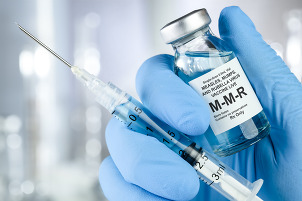
World Immunization Week, celebrated in the last week of April, aims to promote the life-saving power of immunizations to protect people of all ages against vaccine-preventable diseases.
Since 1974, vaccines have saved 154 million lives—that’s more than 3 million lives a year, or six people every minute for five decades.
However, many popular travel destinations still have frequent outbreaks of vaccine-preventable diseases like measles and mpox. If travelers are not vaccinated, international travel increases their chances of getting and spreading diseases in the United States.
Steps to take:
1. Make sure travelers are up to date on their routine vaccines. The routine vaccines travelers may need depend on their age, health, and vaccination history. Travelers may need to get an accelerated dose of a vaccine or a booster dose before traveling. Travel vaccines include: COVID-19; chickenpox (varicella); hepatitis A & B; influenza; MMR pneumococcal; polio; rotavirus; and DTaP and Tdap. Check the CDC's destination pages for additional travel health information. Some protection is better than no protection—if the traveler is leaving before full immunity is reached from vaccination, travelers should still be vaccinated.
2. Encourage travelers to make an appointment with a health care provider or a travel health specialist at least 4–6 weeks before they leave. Discussing travelers’ health concerns, itinerary, and planned activities allows providers to share more specific advice and recommendations.
3. Make sure travelers bring a copy of their official immunization records with them when they travel. This ensures travelers are prepared in case of emergency while away from home.
|
Disease Spotlight: West Nile Virus
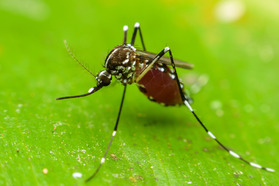
West Nile virus (WNV) was first isolated in Uganda in 1937, but is now commonly found throughout much of Africa, Europe, the Middle East, North America, and West Asia. In nature, WNV is maintained in a cycle involving transmission between birds and mosquitoes. It is primarily spread to people by the bite of an infected mosquito. Fortunately, most people infected with WNV do not develop any symptoms. However, in rare cases, people infected with WNV can develop a serious, sometimes fatal, neurological illness.
|
Who is at risk?
Cases of WNV infection occur during mosquito season, which starts in the spring and continues through fall. All residents of and visitors to areas where virus activity has been identified are at risk for infection, particularly people who work or participate in recreational activities outdoors.
What are the symptoms?
The incubation period for WNV disease is typically 2–6 days but ranges from 2–14 days and can be several weeks in immunocompromised people.
An estimated 70–80% of human WNV infections are subclinical or asymptomatic. Most symptomatic persons experience an acute systemic febrile illness that often includes headache, weakness, myalgia, or arthralgia. Gastrointestinal symptoms and a transient maculopapular rash also are commonly reported. Less than 1% of infected persons develop neuroinvasive disease, which typically manifests as meningitis, encephalitis, or acute flaccid myelitis.
- WNV meningitis is clinically indistinguishable from viral meningitis due to other etiologies and typically presents with fever, headache, and nuchal rigidity.
- WNV encephalitis is a more severe clinical syndrome that usually manifests with fever and altered mental status, seizures, focal neurologic deficits, or movement disorders such as tremor or parkinsonism.
- WNV acute flaccid myelitis is usually clinically and pathologically identical to poliovirus-associated poliomyelitis, with damage of anterior horn cells, and may progress to respiratory paralysis requiring mechanical ventilation. WNV acute flaccid myelitis often presents as isolated limb paresis or paralysis and can occur without fever or apparent viral prodrome. WNV-associated Guillain-Barré syndrome and radiculopathy have also been reported and can be distinguished from WNV acute flaccid myelitis by clinical manifestations, timing of onset, and electrophysiologic testing.
How does it spread?
WNV is most commonly spread to people by the bite of an infected mosquito. Mosquitoes become infected when they feed on infected birds. Infected mosquitoes then spread WNV to people and other animals by biting them.
In nature, WNV cycles between mosquitoes (especially Culex species) and birds. Some infected birds can develop high levels of the virus in their bloodstream and mosquitoes can become infected by biting these infected birds. After about a week, infected mosquitoes can pass the virus to more birds when they bite. Mosquitoes with WNV also bite and infect people, horses, and other mammals. However, humans, horses, and other mammals are 'dead end' hosts. This means that they do not develop sufficiently high levels of virus in their bloodstream to pass the virus on to other biting mosquitoes.
In a very small number of cases, WNV has been spread through exposure in a laboratory setting, blood transfusion and organ transplant, and to babies during pregnancy, delivery, or breast feeding. WNV is not spread through coughing, sneezing, or touching, by touching live animals, from handling live or dead infected birds, or through eating infected animals, including birds.
How is it diagnosed?
WNV disease should be considered in any person with an acute febrile or neurologic illness who has had recent exposure to mosquitoes, blood transfusion, or organ transplantation, especially during the summer months in areas where virus activity has been reported. The diagnosis should also be considered in any infant born to a mother infected with WNV during pregnancy or while breastfeeding.
Other causes of encephalitis and aseptic meningitis should also be considered, as appropriate (for example, herpes simplex viruses, enteroviruses, Powassan virus, St. Louis encephalitis virus, La Crosse virus, eastern equine encephalitis virus).
Laboratory diagnosis of WNV most often involves the detection of WNV-specific IgM antibodies in serum or cerebrospinal fluid (CSF). IgM antibodies are typically detectable 3–8 days after illness onset. Negative IgM results in specimens collected within the first eight days of illness cannot rule out WNV infection, and repeat IgM testing in a later specimen may be indicated.
Positive WNV IgM serum or CSF can sometimes be a result of cross-reactive antibodies or from non-specific reactivity. To confirm the specific infecting virus, plaque-reduction neutralization testing (PRNT) can be performed at CDC. PRNTs can also confirm acute infection by demonstrating a fourfold or greater change in WNV-specific neutralizing antibody titer between acute and convalescent serum samples collected 2-4 weeks apart.
Molecular testing (for example, RT-PCR) for detection of WNV is not routinely recommended because of low sensitivity. RT-PCR may be useful, however, for immunocompromised patients who can have a delayed or absent antibody response and prolonged viremia.
What resources for testing are available?
If WNV infection is suspected, concurrent testing for other domestic arboviruses should be considered, since clinical features of these viruses overlap. The Wisconsin State Laboratory of Hygiene (WSLH) offers an arbovirus IgM antibody panel, which includes IgM tests for West Nile, St. Louis encephalitis, Jamestown Canyon, La Crosse encephalitis, Eastern equine encephalitis, and Powassan viruses.
The WSLH arbovirus IgM antibody panel screens for evidence of infection through IgM antibody-capture enzyme-linked immunosorbent assay or microsphere immunoassay performed on serum or CSF. The WSLH will automatically forward specimens with positive IgM results to CDC for confirmatory PRNT.
The arbovirus IgM antibody panel is available at the WSLH either fee-for-service (no prior approval needed) or fee-exempt (prior approval needed). Providers may request fee-exempt arbovirus IgM testing for patients who would not otherwise have access to testing for financial reasons (for example, lack insurance coverage). To request fee-exempt testing at WSLH, contact a DPH vector-borne disease epidemiologist at 608-267-9003 or email DHSDPHBCD@dhs.wisconsin.gov prior to specimen submission.
Are there treatments?
There is no specific treatment for WNV disease; clinical management is supportive. Patients with severe meningeal symptoms often require pain control for headaches and antiemetic therapy and rehydration for associated nausea and vomiting. Patients with encephalitis require close monitoring for the development of elevated intracranial pressure and seizures. Patients with encephalitis or poliomyelitis should be monitored for inability to protect their airway. Acute neuromuscular respiratory failure may develop rapidly, and prolonged ventilatory support may be required.
Various drugs have been evaluated or empirically used for WNV disease. However, none has shown specific benefit to date.
How can it be prevented?
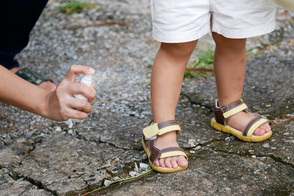
There are no vaccines or medicines to prevent WNV. The best way to prevent WNV is to avoid mosquito bites.
- Use insect repellents with 20–30% DEET, 10–20% picaridin, 10–20% IR3535, or 30–40% oil of lemon eucalyptus on skin and clothes to prevent mosquito bites.
- Apply permethrin (a pesticide that kills mosquitoes) to clothes and gear to prevent mosquito bites. Permethrin kills mosquitoes when they land on clothes. It lasts through several washes after it is applied. Permethrin should not be applied directly to skin.
- Wear long-sleeved shirts, long pants, socks, and shoes outdoors during peak mosquito activity hours. Apply repellent to any bare skin not covered by clothing.
- Wear loose-fitting and thicker clothing so it is more difficult for mosquitoes to bite through clothes.
- Wear head nets in areas with high mosquito activity.
- Stay in places that have air conditioning or a combination of window screens, door screens, and insecticide-treated bed nets.
|
|