|
|
Beginning farmers in Compeer Financial’s 144-county territory may receive up to $1,500 for a variety of farm business-related expenses, including tax preparation or farm accounting services, purchase of accounting software, conference or workshop registration, tuition for courses in farm business management or related topics, and more.
The Wisconsin Department of Agriculture, Trade and Consumer Protection's (DATCP) Meat Processor Infrastructure Grant program aims to grow Wisconsin's meat industry and improve the long-term viability of the state's livestock industry. Eligible applicants must operate a DATCP or USDA licensed meat-processing establishment in Wisconsin and be engaged in livestock harvest or processing. Projects must increase harvest capacity or production.
DATCP's Tribal Elder Community Food Box Program is designed to provide grants to nonprofit food assistance organizations for the purpose of purchasing and distributing food to Tribal elders while also supporting the growth and operations of food producers/processors from Tribal Nations in Wisconsin, Michigan, Minnesota, and Iowa, as well as all Wisconsin food producers/processors.
These grants support general operating costs and applicants must be registered as (or fiscally sponsored by) a 501(c)3 organization. Typical grants range from $5,000-$50,000 and last for one year. Priority is given to applicants that operate at the grassroots level to implement change at the local, state, or national stage.
Wisconsin non-profit organizations, producer organizations, government agencies, universities, and other agricultural groups are encouraged to apply for Specialty Crop Block Grant Program funds. This program, which is federally funded and administered by DATCP, is designed to benefit the entire specialty crop industry as a whole and not provide direct profit to a specific organization, institution, or individual.
Value-Added Producer Grant – Applications due March 3, 2026
Test
This guide highlights how local governments across the U.S. are shaping laws and regulations that impact urban farms, community gardens, and innovative food producers. The guide explores key topics—land access, zoning and land use, city governance, water access, soil health, and innovative production—to assess common challenges farmers and gardeners face and offer concrete strategies, city highlights, and takeaways for both policymakers and producers.
|
|
|
Workshops for Wisconsin farmers who are direct marketing beef, or who are considering it, will be held in four regional locations in the coming months. The workshops are offered by the Wisconsin Beef Council and are being held in conjunction with the Wisconsin Association of Meat Processors; UW-Madison Division of Extension; and the Wisconsin Department of Agriculture, Trade and Consumer Protection. This will be an opportunity to network with fellow beef producers who are direct marketing, as well as the processors who play a key role in getting beef to consumers. Please visit the website for workshop topics, dates, and locations.
Join schools, early care sites, hospitals, and community organizations across the state for Wisconsin Chili Lunch! This statewide Farm to School celebration encourages participants to serve chili made with Wisconsin-grown ingredients and highlight local farmers, even in winter. Organizations can use the official Wisconsin Chili Lunch recipe or their own favorite chili. Learn more and find recipes at the link above.
The Marbleseed (formerly MOSES) Organic Farming Conference is one of the largest organic farming conferences in the United States. Every year regenerative and organic farmers from a wide range of farm sizes, experiences, and backgrounds gather to learn the latest in organic farming methods, build community, and shape the future of the organic farming movement.
This year’s Chicago Food Justice Summit will bring together organizers, growers, food entrepreneurs, advocates, and community leaders to explore what it means to build a just, sustainable, and sovereign food system for Chicago and beyond. Expect powerful conversations, practical skill-sharing, and space to reimagine what’s possible together.
UW–Madison Extension, the Hmong American Center, and their partners are hosting the first Hmong Farmers/Growers Gathering. At this event, attendees will learn about sustainable production practices, soil health, pest management, business management, marketing and branding, financial resources, and more. Sessions will be offered in both Hmong and English, with free interpretation provided.
Co-hosted by Michigan State University and the University of Michigan, this conference brings together Tribal leaders, farmers, scholars, and advocates to share knowledge and build relationships.
|
|
Grant Funding Helps Bring More Local Eggs to Market
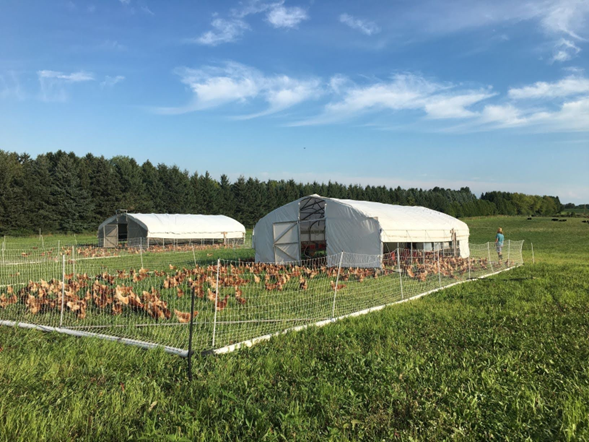
Owned and operated by Michael and Courtney Gutschenritter, Three Brothers Farm produces pasture-raised eggs and 100% grass-fed Shetland lamb and wool products in Oconomowoc, Wisconsin. Three Brothers was awarded a Resilient Food Systems Infrastructure (RFSI) grant to address the inefficient delivery systems and lack of accessible processing facilities for small-scale egg producers.
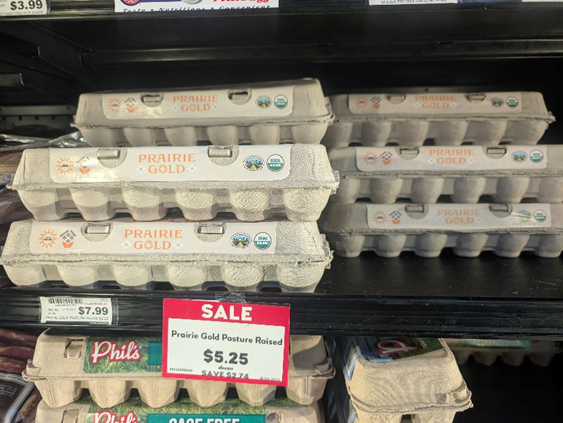
With the original intention of washing eggs for other nearby farms, the Gutschenritters quickly realized it would be more economical for everyone involved if they bought their partners’ eggs directly, processed them in their facility using the new grant-funded equipment, and expand their own brand, Prairie Gold.
Three Brothers Farm produces pasture-raised eggs and 100% grass-fed Shetland lamb and wool products in Oconomowoc, WI.
“With the RFSI funds, we purchased an egg loader and vacuum system. This allows us to load 30 eggs at once into our washer, replacing our previous, one-at-a-time, manual system. We also added an egg dryer to keep pace with the increased washing speed and a new refrigerated delivery vehicle to replace our previous passenger van.
Our staff has grown to eight people, including three drivers. Much of this labor is dedicated to processing eggs from our partner farms. We have so far been able to grow from processing 15,000 eggs per week to 25,000. While we faced a learning curve with the new equipment and required clear communication to align expectations between owners, employees, and partners, the transition has been remarkably smooth. We credit this success to our dedicated employees and the flexibility of our partner farms in maintaining high quality standards,” says Michael Gutschenritter.
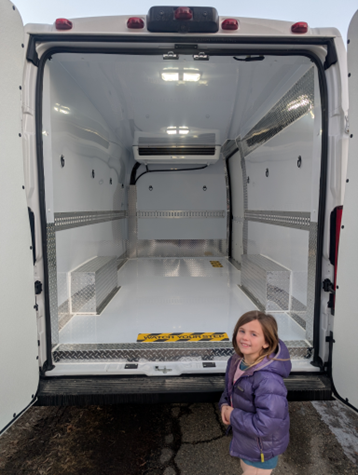
Three Brothers currently contracts with Stock Family Farm and Prairie Folk Farm, with plans to sustainably increase their partner farm network. All partner farms are becoming certified organic and follow strict production standards, such as moving hens to fresh pasture daily during grazing season. This creates high value for consumers—something they’re willing to pay for—while supporting a high quality of life for farmers.
Aligning this grant project with their existing USDA Value-Added Producer Grant, two new delivery routes and 12 new stores have been added. Three Brothers now manages accounts with 30 grocers and several restaurants, reaching markets in Madison, Sheboygan, and East Troy. While they have plans to expand distribution into Chicago and its suburbs, Michael says their strongest sales remain within a 15-mile radius of the farm.
|
|
|
|
|
|