|
|
In the 2025-2027 Wisconsin Biennial Budget, $5 million was appropriated for each of the next two years to address food security through the purchase of food grown, produced, or purchased in Wisconsin. This month, DATCP released the Food Security and Wisconsin Products Grant Program, which will fund the purchase of food by organizations dedicated to serving Wisconsin communities challenged by food insecurity. Nonprofit organizations working to improve food security across our state are eligible to apply, and DATCP encourages collaboration between applicants and producers, processors, and local suppliers to widen the impact of these funds.
The objective of the fiscal year 2026 Farm to School Grant is to improve access to local foods in eligible Childhood Nutrition Program (CNP) sites through comprehensive farm-to-CNP programming that includes local sourcing and agricultural education efforts. This competitive grant will fund innovative farm to school projects ranging from $100,000 to $500,000, for a total of up to $18 million. Eligible entities include state and local agencies, Tribal organizations, CNP operators, agricultural producers (or groups of producers), and non-profit organizations.
Eligible applicants include public entities, community-based non-profits, collaborative organizations, school-affiliated groups, and units of government with brick-and-mortar projects, which “allow cross-sections of community members to gather or provide opportunities for agriculture education.” Funding is available between $2,500 and $10,000 per project and must be used to construct new facilities or complete major renovations for projects demonstrating substantial community support.
A central depot of resources that will support food hub operators in the roles they may play at each phase of a food hub’s lifespan. This resource is comprised of peer-generated knowledge, industry context, and direct links to existing and relevant resources across organizational, value chain, operations, and partnership development.
Wisconsin Farm Center – Wisconsin Department of Agriculture, Trade and Consumer Protection
Since the mid-1980s, thousands of farm families have turned to the Wisconsin Farm Center, which provides free services to farmers including financial and business consultation, succession and transition planning, conflict, legal and financial mediation, herd-based diagnostics, veteran farmer assistance, and a Farmer Wellness Program. Contact the Wisconsin Farm Center at farmcenter@wisconsin.gov or (800) 942-2474.
Co-hosted by UW-Extension and FairShare CSA Coalition’s Sarah Janes Ugoretz, "Pivot Points" explores big changes farmers have made in their business models and, often by extension, their lives.
Hosted by the Wisconsin Farm Center’s Karen Endres, "Rural Realities" focuses on helping farmers tap into their resilient nature by presenting advice from experts that can help reduce stress, improve a farm’s financial situation, and implement effective farm family communication skills, and more.
|
|
|
Milwaukee Urban AgCon, a free one-day conference, is proud to bring together thought leaders, innovators, and practitioners from Milwaukee and the surrounding areas to share knowledge, showcase best practices, and drive meaningful change. As the world grapples with the challenges of urbanization, climate, and food security, the importance of urban agriculture has never been more pressing.
The FEED Summit – October 27-28, 2025 (Eau Claire, WI)
Designed for aspiring and early-stage food and farming entrepreneurs, attendees will gain critical skills to set up or expand their business for success. Attend the FEED Summit for business workshops, networking opportunities, field trips to local food businesses, and more. This event presents a welcoming environment where entrepreneurs can connect without the pressure of traditional networking. Through casual conversations and shared sessions, participants can build relationships that support connections.
This is a free series designed for beginning and underserved farmers! Gain knowledge about how to build the foundation of financial health for resilient soil transitions and wealth building. Boost your financial literacy through financial health basics such as bookkeeping, business planning, planning for land access and heirs' property, and accessing aligned capital. Participants will also receive farming-specific resources and access to programs to achieve soil health-building practices.
The Marbleseed (formerly MOSES) Organic Farming Conference is one of the largest organic farming conferences in the United States, and planning is underway for 2026! Every year, regenerative and organic farmers from a wide range of farm sizes, experiences, and backgrounds gather to learn the latest in organic farming methods, build community, and shape the future of the organic farming movement.
|
|
Green Bay-area Produce on the Move!
Nonprofit Wello’s Resilient Food Systems Infrastructure (RFSI) grant project is underway with the activation of a new mobile market truck and site preparation for the Community Barn facility, which will be fully equipped for post-harvest handling and value-added processing. This added capacity presents significant opportunities for farmers who do not own their own land or who lack extensive storage capacity. Cold storage and value-added activities will allow these farmers to extend their economic activity beyond the growing season and reduce food waste as surplus crops can be preserved through canning, flash freezing, dehydration, and more.
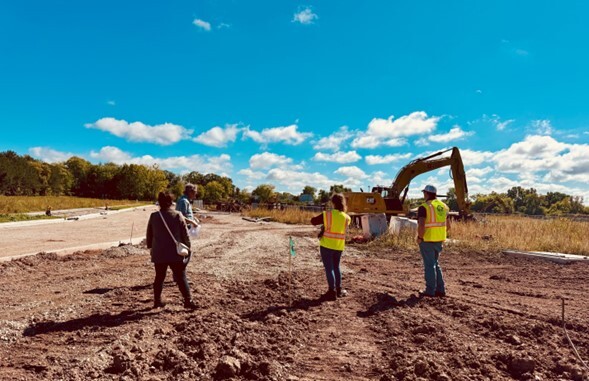 The Community Barn is part of a larger City of Green Bay project on land donated by JBS Foods. The development plan includes an urban farm, recreation spaces, and various housing options tailored to the needs of the community.
The produce truck is not just a mobile market; it is an essential link between farmers, consumers, and the processing infrastructure currently under development. Within just four months, the truck has already provided $12,000 worth of produce from over 50 local farmers to more than 2,500 people. It allows small farmers to reach buyers they otherwise couldn’t access and functions as an entry point for farmers transitioning from farmers’ markets to wholesale distribution, helping them scale up their operations. Additionally, it keeps dollars circulating locally by connecting community members with farm-fresh produce at affordable prices and with reduced transportation barriers, strengthening neighborhood economies while increasing food security.
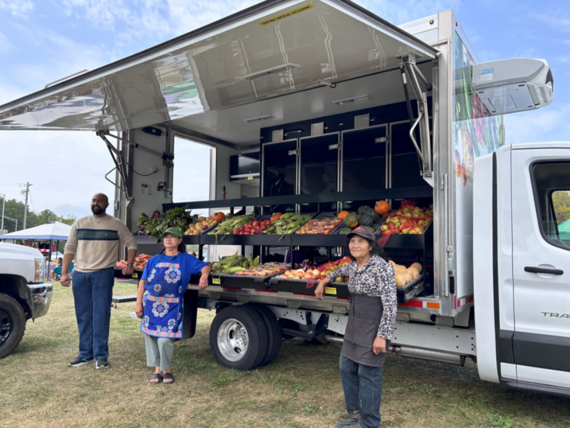 Farmers posing for a photo with the new mobile market truck showcasing their harvest for sale.
Together, these investments create a regenerative local food system where produce is grown, aggregated, lightly processed, and distributed in ways that build farmer incomes and community resilience.
|
|
|
|
|