|
Dairy Processor Grant – Applications due 12 p.m., September 17, 2025
Dairy processors can apply for these grants to fund their projects designed to do any of the following: increase production, profitability, processing, marketing, or distribution of Wisconsin dairy products; increase capital investment in the dairy industry; apply new technologies related to dairy production; improve the competitiveness of the Wisconsin dairy industry; make more efficient use of farmland and other agricultural resources for dairy production; or create or retain jobs in the dairy industry. Grants will be awarded for projects up to $50,000 and two years long.
Corrected Close Date: Buy Local, Buy Wisconsin Grant – Applications due 12 p.m., September 15, 2025
This economic development program is designed to help the Wisconsin food and agriculture industry find ways to improve food production, processing, marketing, and distribution. This includes grants for projects to create, expand, diversify, or promote local food marketing systems and market outlets, local food and cultural tourism routes, distribution of Wisconsin food products primarily for sale to local purchasers, or production, processing, and marketing. Grants will be awarded for projects between $5,000 and $50,000 and up to two years long.
Approximately $3 million across two direct-to-business grant programs is now available to small- to medium-sized dairy farmers, manufacturers, and processors across the Midwest. Applicants interested in diversifying on-farm activity, creating value-added products, or enhancing dairy byproducts are eligible to apply for the Dairy Business Builder program. Applicants pursuing projects that could have a potential effect on the broader industry can apply for the Dairy Industry Impact grant program. Specific focus areas for the Dairy Industry Impact grants will be announced when the grant period opens. Applicants may apply to both grant programs and are eligible to receive awards of up to $100,000 from each.
Eligible applicants include public entities, community-based non-profits, collaborative organizations, school-affiliated groups, and government units with brick-and-mortar projects which “allow cross-sections of community members to gather or provide opportunities for agriculture education.” Between $2,500 and $10,000 per project is available and must be used to construct new facilities or complete major renovations for projects demonstrating substantial community support.
|
|
|
Join food entrepreneurs and experts from across Wisconsin at this once-a-year, in-person opportunity to learn from panels of food entrepreneurs who have successfully grown their businesses; connect with unique Wisconsin food businesses, buyers, and distributors; and experience a tour of some of Madison’s food businesses.
In this simple annual event, diverse sites across Wisconsin including schools, early childhood education centers, hospitals, farms, and more sign up to celebrate local food purchasing and local apple growers by crunching into a local apple in October. Promote your farm, celebrate with your own Crunch event, or sell apples to a growing network of local institutions through the Great Apple Crunch. Learn more through farmer-audience Apple Crunch resources available online. Contact Cathryn Herlihey, Farm to Institution Specialist at UW–Madison Division of Extension, at cherlihey@wisc.edu with questions.
Staple Crops Production Community of Practice – Michigan Food and Farming Systems (MIFFS)
Michigan Food and Farming Systems (MIFFS) is partnering with Chicago Bread Club, Fondy Food Center, Fresher Together, and Michael Fields Agricultural Institute to support development of a peer-to-peer community of practice focused on staple crops production, processing, storage, marketing, and climate resiliency. Contact Jen Silvieri at jen@miffs.org for more information.
Save the Date: Indigenous Food Sovereignty Summit – April 6-8, 2026
The Native American Institute at Michigan State University (MSU) and the University of Michigan are partnering to host an inaugural Indigenous Food Sovereignty Summit that will be held at the Kellogg Hotel and Conference Center on MSU’s campus in East Lansing, MI. Stay tuned for more information and details to come!
|
|
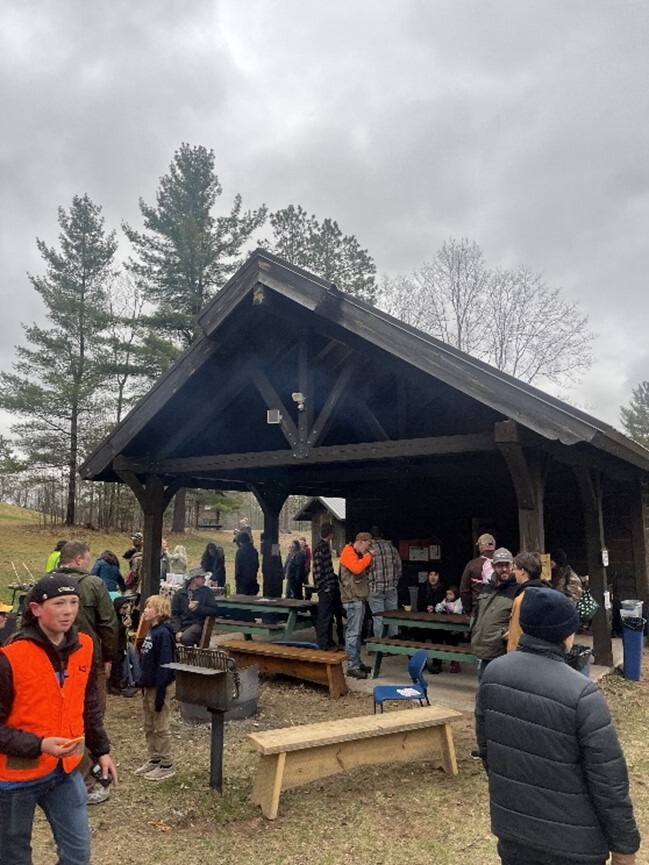 Spring Community Hike in Hayward, Wisconsin
The Wisconsin Farm to School Grant Program through the Wisconsin Department of Agriculture, Trade and Consumer Protection supported eight Farm to School and Farm to Early Childhood Education (ECE) projects spanning rural, urban, and Tribal communities across the state. These projects fostered deep connections among children, families, educators, farmers, and food through school gardens, classroom cooking, culturally relevant programming, and local food procurement. Together, they engaged more than 7,000 students and 100 educational sites, partnered with at least 80 local farmers and producers, and laid the groundwork for lasting system change.
The Northern Waters Environmental School (NWES) in Hayward implemented a year-long project, Digging into Local Food Systems, that engaged over 200 students in rigorous, hands-on learning around soil health, regenerative agriculture, and nutrient-dense foods. Students conducted on-farm soil analyses, built scientific literacy through lab work and microscopy, and applied their knowledge by planning and preparing meals featuring nearly 150 pounds of locally raised, pasture-fed beef. The project fostered deep, sustained partnerships with local farmers and experts, and culminated in well-attended community events like a local foods dinner and Spring Community Hike, reaching over 250 participants. NWES leveraged their Wisconsin Farm to School Grant to purchase long-term educational infrastructure, including microscopes, lab supplies, and kitchen equipment, ensuring future programming can continue and expand. A new annual fifth grade tour and meal was launched as a result, and the school plans to build on this success with Indigenous food programming and continued community engagement.
DATCP’s limited 2025 Equipment-Only Grant Request for Proposals to distribute funds remaining from the 2024 Resilient Food Systems Infrastructure (RFSI) solicitation received 129 applications requesting more than $10 million in funding. The RFSI team is reviewing proposals to award additional projects in the coming months. In the meantime, more than $6 million has been reimbursed to Wisconsin’s 70 active RFSI projects across the state. Learn more about the progress of two of these projects below.
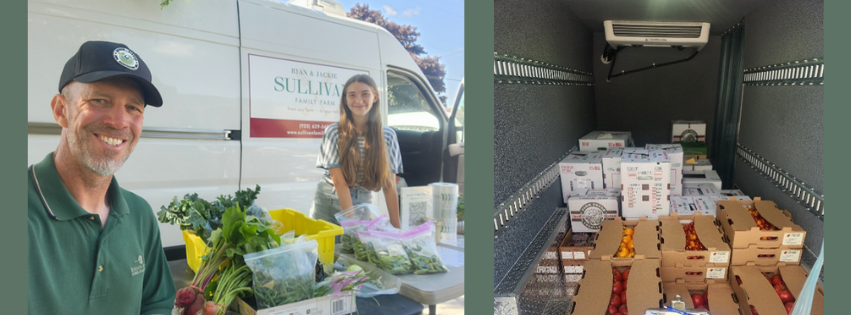 Ryan Sullivan of Sullivan Family Farms (above) shared this update: “Our refrigerated van has allowed for improved CSA [community supported agriculture] customer experience and convenience, and further reach of Seasonal Harvest Co-op which works with over 15 different farms to allow for greater ability of the Co-op to access a wider geographic range of customers. The van has also allowed our involvement in a pop-up market to increase fresh, local food availability to seniors and low-income individuals. We look forward to utilizing the refrigerated van to deliver a wider range of products to customers beyond our CSA and expand to work with other farms to offer a greater variety of products as well.”
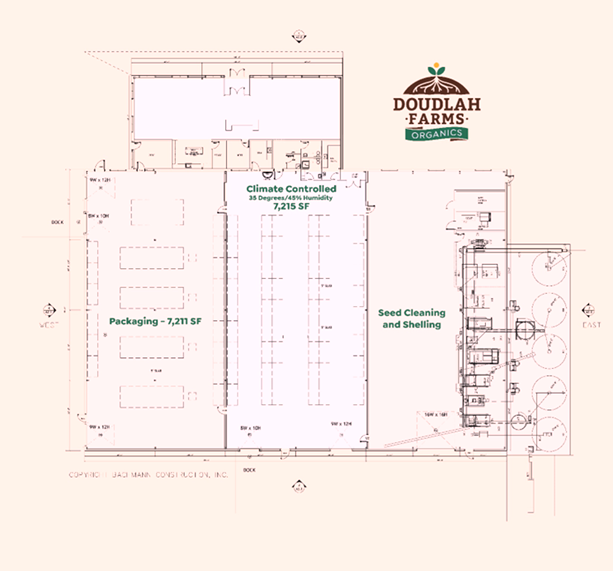 Lucy Doudlah from Doudlah Farms Organics let DATCP know that the farm is planning a groundbreaking in September 2025. Lucy shared, "After a long and thoughtful process—including township meetings and securing permits from the state, township, and DOT—we're excited to share that we've selected a builder, received all necessary approvals, and are now inviting bids from contractors to bring our vision to life."
|
|
|
|
|