|
July 14, 2015 | Celebrating Summer in Wisconsin
In today's Wisconsin Farm to School newsletter, you will find:
 Summer abundance in Wisconsin.
Local Foods in the Summer
Food Service Program (SFSP)
Summer is a fantastic time of year to add variety
to keep meals tasting great. In many regions across the United States, USDA’s Summer Food Service Program (SFSP) aligns well with the peak growing season,
allowing schools and nonprofit organizations to serve products in their
freshest state. There are numerous benefits to “bringing the farm” to summer
feeding sites. Sponsors can increase participation by improving the quality of
meals and keeping kids engaged through hands-on activities. Schools can develop
continuous, year-round farm to school programming, and test out cooking
techniques and recipes using local foods. Regional producers benefit from a
reliable outlet for their products during the summer months. And kids and teens
get fresh, healthy meals and participate in activities at meals sites, staying
nourished and engaged while school is out.
-Resources-
Farm to Summer Fact Sheet - Use this fact sheet for summer meal
program tips on incorporating local foods and agriculture-based activities.
Procuring Local Foods for Child Nutrition
Programs - This resource
covers procurement basics, defining local, where to find local products, and
the variety of ways child nutrition program operators can purchase locally in
accordance with regulations.
SFSP Toolkit - Find local foods guidance for state agencies, sponsors, and partner organizations, along with tips for starting a summer
meals site at farmers markets.
SFSP Handbook - Sponsors can find guidance on procurement and
tips on targeting local foods.
SFSP Webinar Series - Listen to presenters discuss incorporating
local foods in summer meals, building awareness about summer programs, engaging
in partnerships that help boost participation and increase access, and more.
Growing Gardens (pdf) - A Portland, OR organization has published
a helpful guide on maintaining school gardens during the summer months.
FRAC Report - Fresh from the Farm: Using Local Foods in
the Afterschool and Summer Nutrition Programs, a report on extending farm
to school in other child nutrition programs.
Food Safety Decision Tools
The National
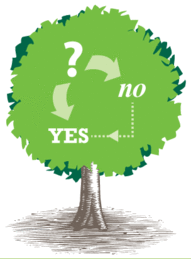
Good Agricultural Practices (GAPs) website has added farm
food safety “decision trees” to help farmers identify risks and
implement food-safe practices. Nine decision trees are available, including
worker hygiene, soil amendments, wildlife management, and postharvest handling.
Each decision tree includes samples of recordkeeping logs and standard
operating procedures, as well as template farm food safety plans. The purpose
of the Decision Trees is to:
- Help
you identify risks and practices that reduce risks;
- Prioritize
the implementation of practices to use limited resources wisely;
- Familiarize
you with the terms and methods necessary to understand and follow
requirements and expectations for food safety from buyers, farm markets,
schools, and federal regulations.
|
|
 |
|
Check out the
WSGI July newsletter! We are so excited to talk about compost this month -
you'll find resources for starting and maintaining a school compost, ideas for
compost-centered lessons, and connections between compost and Green and Healthy
Schools. You can find the newsletter online here.
|
|
Wisconsin Food Systems
Education Conceptual Framework
The Wisconsin Center for Environmental Education and UW
Extension are pleased to announce the recently released Wisconsin Food Systems
Education Conceptual Framework! This document is a guide and reference for
formal and non-formal educators, whether they are updating existing pK-12
curricula, creating a new curriculum, or developing community programming for
food systems education.
|
|
 |
 |
|
Michigan Farm to Early Childcare Guide
New! Farm to Early Childhood Programs: A
Step-By-Step Guide is now available! Freely downloadable, this new
guide provides tools and resources to help early childhood program providers of
all types and sizes purchase and use local foods in their meals and snacks.
|
|
New Edible Schoolyard
Training Videos
The Edible Schoolyard
recently debuted a new series of professional development videos with great
tips for creating effective and inspiring learning environments – indoors and
out. Watch the first three videos and stay tuned for more to
come this summer!
|
|
 |
Wisconsin Department of Public Instruction Team Nutrition Training Opportunities
Following the Carrot - An Introduction to School Gardens: Have you dreamed of starting a garden at your school, but didn’t know where to start? Join us for this 2-hour course where we take a journey from the seed to your cafeteria tray. We will "follow the carrot" through the process of procuring the seeds and garden materials, developing garden standard operating procedures (SOPs), identifying key community members, maintaining your garden, harvesting, and promoting your homegrown local food in the lunchroom.
 |
|
Whole Measures for Community
Food Projects
Thursday, July 23, 1:00pm EST
This webinar will introduce Whole
Measure for Community Food Systems (WM CFS), a
values-based, community-oriented tool for planning and evaluation of Community
Food Projects. We will talk about how CFP grantees can utilize the Whole
Measures CFS frame for their annual Indicators of Success reporting, a
collective impact report for all CFPs, as well as a tool for community
organizing. This will be an introductory webinar geared towards existing CFP
grantees, and prospective grantees. Register here.
|
NEW!
Notah Begay III Foundation’s Seeds of Native Health
Grant.
Purpose:
improve Native American nutrition through capacity building, education, and
research, as well as support projects that strategically target childhood
obesity and type 2 diabetes prevention through healthy nutrition programs. Funding:
up to $40,000 each Deadline: July 20, 2015 at 5:00 PM MDT.
All applications must be submitted through NB3F’s online system.
 |
|
Captain Planet
Foundation Grant
The Captain Planet Foundation provides grants of up to $2,500 to school
and community groups to support hands-on environmental projects. Applications
are accepted twice a year. The next deadline is September 30, 2015.
|
The Pollination Project
The funding is meant for individuals not organizations or corporations.
The funding is meant to be seed money for passionate people to use to start a
program that otherwise might not get started.
The funding must be used in vegan and animal friendly ways
For more info, contact Brady
at bradyripperger@gmail.com.

Let’s Move Salad Bars to
the Midwest
- The goal of Let's Move Salad Bars to MIDWEST Schools
is to increase children’s fruit and vegetable consumption by donating
free salad bars to schools in Indiana.
-
It’s easy for schools to apply for a salad bar. Visit www.saladbars2schools.org to complete an
application.
- For questions about using a salad bar to meet the meal
pattern, contact your field consultant.
-
Click here for resources.
-
Safe Use of Salad Bars in Schools Fact Sheet - provides regulations,
safety guidelines, and helpful tips when working with salad bars and
-
Salad Bars in the School Nutrition Programs Fact Sheet – provides guidance on
utilizing salad bars to meet the rules and regulations in the School
Nutrition Programs.

WI Farm to School
AmeriCorps Positions now Available for the 2015-2016 School Year!
Community Outreach Members recruit and train volunteers to
help with farm to school programing, participate in a community based Farm to
School Task Force, conduct school tastings, develop and maintain school
gardens, develop promotional materials, and work directly with farmers and Food
Service Directors to bring local fresh foods into schools.
Nutrition Educators deliver nutrition and garden based
education to students grades K-12. They also introduce fresh local foods
through tastings, chef-in-classroom programs, and other in-class activities.
They connect farmers to the classroom through in-class programing, farm visits,
and special presentations. Nutrition Educators work closely with teachers,
school staff, and the host site supervisor to arrange and develop lessons.
Members gain exposure to networking, planning, curriculum
development, volunteer management, and more. Members also receive a living
stipend, Segal Education Award upon successful program completion, travel
reimbursement, and the opportunity to attend a professional state conference.
The following communities are currently recruiting for both Community Outreach and Nutrition
Educators: Ashland, Bayfield, Beloit, Oshkosh, Prairie du Chien, Richland
Center, Stevens Point, Washburn, and Whitewater
The following communities are currently recruiting for one
Member: Madison (Nutrition Educator), Menasha (Nutrition Educator), Spooner
(Community Outreach), and Waupaca (Community Outreach)
Please contact the Program Director Dominique Bradley at Dominique.Bradley@wisconsin.gov
for more information and specify which position and location you are interested
in.
|
School
Food FOCUS seeks a Research, Data & Evaluation Manager
School Food FOCUS seeks a
Manager to coordinate research, evaluation and procurement data activities
across the organization. The Manager's responsibilities include:
- Oversee
evaluation of FOCUS and its projects;
- Create
reports that blend quantitative and qualitative findings from FOCUS
programs to inform practices and educate the FOCUS network;
- Maintain
and share knowledge of evolving trends, data and information vital to
FOCUS' mission and operations; and
- Ensure
FOCUS-generated knowledge is archived and shared within the organization
and more broadly.
Click here for the full Research, Data and Evaluation
Manager job description
Please forward widely, and
feel free to contact Amy Rosenthal at arosenthal@schoolfoodfocus.org with any
questions. Applications are due Monday, August 3.
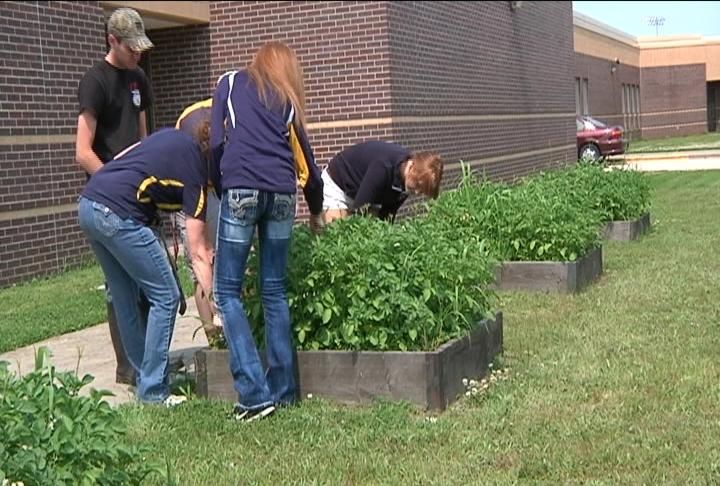
FFA students at Holmen High School recognized by USDA
Deputy
Undersecretary
WXOW-TV
(LaCrosse, WI)
|