 |
|
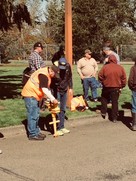
More than 300 enthusiastic people, who were eager to learn and improve
their skills, attended either Staking Utility Locator training, NUCA Dig Safe
training, or both.
The classes were held in Lynnwood, Renton, Spokane, Richland,
Yakima, Vancouver and Longview, beginning early this year, and wrapping up in
April.
|
The trainings were offered completely free of charge to participants, using Damage Prevention Account funds, which were collected by the UTC through enforcement actions for violations of the Dig Law.
Watch for more training opportunities later this year and early 2019.
Thank you to our trainers, John Foster, Jon Cornelius, Kemp Garcia, and Don Evans. Additional thanks to the following organizations who provided training rooms: Alderwood Water and Wastewater District, City of Renton Maintenance Shop, Richland Public Library, Yakima County Road Maintenance Shop, Lower Columbia Contractor’s Association, and Enduris.
 |
|
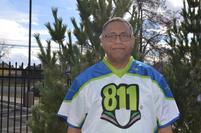
Kathy has been the Executive Director and Business Manager of
the Inland Empire Utility Coordinating Council (IEUCC) for more than 27 years.
She learned about the position from her husband, Chuck, a utility general
manager, after he attended a Spokane Call Before You Dig meeting. From there, Kathy was hooked.
|
She has been one of the biggest advocates of the CBYD program in Washington. She routinely takes cupcakes to a local radio station that then
gives her air-time to promote the CBYD message.
While she has spent many hours promoting 811 in many different
ways, her favorite medium to advertise is through science fairs at local
schools.
Kathy has found that kids are very interested in learning about
the program, and they will ultimately be our future
excavators.
Kathy was born in Williston, ND, and grew up in Sidney and
Havre, MT, with her dad, who was a General Motors new car dealer, and mom, who
raised Kathy and her five younger sisters. In high school, Kathy worked for a
couple years at the merchandise pick-up counter at Montgomery Ward. After
earning her business degree from Eastern Washington University, she worked for
an accounting firm until her children were born.
In her spare time, Kathy enjoys yard work and reading, with her
favorite topic being history. She also volunteers at St Joseph’s Church in Otis
Orchards.
Kathy’s favorite vacation destination is Alaska, and she has
traveled there 10 times in 20 years. Katmai National Park on the Aleutian
Peninsula is by far her favorite spot, with the opportunity to watch grizzly
bears finishing up their fishing season.
Kathy also enjoys spending time with husband Chuck, their
children Catherine, Craig, and Charlene, who helps out in the
office.
She also has three very special grandsons, Jackson, Wyatt, and
Christopher, who are all teenagers and getting close to getting their driver’s
licenses!
 |
|
RCW 19.122.030(1)(a) Excavator and facility operator duties
before excavation, states: “Unless exempted under RCW 19.122.031,
before commencing any excavation, an excavator must mark the
|
boundary of the excavation area with white paint applied on the ground of the worksite, then provide notice of the scheduled
commencement of excavation to all facility operators through a one-number
locator service.”
Or, put another way, “Before you start a planned dig, first mark
the dig site with white paint. Then notify 811 to submit a dig ticket. The dig
ticket will contain all necessary details to help facility operators locate and
mark their buried lines below your planned excavation site.”
Here’s a question for you to ponder: If you marked the dig area
in white (as required by law) and included additional requests in the remarks
section of your reuqest, what are locators required to do if your remarks and
your white mark conflict?
Here is a real life example: A ticket states work will take
place at a specific address on the east side of the building. "Area marked
in white box" is checked. The ticket also includes these remarks:
"Mark entire perimeter."
If the locator only marks the buried utilities within the area
marked in white, and ignores the “mark the entire perimeter” comment, has that
locator violated the law? One of the first complaints submitted to the
Washington State Dig Law Safety Committee was formed around this same scenario.
In the complaint an excavator damaged a buried line while digging outside the
area they marked in white, but within the area they described in their 811. The excavator had also included the
request to mark all easements in/out of the property including the opposite
side of street.
The
facility operator provided proof they had marked their lines within the area
marked in white. The excavator argued facility operators should locate and mark
their lines within the white paint and the area provided in remarks.
The
decision by the Safety Committee went against the excavator and was backed up
by the Utility Transportation Commission legal advisors: Areas marked in white
takes precedent.
Next
article: How To Mark Proposed Dig Site in White
- Don Evans
 |
|
The 2nd Annual Call Before You Strike bowling event was held at
Lake Bowl in Moses Lake on March 30.
The event was hosted by the Grant/Adams UCC and brought in 12
teams, for a total of 63 players, and a lot of spectators. Bowlers were treated
to a prime rib dinner, prior to bowling three games. By the end of the evening, many prizes and give-a-ways were handed out.
|
The evening was big success due to the help of sponsors Paradigm and ELM and Todd Knittel and the Grant/Adams UCC, for all their organization and hard work.
The event was a great way to spread the word about the importance of not “striking” something underground by first calling 811 to have utilities marked. Organizers also remind us to watch for the "811 Call Before You Divot" golf event also in Moses Lake on August 10! |