|
Snohomish County Human Services has launched a Community Needs Assessment to better understand the needs, experiences, and priorities of people experiencing poverty or poverty-related challenges across Snohomish County.
The first step is a short community survey that gives residents an opportunity to share what is working, identify challenges and barriers, and highlight priorities for their communities. Survey findings will help inform the next phase of engagement, including community focus groups, and ultimately provide Human Services with community-informed data to help guide future planning, services, and programs.
Human Services is partnering with LISC Puget Sound (Local Initiatives Support Corporation) to conduct the assessment and ensure community perspectives are gathered, analyzed, and elevated throughout the process.
How you can help: Take the survey, and help us spread the word! Encourage Snohomish County residents, particularly individuals and communities with lived experience of poverty or poverty-related challenges to complete the survey and share it with others. Broad participation will help ensure the assessment reflects the diverse experiences and priorities of the communities we serve and who are most impacted by poverty-related challenges.
 The flyer for the Human Services community needs assessment project.
|
|
County leaders and community partners came together on September 22 to explain upcoming changes to two property tax levies: the Veterans levy, and the Mental Health and Developmental Disabilities levy. Both are existing levies, and both are subject to new statutory minimums set by recent changes in state law.
These levies have historically been nested within the County’s General levy, which funds a variety of core services including public safety and justice, planning, elections, parks and environmental efforts, human services coordination and support, emergency management and response, and much more.
Due to the state-mandated change in the minimum rates for these two levies, the County must either: 1) Absorb the increase within an already strained General Fund, resulting in the need for more cuts to staffing and services in other areas of the Fund or 2) Remove the levies from the General levy so that they stand independently and are listed separately on property tax statements. Snohomish County Executive Dave Somers has recommended the second option in his proposed 2027-28 biennial budget, which is currently moving through the Council review process before public hearings later in October. Removing the levies so that they stand independently would preserve General Fund capacity, increase transparency for taxpayers, and increase property tax payments by an estimated $26.90 per year on an average-valued home of $741,000. That increase would go toward services for veterans, people experiencing mental health challenges, and services for those with developmental disabilities. To learn more, watch the full briefing and review the handouts.
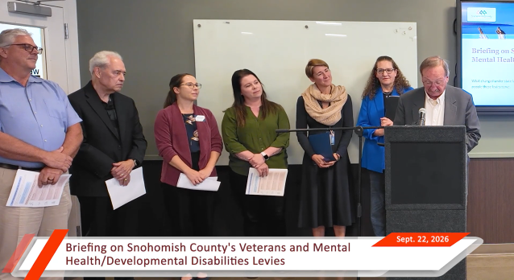 Snohomish County Executive Dave Somers speaks about upcoming levy changes recommended in his proposed budget, joined by (from right to left) Council Chair and Board of Health Chair Megan Dunn, Chief Budget Officer Kara Main-Hester, Behavioral Health and Veterans Services Division Manager Amanda Franke, Housing Hope Chief Strategic Officer Rachel Downes, Veterans Assistance Fund Executive Board Vice Chair Bob Reese, and Sherwood Community Services CEO Lance Morehouse.
|
|
|
About 100 people gathered on August 28 to celebrate the opening of the Everett New Start Center. The center at 1602 SE Everett Mall Way is operated by The Salvation Army and will provide time-limited bridge housing along with 24/7 on-site staffing and wraparound services such as behavioral health support, connections to medical and dental care, assistance with employment and benefits, life skills development, and connections to permanent housing.
Up to 73 residential rooms are available at the location, a former motel purchased by Snohomish County in 2022. The purchase and renovation were made possible by the federal American Rescue Plan Act (ARPA) along with county Affordable Housing and Behavioral Health funds from a dedicated portion of local sales tax. That project is coming in on budget at a little under $22 million including purchase and renovations. Ongoing operations are supported with a mix of local and federal housing funds.
Speakers at the opening event talked about how the New Start Center will change lives and how it fits into broader strategies for reducing homelessness. The full remarks are available to view from Snohomish County Television.
There are now two Snohomish County New Start Centers. The Edmonds New Start Center opened in June. Both centers are welcoming residents by referrals from a list of community partners who work with people experiencing homelessness and housing instability.
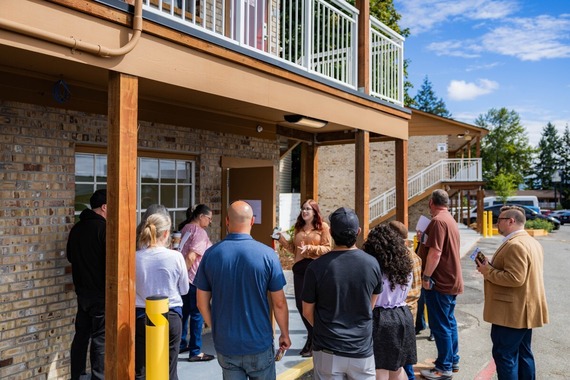 Guests tour Snohomish County’s Everett New Start Center on August 28.
|
|
On Thursday, August 27, Snohomish County observed International Overdose Awareness Day with A Night to Remember, A Time to Act, hosted at the Snohomish County main campus plaza. This year marked the 10th anniversary of the event founded by Debbie Warfield and Cathi Lee, two mothers who turned their personal tragedies into powerful advocacy after losing their sons to opioid overdose. Over the past decade, Snohomish County and Lindsey Arrington, CEO and Founder of Hope Soldiers, have supported the event.
The evening began with a resource fair showcasing more than 30 community organizations providing treatment, prevention, and recovery support and highlighting the collective commitment across the county to saving lives and supporting healing. The event program featured reflections from Debbie, Cathi, and Lindsey, each sharing their stories and offering a strong message of hope for the community. Attendees joined in a moment of silence, followed by a candlelight vigil walk where photos were placed in remembrance of loved ones lost to opioid overdose.
A video recording of the full program is available to watch online, courtesy of Hope Soldiers.
Click on the image to watch the recording of the program from this year's A Night to Remember, A Time to Act event, courtesy of Hope Soldiers.
|
|
Overdose deaths in the workplace from nonmedical use of drugs or alcohol totaled 411 in 2024, which accounted for 8.1% of all occupational injury deaths in that year, according to the National Safety Council. Opioid related substances made up around 54% of those workplace overdose deaths. The U.S. Department of Labor’s Occupational Health and Safety Administration (OSHA) released a fact sheet at the end of September to help workplaces respond effectively to opioid-related overdoses. The OSHA fact sheet highlights the importance of workplace preparedness as a step in addressing the ongoing opioid overdose crisis in the United States. The fact sheet encourages key overdose response strategies that should be in place in all workplaces, including:
-
Keep lifesaving reversal medications such as naloxone on hand. These medications quickly restore normal breathing in an overdose situation.
-
Treat overdose kits like first aid by storing them in highly visible, easily accessible locations, just like AEDs or standard first-aid kits.
-
Educate workers on how to identify critical symptoms of an overdose, such as slow or stopped breathing, blue lips or skin, or unresponsiveness.
-
Train employees to administer the medication and provide supportive care while waiting for first responders as part of regular training requirements.
The OSHA fact sheet also provides resources and trainings to support workplace safety and health for both employers and employees, along with suggestions for creating recovery friendly workplaces. For employers interested in improving their workplace training related to opioids, the National Institutes of Health has put together a comprehensive Opioids & Substance Use: Workplace Prevention & Response manual.
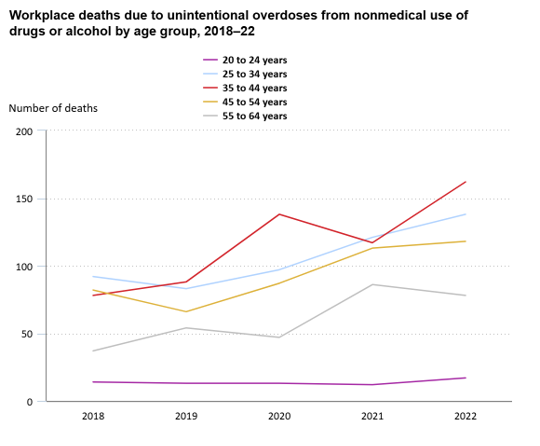 Source: U.S. Bureau of Labor Statistics
|
|
|
All are welcome to join this free training to learn to administer Narcan, the nasal spray that can reverse an opioid overdose. Training will help participants learn to identify overdose symptoms and respond quickly. The training is free, and attendees will receive a free dose of Narcan to take home.

|
|
Unused prescription drugs pose a risk to everyone in the community. Accidental poisoning and overdoses are a leading cause of death in Snohomish County. October 24 is the National Drug Enforcement Administration (DEA) “Take Back Day,” and a great opportunity to dispose of unused medications safely and anonymously. This year marks the 30th National Take Back Day, and in those 30 years the DEA has collected more than 21 million pounds of medications!
Did you know that you can dispose of medications safely and easily any time of year? Snohomish County residents can drop off prescription medications at many local sites through the Washington State Safe Medication Return program. To learn more, or to find a site convenient to you, visit the Medicine Disposal page on the Snohomish County Health Department website.

|
|
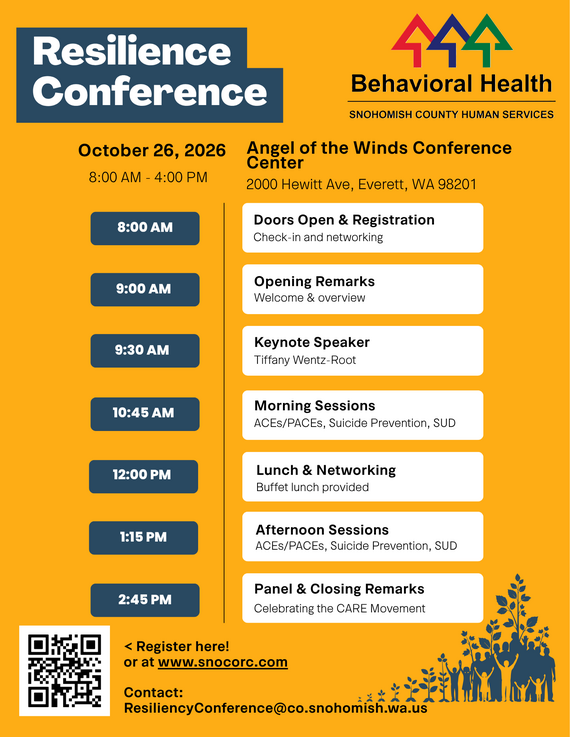
The 2026 Resilience Conference, coordinated by Snohomish County Human Services, takes place on October 26. Join educators, clinicians, substance use disorder (SUD) specialists, youth-serving agencies, first responders, and community partners committed to promoting resilience and well-being throughout Snohomish County. The theme this year is Power and Partnership to celebrate the ways we work together to care for one another.
Together, attendees will learn about trends in behavioral health, how trauma impacts our community, and how we can respond with compassion, care and increase access to positive experiences including treatment and recovery options. Presenters will share concrete steps for reducing risk, supporting recovery, and strengthening prevention systems.
For the first time the conference is offering tracks so to customize the conference experience. Attendees can choose between ACES/PACEs, SUD and Suicide Prevention or attend sessions across tracks to learn about the topics that matter to them and their work.
|
|
|
|
|