Mental Health, Developmental Disabilities, and Veterans Levies
One of the biggest decisions in this budget is how the County structures two existing levies: the Mental Health and Developmental Disabilities (MH/DD) levy and the Veterans levy.
Earlier this year, the state passed ESHB 2442, which requires the County to set both levies at a statutory minimum rate. Together they will raise about $8.7 million in 2027: roughly $6.0 million for MH/DD services and $2.7 million for veterans. The levies raise the same amount either way. What Council has to decide is whether that money comes out of the County's General levy or is collected separately.
If the levies stay nested within the General levy, the $8.7 million comes out of existing General Fund capacity. The General Fund pays for the Sheriff, courts, public defense, parks, senior centers, family resource centers, and much more. Law and justice alone account for 76% of General Fund spending.
If the levies are separated, as Executive Somers has recommended starting in 2027, that General Fund capacity is preserved. The trade-off is an additional property tax cost of about $26.90 a year for an average-valued home ($741,000). Of that, $18.55 goes to MH/DD services and $8.35 goes to veterans.
|
What these levies fund
-
Mental health and community supports: The levy funds street outreach and care coordination through the Snohomish County Outreach Team (SCOUT), the VOA Connect helpline, school-based mental health supports, and prevention programs. It also helps keep services running as other funding shrinks, including the County's Chemical Dependency and Mental Health sales tax and federal Medicaid coverage. This year, levy funds helped one local agency keep school-based mental health care going for more than 50 students after other funding fell through.
-
Developmental disabilities: Early Support for Infants and Toddlers serves about 3,100 children from birth to age 3 each year, though at least 30% of eligible children still aren't enrolled. More than 800 adults with developmental disabilities work through Supported Employment, partnering with about 150 local businesses and expected to earn about $5 million in 2026. Levy funds will also support School-to-Work services for young adults, which are paused due to state budget constraints.
-
Veterans: The Veterans Services Program served 253 veterans in 2025 and provided about $230,000 in emergency vouchers, nearly half of it for rent and move-in costs. Its staff are the only state-accredited Veteran Service Officers in the county, and they processed 103 VA benefit claims last year. In one case, the team helped a homeless veteran living on $170 a month secure full VA disability benefits, raising his monthly income to $3,900.
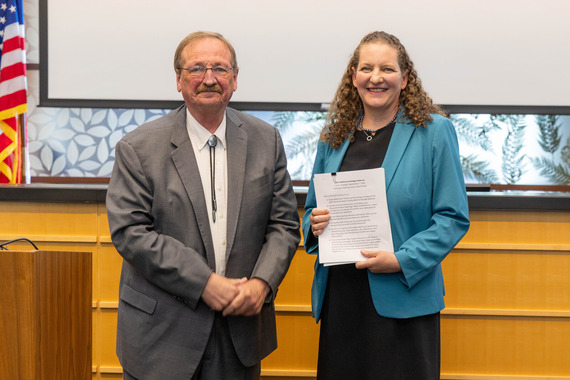
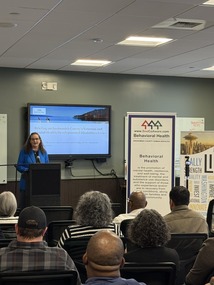
On September 21, I joined Executive Somers and community partners from Housing Hope, Sherwood Community Services, and the Veterans Assistance Fund Board for a levy roundtable at HopeWorks Station in Everett. Every piece of this decision is a real consideration. Even a modest increase has an impact when so many households are already financially stretched. At the same time, $8.7 million in General Fund capacity supports services residents count on every day. And behind the levies themselves are veterans, people with developmental disabilities, and families facing behavioral health challenges, along with the providers who keep them housed, working, and connected.
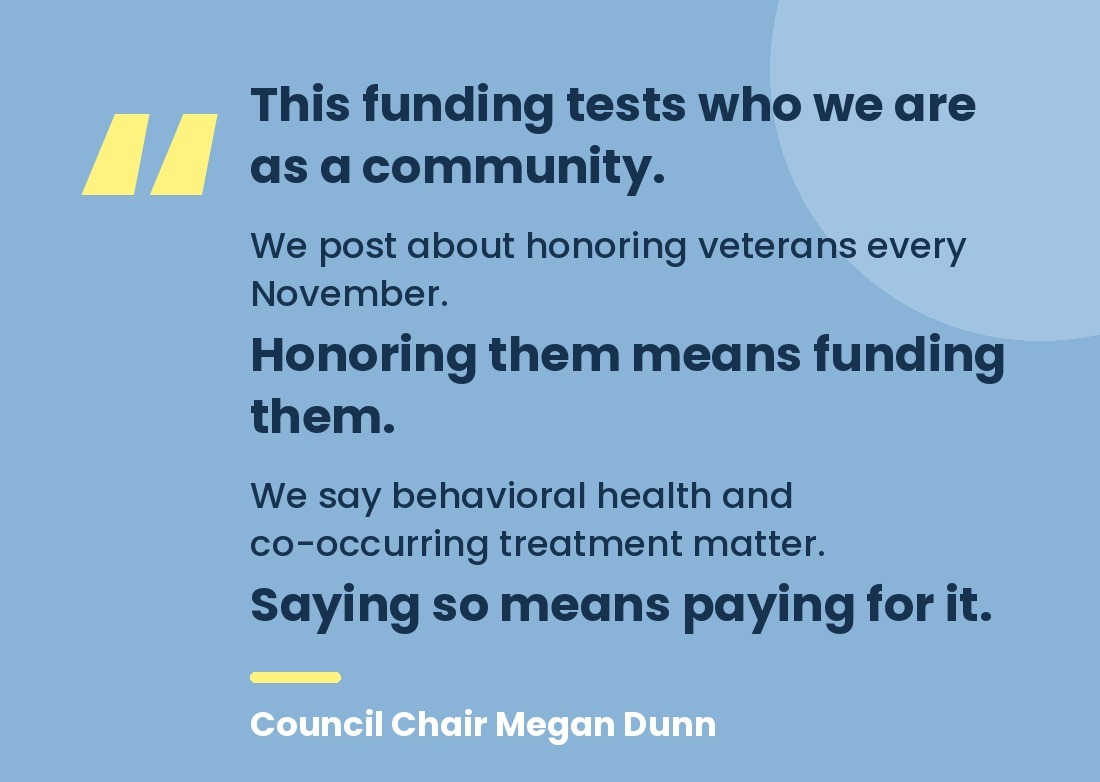
This funding tests who we are as a community. We post about honoring veterans every November. Honoring them means funding them. We say behavioral health and co-occurring treatment matter. Saying so means paying for it.
Since 2020, I've hosted a monthly call with our human service providers, and those calls continue every first Friday. What I hear again and again is that help works best when we can be responsive and actually get the work done. Residents want to see local government working together and finding compromise. The state has given us the tools. The Executive and his team have done the math. Now it's time for Council to do the work.
If you have a story about these services or a concern about the cost, I want to hear it. Read the County's levy fact sheet, join the Council's budget forum on October 7 at 6 p.m. in Council Chambers or online, or email me at megan.dunn@snoco.org.
 Financial Information and Tax Relief Resources
As a county, we are transparent in our expenses and revenue sources, more information on all finances, annual audits and tax relief programs here:
Track County finances:
Tax relief programs for qualifying residents:
 Friday, October 23 | 4 to 7 p.m. | Waterfront Place, 1028 13th St
Bring the whole family to the waterfront for the Port of Everett's 3rd annual Haunted Harbor, an evening of free, not-so-scary Halloween fun. The event happens rain or shine at Pacific Rim Plaza (near Hotel Indigo) and Port Gardner Landing.
Spooky snacks will be available at the event, and waterfront restaurants are open all evening. All month long, you can also play Yachtober Fest Drink Bingo by trying fall drinks at participating waterfront restaurants. Turn in a completed card by November 10 for a chance to win a restaurant gift card. Learn more at portofeverett.com/hauntedharbor.
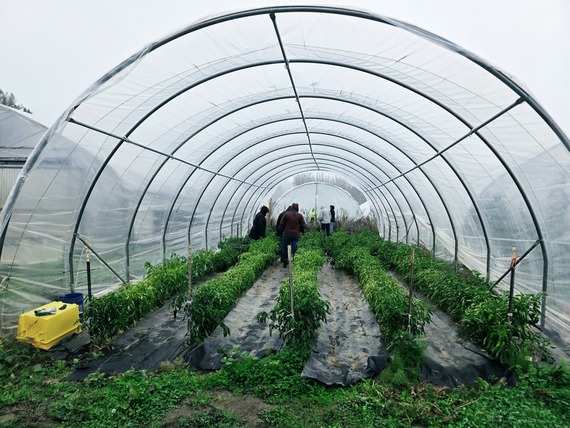
Agriculture is part of who we are in Snohomish County, and in September I joined County Planning Department staff for a tour of two local farms: Chinook Farms and Bob's Corn. Hearing directly from farmers about their workand the challenges they face is the best way to understand how County decisions show up on the ground.
At Chinook Farms, volunteers help grow and harvest food for Food Lifeline, which distributes it to food banks across the region. It's a powerful model for making sure good food reaches the people who need it instead of going to waste. At Bob's Corn, we learned about agritourism, where farms welcome visitors for experiences like corn mazes and pumpkin patches. It brings families out to our farmland and helps keep local farms viable.
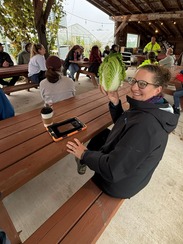
We also talked about the challenges. Farmers shared their experiences with County permitting and regulations, and where the process can be hard to navigate. Because many farms sit in the floodplain, we discussed the toll flooding takes and how the County and the State can be more responsive during floods and recovery. These conversations will stay with me as we look for ways the County can better support the people who grow our food.
Thank you to the farmers who welcomed us and to our Planning Department team for organizing the tour.
|
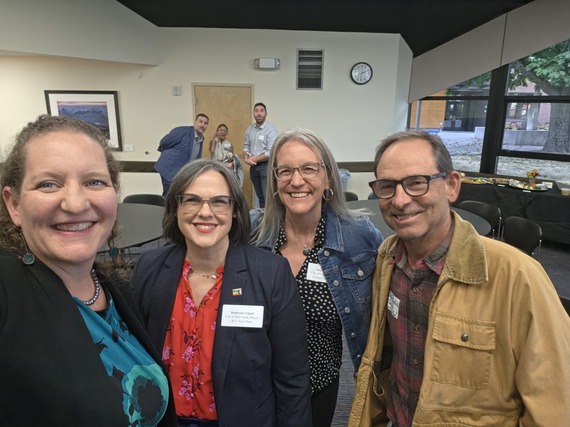 The SCT General Assembly gave me a chance to catch up with other local elected officials including Mill Creek Mayor Stephanie Vignal, Lake Stevens Councilmember Anji Jorstad, and Darrington Mayor Dan Rankin.
On September 22, cities, towns, and County leaders gathered at Everett Community College for the Snohomish County Tomorrow (SCT) General Assembly. SCT is where the County and our cities plan together, and this year I shared an update as co-chair of the Human Services Providers Calls, on behalf of the committee and my co-chair, Mindy Woods, Human Services Program Manager for the City of Edmonds.
These calls started during the pandemic, when my office worked with County Human Services and the Health Department to bring providers together as conditions changed by the hour. The emergency has passed, but the need to stay connected hasn't. Today, about 200 people from dozens of local organizations are on the distribution list, and around 40 join each month. Some of the most valuable work happens between meetings, when someone hears about a program on the call and makes a referral that same afternoon.
This year, the calls became an official part of SCT. In February, the SCT Steering Committee made the Human Services Providers Calls one of its four new focus areas. That means the people who see what's happening in our neighborhoods every day now have a direct line to the table where local governments plan for our future.
If you work in human services and would like to join or have a topic you'd like the group to take on, email me at megan.dunn@snoco.org.
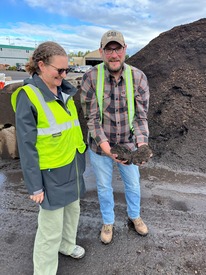
In September, I toured Cedar Grove's composting facility on Smith Island in north Everett to learn more about how our region turns food scraps and yard waste into compost.
Cedar Grove has been part of the Puget Sound's recycling story since 1988, when the City of Seattle asked the company to help recycle the yard waste it collected at the curb. Its Everett site began accepting food waste in 2004. Today, Cedar Grove's facilities in Everett and Maple Valley compost more than 350,000 tons of residential and commercial food and yard waste each year. That keeps organic material out of landfills and turns it into compost for yards, gardens, parks, and landscaping across the region.
Seeing the process up close was impressive. The large compost piles are covered with a breathable fabric that keeps out rain while holding in the heat, which can reach 175 to 180 degrees as the material breaks down. A contamination specialist inspects incoming loads, and still pulls out enough trash to fill multiple carts every day.
That's where all of us come in. Composting only works when what goes into our bins is actually compostable. A few simple habits help:
-
Keep plastic out of your food and yard waste cart, including plastic bags.
-
Peel off produce stickers before tossing fruit and vegetable scraps.
-
Check with your garbage hauler about what's accepted in your area, since programs vary by city.
Thank you to the Cedar Grove team for hosting us and sharing their work.
|
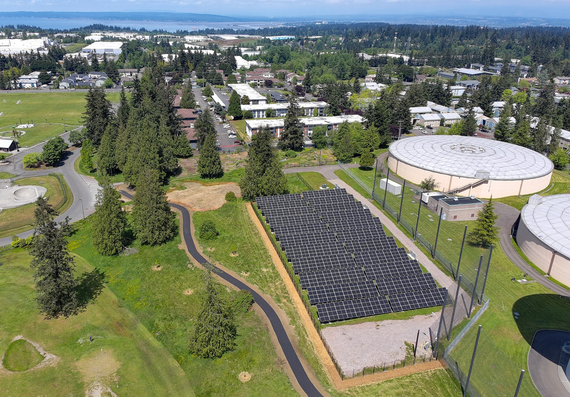 The new community solar array next to Walter E. Hall Park, generating enough electricity each year to power about 30 homes. Photo: PUD.
Last month, I joined Snohomish PUD, the City of Everett, state partners, and neighbors to open El Sol al Alcance de tus Manos ("The Sun at Your Fingertips"), a new community solar array next to Walter E. Hall Park on Casino Road.
The 400-kilowatt array produces enough electricity each year to power about 30 homes. The best part is where that value goes. The PUD directs the proceeds to its Community Energy Fund, which St. Vincent de Paul administers to help income-qualified customers pay their electric bills. That means clean energy that also eases costs for the families who need it most. A state Clean Energy Fund grant of $861,814 helped pay for the project, and grants and tax credits covered most of its cost.
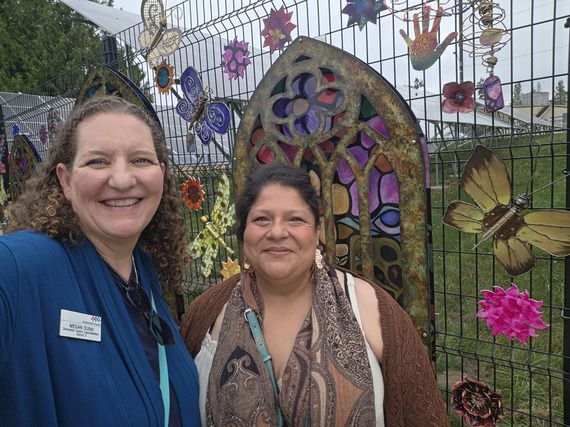 It was a pleasure to get a personal tour of the art panels from the artist and D2 resident and friend, Luisana Hernandez.
Neighbors shaped this project from the start. Residents chose its name at the 2022 Connect Casino Road Summer Carnival. Everett artists Luisana Hernandez, Ruben Trujillo, and Yessica Marquéz then worked with every classroom at Horizon Elementary and young people across the community to paint nearly 1,000 suns and hands. Those pieces now line the fence, alongside four large art panels, original poetry, and recycled materials from the PUD. The City also built a new accessible path connecting the Westmont and Holly neighborhoods to the park.
Thank you to the PUD, the City of Everett, Connect Casino Road, the Westmont Holly Neighborhood Association, the Snohomish Conservation District, and every young artist who made this possible. Visit the array at 1226 W. Casino Rd. in Everett, or learn more on the PUD's project page.
You can also help neighbors facing energy hardship by donating to the Community Energy Fund.
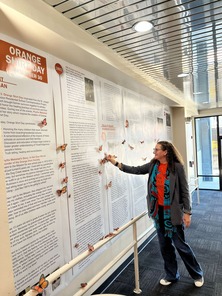
On September 30, I joined community members at the Snohomish County public health building to mark Orange Shirt Day. The day honors Native children who were taken from their homes and sent to residential and boarding schools, including those who never returned, and recognizes the survivors and families still living with that history.
This history is close to home. For 75 years, from 1857 to 1932, children from Tulalip and other reservations around northern Puget Sound were sent to a boarding school on the Tulalip Reservation, first run by missionaries and later by the federal government. Many of their descendants are our neighbors today.
At the gathering, an Elder of the Tulalip Tribes and descendant of the sduhubš (Snohomish) people shared her own story, along with traditional teachings about how families heal from harm that reaches across generations. Local Grammy Award-winning artist Star Nayea offered songs of remembrance and healing.
Thank you to everyone who shared, and to the County's Health Department and Human Services team for hosting. Honoring this history means keeping it in view all year, especially in how the County listens to and works alongside Tribal nations.
If you'd like to learn more, the Hibulb Cultural Center in Tulalip is a wonderful place to explore Tulalip history and culture.
|
 Spada Lake west of Glacier Peak. Photo: J Brew, CC BY-SA 2.0, via Wikimedia Commons
For about 670,000 people, roughly 75% of Snohomish County residents and businesses, clean drinking water starts at Spada Reservoir. The reservoir sits at the headwaters of the Sultan River, about 30 miles east of Everett. The rain and snowmelt that fill it run through intact forest, including the Glacier Peak Roadless Area.
The U.S. Forest Service is proposing to repeal the 2001 Roadless Rule. For 25 years, the rule has limited new road building, logging, and development in roadless areas of our national forests. Repeal would remove protections from roughly 2 million acres in Washington, including parts of the upper Sultan River watershed that drain directly into Spada Reservoir. It would also affect the Glacier Peak, Boulder River, and White Chuck Mountain Roadless Areas, home to favorite places like Mount Dickerman, Big Four Ice Caves, and Boardman Lake.
In September, I wrote an op-ed for The Herald about what this means for Everett and south Snohomish County. These forests filter our water, reduce erosion, and keep slopes stable. Supporters of repeal point to wildfire risk. However, the Roadless Rule already allows exceptions for wildfire suppression and emergency response, and new roads can increase human-caused fires.
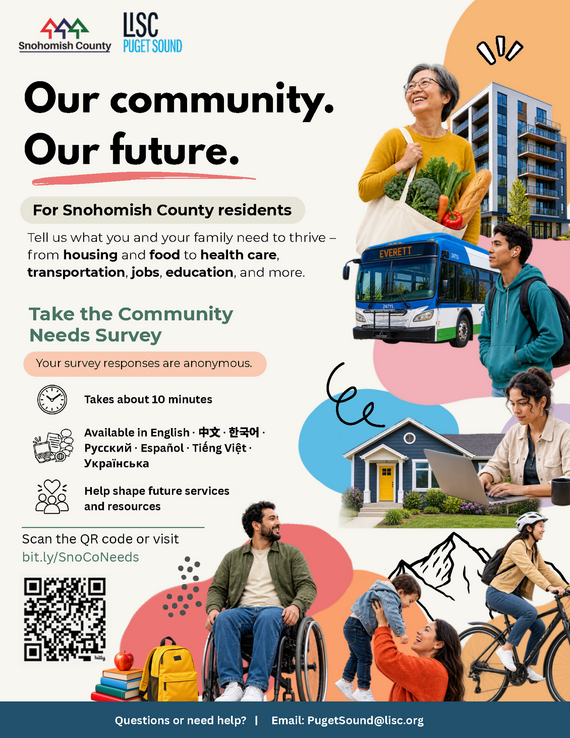 You are the expert on your own life, and the more people who take part, the better the results will reflect our whole community.
Please take the survey and share it with friends, family, and neighbors whose perspectives should be included.
To learn more about the department's work, visit Snohomish County Human Services.
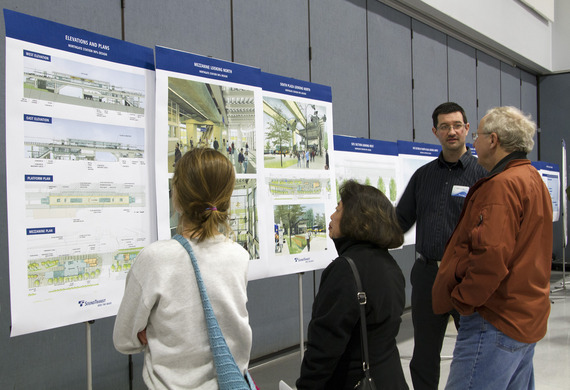 An Open House provides an opportunity to talk directly with staff and experts. Photo: Sound Transit.
|
Sound Transit has published the Draft Environmental Impact Statement (EIS) for the Everett Link Extension, which will extend light rail north from Lynnwood City Center to the Everett Station area. The public comment period is open through November 2.
The Draft EIS looks at how each route, station, and maintenance facility alternative could affect the physical, natural, and human environment, and how those impacts could be reduced. Station areas being studied include Mariner, SR 99/Airport Road, SW Everett Industrial Center, SR 526/Evergreen, Broadway/I-5, and Everett Station. This is your chance to compare the options and help shape light rail access in your community.
|
Attend a public meeting/hearing
All four sessions share the same information and the same opportunity to comment, so pick whichever works best for you.
- Tuesday, October 6, 5:30 to 7:30 p.m. | Online via Zoom
- Tuesday, October 13, 5:30 to 8:30 p.m. | Mariner High School, 200 120th St SW, Everett
- Thursday, October 15, 5:30 to 8:30 p.m. | Carl Gipson Center, 3025 Lombard Ave, Everett
- Wednesday, October 21, 5:30 to 8:30 p.m. | Lynnwood Neighborhood Center, 19509 64th Ave W, Lynnwood
More ways to weigh in
The project site is also available in Spanish, Korean, and Russian. Questions? Contact Sound Transit at everettlink@soundtransit.org or 206-370-5533.
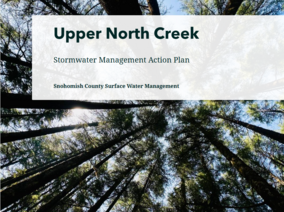
Snohomish County is taking public comment through October 30 on a draft plan to reduce polluted runoff in the upper North Creek basin, a 2.8-square-mile area of unincorporated county between Everett and Mill Creek.
The plan focuses on 6PPD-quinone, a chemical that forms from tire dust and washes off busy roads into streams. It is toxic to coho salmon, which have been found in North Creek as far upstream as McCollum Park. The draft proposes three new stormwater treatment facilities, including one near the future Mariner light rail station, that together would treat about 40% of the high-traffic road surfaces in the basin. It also adds street sweeping, pipe cleaning, and support for owners of private drainage facilities.
This is a 20-year plan, and the county expects to finalize it in March 2027. What you know about flooding, drainage, and traffic in your neighborhood helps decide where improvements go.
|
Ways to Weigh In
- Explore the Storymap for a visual overview of the plan
- Read the full draft plan
- Submit comments through the form on the project page by October 30
- Stop by the county's table at the Food Distribution at The Clearwater School on Saturday, October 10, 7:30 to 9:30 a.m.
- Watch the May 6 community meeting in English or Spanish
-
Sign up for project updates
Questions? Contact Jennifer Adams, Surface Water Management Project Specialist, at jennifer.adams@snoco.org or 425-388-5422.
Everett Farmers Market
- Sundays through October 25, 10:30 a.m. to 3:00 p.m.
- Wetmore Avenue between Hewitt and Pacific, Everett
- Shop farm-fresh produce, baked goods, artisan foods and handcrafted products from local vendors before the season wraps up.
Snohomish County Council Budget Forum
- Wednesday, October 7, 6:00 p.m.
- County Council Chambers, Robert J. Drewel Building, 3000 Rockefeller Avenue, Everett, with an online option via Zoom
- Share your priorities for the 2027–2028 County budget with the Council.
Community Access Skate Night
- Friday, October 9, 5:00 p.m.
- Everett Community Ice Rink, Hewitt Avenue and Broadway, Everett
- Enjoy free admission and skate rentals during this monthly community skate night; advance registration is required.
Walk to End Alzheimer's
- Saturday, October 10, 10:00 a.m. to 12:00 p.m.
- Boxcar Park, Port of Everett Waterfront Place, Everett
- Join this free, family-friendly walk to honor those affected by Alzheimer's; the ceremony starts at 11 a.m., with the walk to follow.
Everett Link Extension Public Meetings
- Tuesday, October 13, and Thursday, October 15, 5:30 to 8:30 p.m.
- Mariner High School, 200 120th Street SW, Everett (October 13); Carl Gipson Center, 3025 Lombard Avenue, Everett (October 15)
- Learn about the Draft Environmental Impact Statement for light rail to Everett and share your comments with Sound Transit.
Wild Mushroom Show
- Sunday, October 18
- Floral Hall at Forest Park, 802 East Mukilteo Boulevard, Everett
- See more than 100 kinds of Pacific Northwest mushrooms, learn identification tips and bring your own finds to be identified at this free show from the Snohomish County Mycological Society.
Haunted Harbor
- Friday, October 23, 4:00 to 7:00 p.m.
- Port of Everett Waterfront Place, 1028 13th Street, Everett
- Bring the family for free Halloween fun, including dock trick-or-treating, a Witches Paddle, games, crafts and a free pumpkin patch.
Making Strides Against Breast Cancer
- Saturday, October 24, 9:00 a.m. to 12:00 p.m.
- Boxcar Park, Port of Everett Waterfront Place, Everett
- Walk in this free, noncompetitive event honoring breast cancer survivors and raising funds for research and patient support.
Downtown Everett Trick-or-Treating
- Saturday, October 31, starting at 11:00 a.m.
- Downtown Everett, with activities at Wetmore Plaza
- Bring your little monsters and superheroes to trick-or-treat at downtown businesses, with free family activities at Wetmore Plaza.
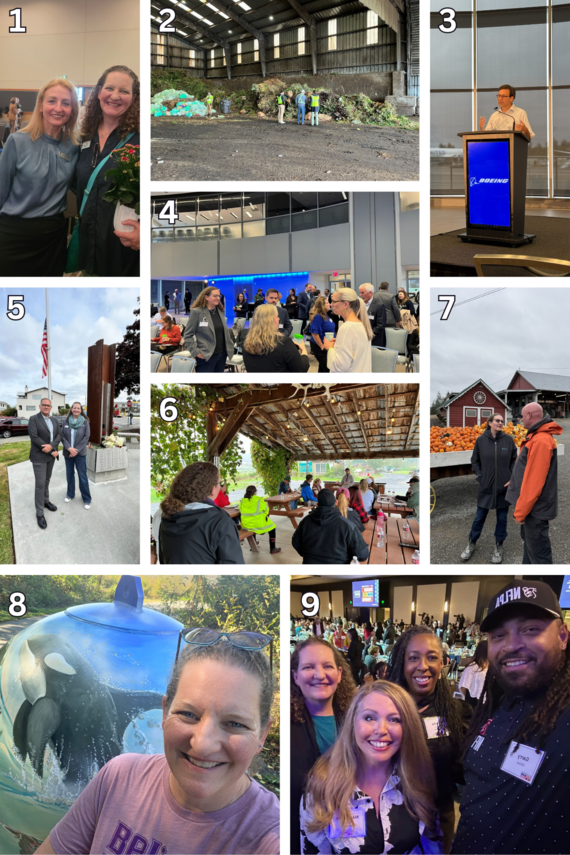 (1) It was a joy to join community activists, organizers, nonprofit leaders, and fellow elected officials at Volunteers of America Western Washington's Hope is Brewing morning event, including Galina Volchkova, Executive Director of Housing Services.
(2) Touring Cedar Grove's composting facility on Smith Island in north Everett. Read more about the visit above.
(3)(4) I joined Governor Bob Ferguson, aerospace industry leaders, and the Department of Commerce to discuss the future of aerospace in our region. Boeing employs 67,500 people, including about 7,000 veterans, and works with 1,100 suppliers in our state. Worldwide, the industry will need roughly 44,000 new jets over the next 20 years, including about 33,500 single-aisle planes, 7,700 widebodies, 1,400 regional jets, and nearly 1,000 freighters. That demand will be a major economic driver for Washington state.
(5) Councilmember Strom Peterson and I joined South County Fire to remember the nearly 3,000 people who lost their lives in the September 11 attacks. I encourage you to visit the Fallen Firefighter Memorial Park at Fire Station 17 in downtown Edmonds (275 6th Ave. N.) and take a moment to remember. The park is built around a one-ton beam recovered from the World Trade Center.
(6)(7) Listening to our local farmers is important to me. I joined County staff on a tour of local farms to hear directly from farmers like Bob at Bob's Corn about agritourism, and Eric at Chinook Farms about how food gets from farms to food banks and onto our neighbors' tables. We also talked about flooding challenges in the valley. Read more about my visit above.
(8) I've been making time for self-care and soaking up the sun in the last days of summer. On a hike at Meadowdale Beach Park, I found another stop on the Great Soccer Ball Hunt: Splash, by artist Jean Bradbury.
(9) I joined leaders from across the region at the YWCA's annual Inspire Luncheon to hear from YWCA leaders and retired professional boxer and television host Laila Ali. I also got to snag a picture with Kresha Green (back) and Mary Anne Dillon (front) of the YWCA, along with former Seahawks player Garry Gilliam.
|